Solar power is going big time, and that’s super good news for the planet and your pocketbook. But as with anything popular, some bad apples seek to deceive people. We’re discussing solar panel scams. These scams can saddle you with a big mess and an empty bank account.
So, how do you spot them? It’s not always like that, of course, but knowing what to look for can save you some trouble. This article will help you understand the typical tricks and what you can do to avoid being scammed when you are considering going solar.
The Rise of Solar Energy and Scams
I’ve seen the solar industry grow, and it’s kind of incredible how many people are exploring it now. Who doesn’t want to save a buck on the electric bill and, perhaps, do the planet a little good? It makes sense, right? In the excitement over clean energy, solar panels have surged. But, and this is a big “but,” with all that growth also comes a downside: more chances for solar energy fraud.
It’s the way it is whenever anything gets popular: the bad apples come crawling out, trying to hawk garbage products or services to the next rubes in line. It’s a shame. You grow excited to go green and save money, and suddenly, someone is trying to play you for a sucker.
And it’s more than about wasting money; it’s about washing away trust in something that really could help your home and the environment.
And it is not just a few bad actor cases. I have been hearing more and more stories lately of people who got stuck with bad solar deals. It’s a real issue, and that is why I wanted to discuss it.” The need for solar is sky high, and while that’s largely a good thing, it also means that scammers are trying to profit off that demand. They are also getting tricky, so it isn’t always simple to spot one at first. That’s why it’s especially important to know what to look for.
What Makes Solar Scams on the Rise?
There are several reasons the scams seem to be on the rise:
- High Demand: The demand for solar power is at an all-time high; everyone is clamoring to buy solar these days, and there will always be a market for both the good guys and the bad that want to take advantage of a trend. As it is, the volume of interest makes it difficult for scammers to hide.
- Incentives from the government: There are a lot of good solar incentives, such as tax credits and rebates, that help people make the switch. Scammers, of course, love to distort these into something they aren’t, offering rewards that aren’t real or exaggerating the benefits to reel people in.
- High-Pressure Sales: A few of these scams are prone to hard-sell tactics. Think cold calls, door-to-door calls, or online ads that emphasize urgency. Your brain doesn’t get to think or do research before they have you sign on the dotted line.
- Consumer Ignorance: For a lot of people, the solar industry is still something relatively new. They may not be in the know enough to sift through misinformation or promises that seem too good to be true. It is easy to get lost in the clouds of technical jargon and financial intricacies.
What Are Solar Panel Scams?
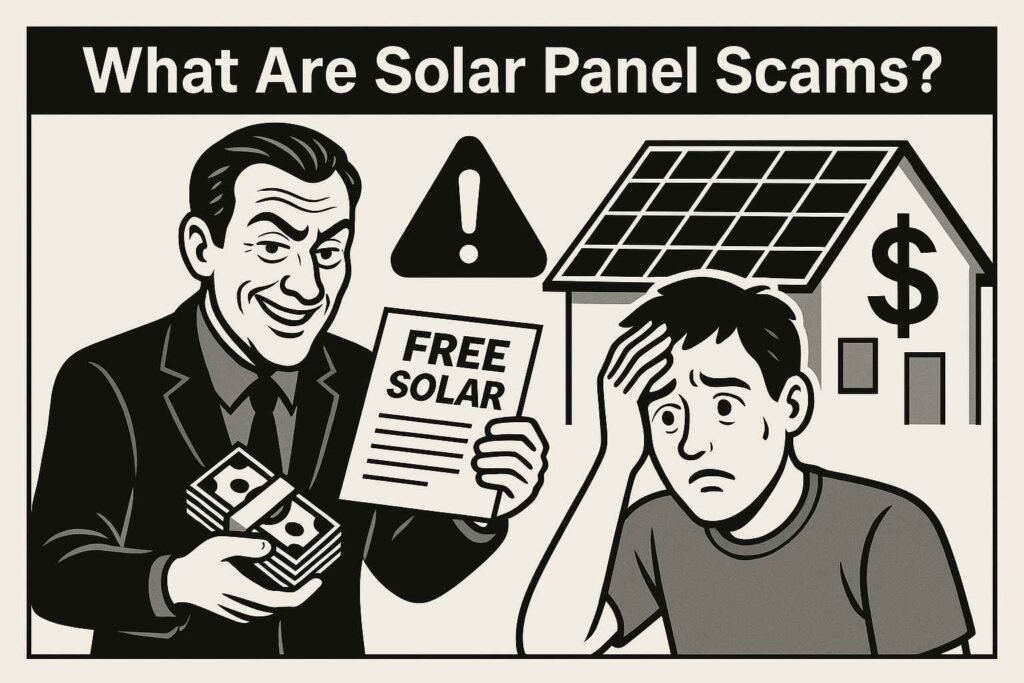
I’ve watched many, many people get excited over solar, and justifiably so. It’s a wonderful way to save money and save the planet. But, as with anything popular, there will be opportunists.
A solar panel scam is, at its core, an attempt to dupe you into a bad deal for solar panels or services. The problem is not the solar panels themselves, is it the shady characters or companies selling them. They frequently prevaricate, kind of, to part you from your money.
How They Operate
These guys are pretty sharp, and they’ve got a few tricks up their Bayonne sleeve. They could make outrageous promises that sound too good to be true, i.e., “free solar panels” or savings that are just not possible. At times, they will even claim they represent a government program to win your trust. The objective in all cases is to get you to sign and contract or give over money before you have a chance to think it through. It’s a bait-and-switch, with solar.
Common Tactics
I’ve seen a few typical scenarios for these scams. They typically use high-pressure sales pitches, attempting to force you into making a decision right away. They may arrive on your doorstep unannounced or phone you repeatedly.
Another huge one is the phony solar rebates or incentives. They will suddenly be ringing you about these great deals that aren’t quite as great as they sound, and they might blow up those things that were worth your consideration to make them sound greater than they are. It’s about creating that sense of urgency and making you feel that you’ll miss out if you don’t act now.
I’ve learned the hard way that if a deal sounds too good to be true, it probably is. For solar, slow and steady is the best way to go. Don’t allow anyone to hurry you into a decision that may cost you significant money and pain later on.
The High Cost of a Solar Installation Ripoff
Being bamboozled by a solar installation scam could leave you in a state of red-alert nightmare. Not only could you lose a lot of money, but you could end up with a shoddily installed system or no system at all.
Curious about how much solar might set you back? Check out our guide on the cost of installing solar panels and get a detailed breakdown of expenses and potential savings.
I’ve heard stories of people spending thousands of dollars, only for the company to vanish, or for them to discover that the panels they got are cheap, low-quality, or not what they were promised. It can also sour you on solar more broadly, which is unfortunate, because it’s a fantastic technology when done well. Identifying the scam solar company signs is crucial to protecting yourself.
What You Should Know Before Signing a Solar Contract
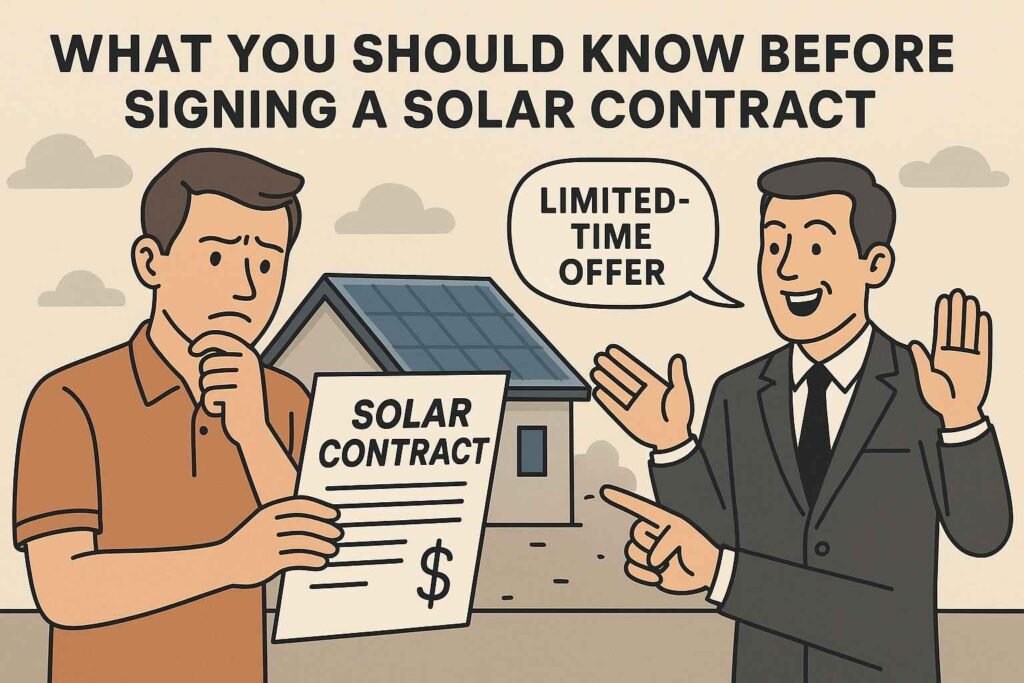
I remember when I first began researching solar, it seemed like I was swimming in information. Everybody had an opinion, and every company had a deal that sounded too good to be true. But I soon discovered that going slowly and thoroughly understanding what you’re getting into is an essential strategy.
We’re not just talking about the panels; this is the full service, from installation to how you’ll pay for it over the next couple of decades. The key to avoiding potential troubles and reaping solar benefits is to make an informed decision.
Deciphering the Fine Print: The Solar Contract
When you sign a solar contract, it’s not just a piece of paper; it’s a commitment for the long haul. I mean, we’re talking about something that could affect your economic world for 20 years or longer. Again, I will always tell people to drill deep into the details. Don’t just skim it.
Ask them loud and clear: what happens if you make less energy than they promise? Are there maintenance provisions, and who pays for maintenance? What are the panels and the inverter guaranteed for? I’ve also seen some contracts that limited the warranty to just a few years, a major red flag.
You want to ensure that everything is spelled out explicitly, with nothing left to vague language. And if something seems off, if they push you to hurry, that’s a big sign to slow down. I have also always made sure to be alert for any hidden fees or charges that could pop up down the line. You don’t just sign the dotted line without knowing the entire price of the car, right?
Avoiding Solar Leasing Traps
Solar leasing can be incredibly attractive at the outset. “No money down!” they say. “Save instantly!” But I’ve come to learn that those instant savings can mask longer-term problems. When you lease, you don’t own the panels; the company does. That’s because they receive the tax credits and other incentives, not you. And should you decide to sell your house, transferring that lease can be a real pain.
I’ve heard tales of homes being on the market for a longer time frame because buyers didn’t want to assume a solar lease. It’s not always a bad choice, but make sure you understand all the consequences. I tend to analyze the pros and cons a lot, and to me, owning my system outright seems to be the better option in the long run. It’s about control, you know?
Verifying Solar Installer Credentials
And I do not let just anyone on my roof. That means getting up to speed on how solar installers are screened. I verify their licensing with my state board, and I look for certification from places like the North American Board of Certified Energy Practitioners (NABCEP). It’s the same as verifying a doctor; you wouldn’t just go to anyone, right? I also read reviews, not just on their website, but on independent sites and from the Better Business Bureau.
You want to be looking for reputable solar installation companies with a strong history and satisfied customers. If they are unable to show some sort of proof of credentials or if their reviews are nothing but poor, that is a big indicator.” I also ensure they have appropriate insurance. You don’t want to be on the hook if something goes awry in the installation process.
The reputation of the company is also rather important to me, even when choosing the new facility. Information on selecting the best solar companies for 2025 is readily available if you need assistance with this choice. Top Solar Companies for 2025
Identifying Red Flags for Solar Contracts
There are a lot of questionable contracts out there, and I have learned to pick up the red flags in solar contracts fairly quickly. Here are a few things that invariably give me pause:
Pressure to sign on the spot: If they say the offer is good “today only” or push you to rush, that is a big red flag. A real business will be open to you, going over some of the fine print of the solar agreement and asking questions.
- Loose, vague, or missing details: A contract that fails to spell out exactly what models of panels, inverters, or other equipment will be used, or lacks particulars about the installation timeline, is a reason for concern. You want to know precisely what you’re signing up for.
- Unrealistic savings projections: If their numbers sound too good to be true, they’re likely to be so. I always request a line-by-line explanation of how the savings were calculated and then check my independent research against theirs.
- Unclear cancellation policy: Each contract should provide a clear cancellation clause. A big source of concern if it’s not there or hard to come by. You ought to be able to change your mind within some reasonable period.
Asking for huge sums upfront: Lots of companies request a deposit, which is fine, but be suspicious of companies asking for a large percentage of the total until work has started. This can be a sign of a scam.
I’ve learned that you have to be patient, as solar is your B.F.F. No one should rush you to a decision. Be patient, do your homework, and ask all the questions you want. It’s a huge financial commitment, and you deserve to be comfortable with every aspect of the deal before you sign on the dotted line. Your peace of mind is more valuable than any “limited-time offer.”
I always get several quotes and compare them to one another. It’s how I learn about the market and which outliers to watch for. ” And if something seems wrong, go with your gut. There are a ton of good, honest solar companies to choose from, so don’t compromise on transparency and trust.
What to Do If You Suspect a Solar Scam
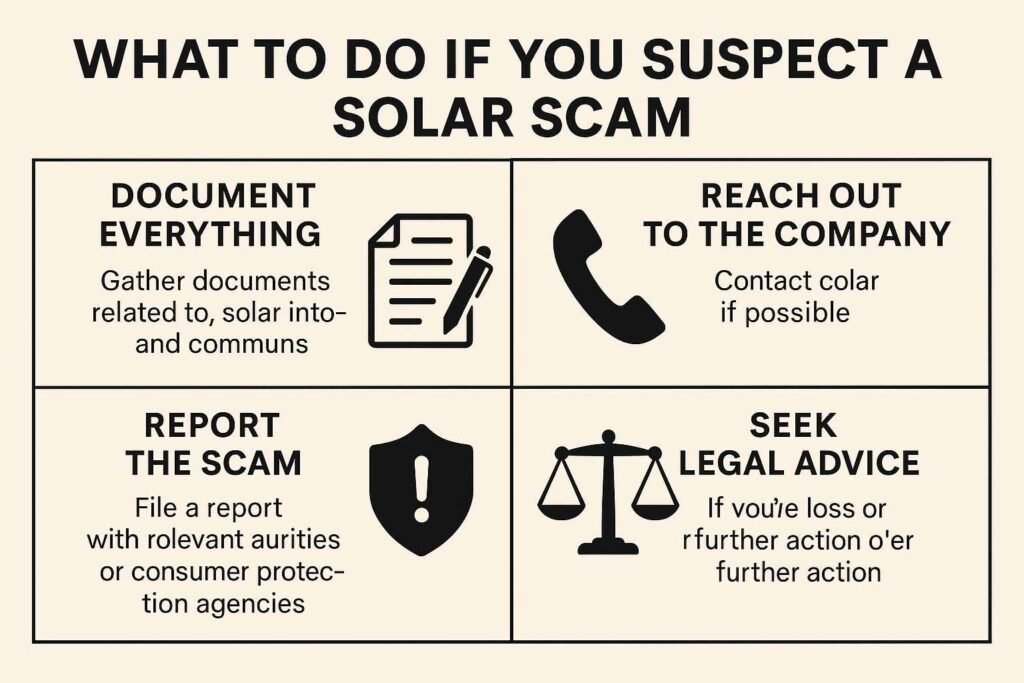
If you’re feeling uncomfortable about a solar sales pitch, or if you’ve already signed something and you’ve got that sick feeling in your stomach, don’t sit still. Moving swiftly can make a difference to both your financial security and peace of mind. So trust me on that.” This isn’t being paranoid, it’s being prudent.
Document Everything
First things first, gather up all your paperwork. I mean everything. Contracts, emails, text messages, even notes from phone calls. If not, write down dates, times, and who you talked to. This stuff is gold if you later need to prove your point. It’s almost like you’re creating a mini evidence locker for yourself.
The more granular the information you have, the stronger your position. I always remind myself: If it’s not in writing, it didn’t happen, particularly for something as significant as a solar installation. This paper trail is crucial for any future solar power scam protection that you may seek to implement.
Reach Out to the Company (If You Can)
Before you go full legal eagle on us, give the company a call. There are times when it is simply a matter of comprehension or perhaps of a rogue salesperson. Articulate your concerns, without getting wound up. Request clarification on anything that feels funky.
If they are legitimate, they have no problem addressing your concerns. If they hem and haw, if there’s more high-pressure tactics, that’s a big red flag waving right in your face. A friendly but firm conversation can sometimes fix things without a huge brouhaha, I’ve discovered.
Report the Scam
If reaching a fraudster directly doesn’t pan out, or you are convinced you’ve been the target of a scam, it is time to file a report. This is your documenting at its best. A few where you can go:
- Federal Trade Commission (FTC): They focus on consumer complaints about unfair business practices. It is a nice place to start reporting solar fraud.
- The state attorney general’s office where you live: There is often a consumer protection division that might help.
- Better Business Bureau (BBB): Submitting a complaint here is not a government organization, but it can sometimes make the company respond.
- Local Consumer Protection Offices: Your city or county may have consumer protection offices that can help with solar headaches.
I’ve learned that remaining silent only plays into the scammers’ hands. Reporting the incident would be an essential step for you to take, even if you feel embarrassed or foolish. It not only saves you, but it also helps keep others from becoming victims of similar schemes. Even if your experience was very minor, it can add up to stop these scamming operations.
Seek Legal Advice
If you’ve lost a lot of money or if you’re trapped in something you believe is a scam, it may be time to contact a lawyer. Search out lawyers who specialize in consumer law or who work on contract disputes. They can explain your rights and available courses of action. It can be daunting, but sometimes a pro’s advice is just the ticket when it comes to feeling your way around this sticky wicket. I know it’s a step too far, but it surely brings peace of mind.
How to Learn More & Protect Yourself
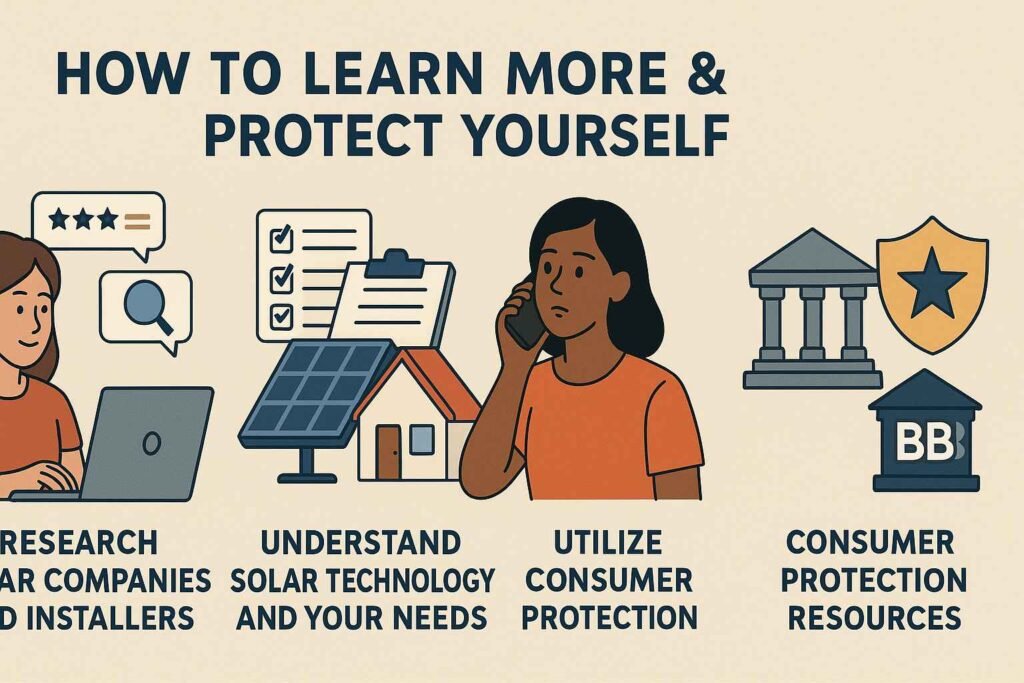
I’ve found that staying safe in the solar game is simply a matter of being informed. This is not about becoming a solar expert, but about gaining enough knowledge to recognize when something seems fishy. The best defense against scams is researching proactively. You know, no one wants a bum deal, right?
Researching Solar Companies and Installers
When I began researching solar, I discovered there are plenty of companies. It’s akin to choosing a restaurant in an unfamiliar city, overwhelming! But I did encounter a couple of things that made a tremendous difference for me in narrowing it down:
Consider their qualifications: I make sure companies are licensed and insured. It’s a simple step, but it signals to me that they are serious and legitimate. I also look to see if they’re certified by any industry groups, such as NABCEP. That’s a good sign that they understand what they are doing.
Choosing the right installer can save you thousands. Explore our expert list of the best solar companies for homeowners and find top-rated providers near you.
Read reviews, but be sensible about it: I look at a lot of sites, Google, Yelp, Better Business Bureau. I don’t just read the five-star reviews; I pay attention to the one- and two-star reviews as well. A few bad reviews can be normal sometimes, but a pattern of complaints over the same thing is a massive red flag.
Request references: Any reputable business should have no problem providing you with references. I’ve made it a point to call a couple and ask about their experience, from the process of making the sale to the installation, and even the post-installation service. It’s like we’re seeing an advanced glimpse of what it’s going to be like.”
Understanding Solar Technology and Your Needs
One thing I did before even speaking with a salesperson: I did my best to understand the fundamentals of how solar even works. I didn’t need to be an engineer, but just knowing the basics helped me ask better questions and not be bamboozled by jargon.
Educate yourself about the various types of panels:
I discovered there are monocrystalline, polycrystalline, and thin-film panels. They each have their advantages and disadvantages, efficiency and cost, for example. This helped me understand why one quote could be higher than another.
Calculate your energy usage
I examined my old electricity bills to determine how much power I’m using. This helped me figure out the size system I would need. It’s a little bit like knowing how many groceries you need before going to the store; you don’t want to buy too much or not enough.
Look at your roof
Not all roofs are suitable for solar. I looked up the age of my roof, the angle of it and whether any large trees were shading it. These factors contribute to how much sun your panels will receive and how much power they will generate. If you want to dive into more information about what’s involved in a solar installation, I also found some great resources online.
I have learned that it makes sense to learn the fundamentals of solar energy and to do my homework on installers, not just to protect myself from scams, but to make a wise investment in my home. “It’s really much like buying a car, you wouldn’t just go for the first car you see without doing a little bit of research, right? I feel more confident the more I learn.
Utilizing Consumer Protection Resources
If something doesn’t feel right, or if I want to verify something, I know there are places I can go. It pays to have a backup plan.
- State consumer protection offices: These agencies are designed to assist consumers on a variety of issues, including scams. They tend to have resources or know where to send you to complain.
- Better Business Bureau (BBB): I always look up a company’s BBB rating, and I read any complaints that are lodged against it. It’s one way to determine if there’s a pattern of unresolved disputes.
- Industry associations: Organizations like the Solar Energy Industries Association (SEIA) usually have codes of conduct that their members are expected to follow. If a company is a member of one of these associations, they are likely following certain standards.
Frequently Asked Questions
What is a solar panel scam, anyway?
Solar panel scams occur when con artists or, in some cases, legitimate companies promise homeowners fake or misleading deals, such as free solar panels with hidden fees, or panels that the homeowner will not own, and the homeowner ends up burdened with hidden costs or, worse, unable to sell their home. They could make you offers that are out of this world, or “free solar panels,” or deals that don’t even exist.
What are the red flags of a solar scam?
You should be cautious if somebody offers “free solar panels,” rushes you to sign on the spot, lacks necessary licenses or positive reviews, or presents you with a contract that is vague or neglects key details. Also, watch for false promises on government rebates or special offers due to expire.
How can I avoid being cheated when purchasing a solar panel?
Always take your time. And don’t be pressured by anyone to hurry and sign. Get quotes and compare from a few different companies. Ensure the company has good reviews and it is licensed to carry out work. Read the contract very closely and ask questions about anything you don’t understand.
Do “free solar panel” deals ever pan out?
If it sounds too good to be true, it probably is. A legitimate solar panel is a big investment and while they do eventually pay off, they’re not normally “free.” Never, ever trust anyone who says that.
What if I suspect I have a case of solar scam on my hands?
If you believe you have found a scam or have been a victim of a scam, you should report it to the Federal Trade Commission (FTC). You can also reach out to your state’s consumer protection office or the Better Business Bureau.
Why should we learn solar before engaging in conversation with a salesperson?
Educate Yourself Before you even begin getting quotes, there are a few key facts about how solar panels work, how much they cost and how they can save you money that you should know. The more you understand, the less likely it is that you will be tricked by scammers.