Are You Wondering About Off-Grid Solar Systems Cost? I’ve been researching off-grid solar systems costs recently, and I realized…This is it! This is the difference between living off-grid and living on-grid. I mean, all those people who talk about going green, being self-sufficient, that looks good on paper, doesn’t it?
When you start diving into the real numbers and what it takes to get set up, though, it can be a bit overwhelming. So, I decided, let’s just show how much off-grid solar actually costs, since I’m sure I’m not the only one who wants to know!
What is the off-grid solar system?
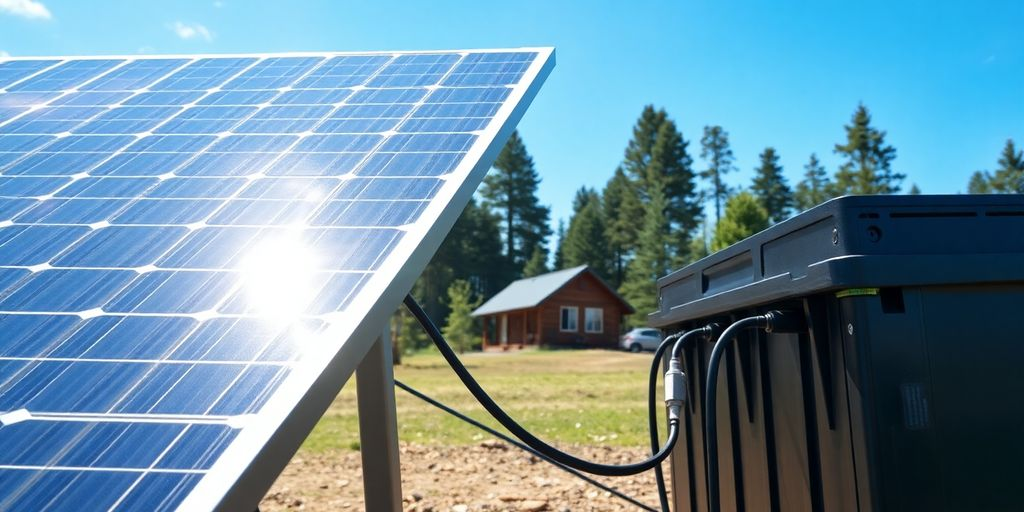
Well, then what is an off-grid solar system, exactly? Well, in basic terms, it is a means for you to produce and save your power off the traditional power grid. Call it energy independence! You are no longer sucking on the grid; instead of the power company feeding you juice, you’re making your juice from the sun.
Off-grid solar systems are built to run everything in your home, and, at that, 24/7. That means you have to size and plan your system very carefully to manage everything, even when the sun isn’t shining on those cloudy winter days. Regular residential solar panels are connected to the grid at all times, but an off-grid system is your only source of electricity. It’s a bigger investment, but you’re also not at the mercy of power outages or increasing electricity costs. I think that’s pretty cool.
What are the main items in an off-grid power system?
So, you’re considering staying off the grid with solar power? Awesome! But what exactly do you need to do to make that a reality? It’s not just about slapping some panels on your roof. For now, let’s drill down on some of the important pieces I’ve learned about.
Solar Panels
These are what your system uses to do the work. Solar panels transform sunlight into electricity. Multiplying a panel’s wattage by the amount of time the sun shines can give you an estimate of how much power a panel can generate per day. You will probably want to calculate your energy needs first, then size your panel array accordingly. Be sure to take the solar panel costs by state into account, as prices can fluctuate.
Charge Controller
Consider the charge controller the traffic cop of your electricity. It keeps the power going from your solar panels to your batteries, maintained. That way, you’ll never overcharge (which can ruin your batteries and reduce their lifespan). A solid charge controller is key to a great system.
Battery Bank
That’s where you save up all this wonderful solar power for when the sun isn’t shining. They’re also a major investment, and you want the most useful and size-appropriate vehicle battery you can get for your money. One alternative is lead-acid batteries, which are less expensive, but so-called lithium-ion batteries are known to provide better muskets and a longer service life, though they carry a steep initial cost. The size of your battery bank also depends on how much energy you use daily, and for how many days you want to be able to run your system without seeing the sun (days of autonomy).
Inverter
Your solar panels and batteries generate electricity in the form of direct current (DC), but most of the appliances in your home run on alternating current (AC). This is where the inverter steps in. It’s what changes the DC power stored in your batteries into the AC power you need to run your lights and refrigerator and TV, and all the other devices we all use. Inverters are available in a variety of sizes, too, so you’ll have to select one that can accommodate the highest load you intend to run at any time.
Balance of System (BOS) Components
This is a sort of catch-all word for all the other little bits and bobs you need to actually hook everything up and get it running safely. This includes wire, fuses, circuit breakers, disconnects, and fasteners. Don’t cheap out on these parts — they’re important for both the safety and performance of your rig. Finding the perfect off-grid solar system for your home is essential to achieving a sufficient power output.
How Much Does an Off-Grid Solar System Cost?
Mostly, though, let’s just cut the crap. What would it cost to go off the grid? It’s not a straightforward answer, but I can offer a realistic estimate. The off-grid solar system cost is certainly a lot more expensive than remaining connected to the grid.
As far as I can tell, this is not cheap. I’m not only referring to solar panels; you also need batteries, an inverter, a charge controller to control it all, plus wire to put it all together. And then there are the installation costs.
I’ve heard estimates that assert that the average off-grid solar price per watt is higher than grid-tied. (That’s because you have to over-engineer your system to cope with cloudy days and low sunlight periods.) You can’t just count on the grid to backfill the holes.
And the solar battery cost hasn’t been mentioned. The batteries are a big part of the price, and you’ll need to have enough storage to tide you over through nighttime and those kinds of not-so-sunny winter days. The solar panel inverter and solar charge controller are additional costs to be borne.
I can’t give you a number off the top of my head without knowing exactly how much you need. I will say the price of solar panels for house off-grid applications can be a hefty cost. It’s an investment in energy independence, but it’s also one you need to go into with your eyes wide open.
Factors Influencing Off-Grid Solar Costs
O.K., so you’re pondering going off the grid and becoming energy independent. Awesome! But first, before you leap, let’s discuss what goes into making an off-grid solar system affordable. There’s more to the final bill, you see, than panels and batteries. I realize that if you want to budget and plan well, you must understand some of these variables.
System Size and Capacity
This one’s pretty straightforward. The more power you want, the bigger the system, and the bigger the system, the more it’s gonna cost. Do you live in the tiniest cabin on earth and use virtually no electricity, you can get away with a smaller and therefore cheaper system. But if you want to run an entire house with all its modern conveniences, you’ll need a far beefier setup. More solar panels and more batteries equal a higher price tag, pure and simple. A tiny house can scrape by with a 5 kWh solar power system, but most homes require at least 10 kWh to go fully off the grid.
Energy Consumption
But how much electricity do you need? I mean, really use? You need to work that out before you go and start looking at equipment. Check your previous electricity bills to determine your average monthly usage. Then consider what adjustments you might make to decrease that consumption. Switching to LED lights, investing in energy-efficient appliances, and being aware of patterns of use can all help. It’s also the less energy you use, the smaller (and cheaper) your off-grid system will be.
Location and Sunlight
How much solar power you can get depends, by and large, on where you live. If you live somewhere sunny like Arizona, you’ll get much more sunlight than someone in, say, Seattle. In other words, you may need fewer solar panels to produce the same amount of power. Plus, elements like trees, buildings, and even how your roof is situated can influence how much sunshine directly hits your panels. Optimizing panel placement has been everything for maximizing my energy production.
Component Quality
Solar panels and batteries are not all made the same. You’re welcome to choose the cheap stuff, but trust that you’ll come to regret it. Better components are more efficient, longer-lasting, and have higher-quality warranties. That’s why they’ll exceed promises and provide you peace of mind. Yes, they can be pricier up front, but they will ultimately save you money by cutting down on the frequency of replacements and repairs. Take it as an investment in the long-term reliability of your off-grid solar systems.
Installation Costs
Barring a few tinkerers and preppers, most people will need to hire someone to install their off-grid solar system. The cost of labor can be affected by your location and the complexity of the installation. Get multiple quotes and ensure that the installers are licensed and insured. Choose wisely and don’t always go for the cheapest you can find; look at their experience and reputation. Ah, they pop up… then they shut up. A bad install can cause all kinds of problems later.
Permits and Regulations
Naturally, going off-grid meant negotiating permits and regulations. We’d imagine that these can vary by market, and possibly increase the overall cost of your system. Check and see what is required in your area and factor that into your budget. At times, it’s worth enlisting a professional to take care of the permitting for you.
Solar Incentives and Credits
And don’t forget to explore solar incentives, rebates, and credits. These can reduce the price of your off-grid system. A federal tax credit could defray much of the cost of installation, whether or not you are attached to the grid. There may also be state and local incentives. Do your homework and use all the programs that can save you money.
Cost Breakdown By System Size
All right, so that’s the theory you’re spending money on. The size of your off-grid system comprises the greatest piece of the pie chart for costs: A small cabin setup will be far less expensive to run than an entire house.
Small Cabin/Tiny Home System
For a small cabin (or tiny home) where your energy usage is limited (lights, small fridge, charging a device or two), you might be able to get by with a smaller system. I’m thinking like 1–3kW of solar panels, a simple battery bank, and a tiny inverter. This might be in the $5,000 to $15,000 range, given the components involved.
Average-Sized Home System
By that amount, though, you’d be talking about a much more substantial system if you want it to be able to power a small or average-sized home. I’m thinking 5-10kW of solar panels, a much larger battery bank to store whatever you can collect, and a bigger inverter.
Wondering how much space you’ll need for your solar project? Explore our detailed guide on solar panel dimensions and learn the standard sizes for residential and commercial systems.
This is when the price begins to soar. You should be prepared to pay between $20,000 and $50,000 or more. The solar panels themselves can make up a substantial portion of that expense.
Large Home/Off-Grid Living System
For a bigger home, or one that wants a whole lot of independence from the power company, expect a hefty investment. We’re talking solar panels in the 10kW+ range, a big battery bank, and perhaps even a backup generator. These systems can easily run you anywhere from $50,000 to $100,000+. It’s a substantial commitment, but for others, the freedom is worth it.
Just to put it in perspective, here is an order of magnitude estimate:
| System Type | Average Cost |
|---|---|
| DC only | $6,000–$10,000 |
| Mixed DC and AC | $10,000–$50,000 |
| AC only | $30,000–$60,000 |
| AC with wind | $20,000–$80,000 |
| AC with backup generator | $40,000–$70,000 |
Remember, these are only estimates. Prices can vary depending on where you are, your installer, and the particular components you select. If you have time, it never hurts to get multiple estimates.
Off-Grid Solar System vs On-Grid
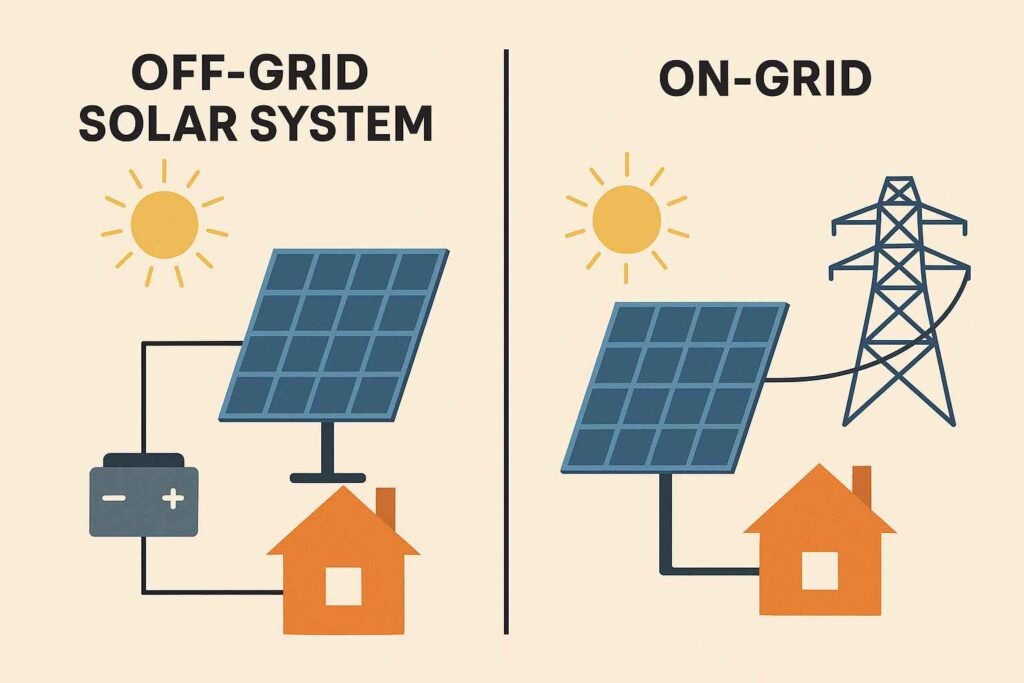
Great, let’s compare off-grid and on-grid solar systems. It’s a big decision to make if you’re considering going solar, and ultimately, it comes down to what you want to achieve with your home system.
Grid-tie systems are typically cheaper than off-grid systems in the beginning because you don’t have to buy boatloads of batteries. They are still connected to the regular power grid, so if your solar panels aren’t generating enough juice or you use power during the night, you simply lean on the grid. Simple as that. But with an off-grid system, you’re on your own entirely.
Ready to harness the power of the sun? Check out our easy, step-by-step guide on how to set up a solar panel system for your home and start producing your own clean energy.
That means you want enough solar power autonomous days to cover the rare days the sun doesn’t show up. Typically, that translates to a larger system and a large battery bank. I’ve been exploring some off-grid solar calculator choices in order to determine what I need.
Consider it another way: with on-grid, the utility is your primary backup. With off-grid, you’re your backup. This is why so many people often think about off-grid solar vs generator, just in case.
Oh, and battery chemistries, too. Lithium vs lead-acid batteries is a big consideration in terms of the expense and longevity of your system. Lithium costs more, but its endurance is longer. It’s cheaper upfront, but more to maintain and replace.”
I’ve even thought about doing a DIY off-grid solar system in order to save money, but I don’t know if I’m well enough equipped for that. It’s a big project!
How Many Solar Panels Do You Need for an Off-Grid System
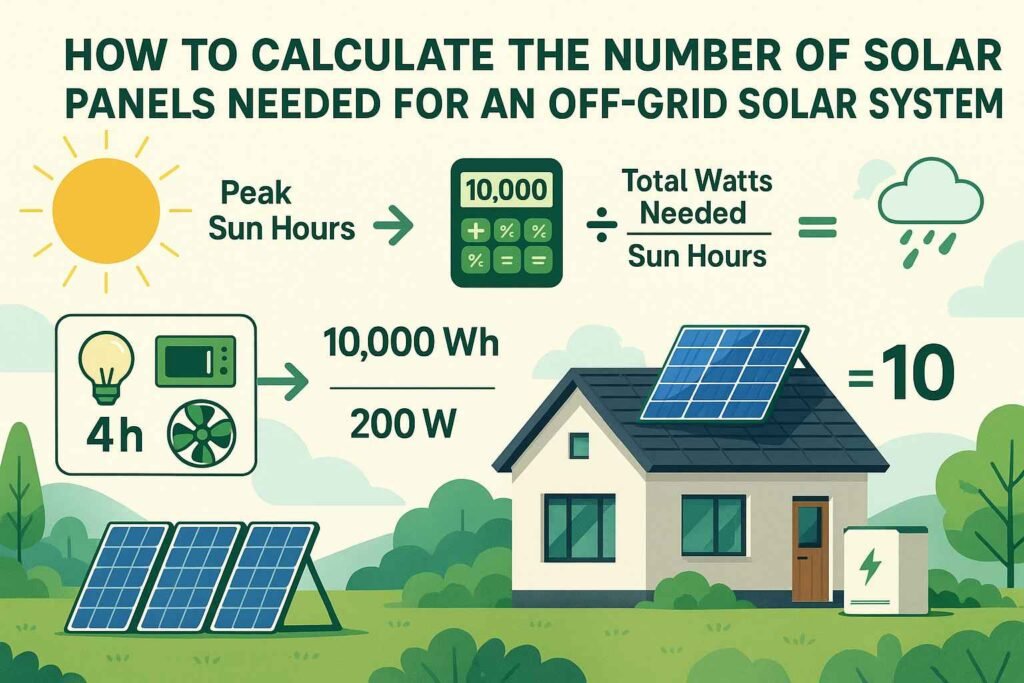
O.K., you’re considering going off the grid and moving into solar. Awesome! One of the big questions I was left with when I started planning my off-grid system was how many solar panels I would need to meet my own electricity needs. Simply slapping a couple of panels on the roof and crossing your fingers won’t cut it. It’s all about balancing your energy demands with the correct amount of solar power. Let’s break it down.
How many panels you should have depends on how much electricity you use, what the wattage of the panel is, and how much sunlight hits the panels.
First, you have to find your daily energy needs. Tally the total wattage of appliances and devices you use, and the number of hours a day you use each of them. This will give you an approximate value for total energy (in Wh per day). From there, you have to calculate the peak sun hours in your area. This is the general number of hours that your solar panel will be exposed to sunlight each day. You can usually Google this for your region. With these numbers in hand, you can calculate the total number of watts of solar panels you will need with a simple formula. There are also sites with energy needs calculators to assist in this.
For instance, if you calculate that you need 4,830 watt-hours per day and receive 5 peak sun hours, you would divide 4,830 by 5, yielding 966 watts. To compensate for losses in your system (from the inverter and wiring), you’ll want to add 25% to this number. So you’d want something like 1,200 watts of solar panels. If you have 300-watt panels, you’ll need about 4 panels. If you have 200-watt panels, you’d need 6. Please note that the cost of a solar panel system varies depending on the wattage and quality of the panels.
And don’t forget to consider weather patterns and seasonal fluctuations. To make up for the lesser amount of sunlight, you’ll need more panels if you live in an area with lots of cloudy days. Also, think about the angle and orientation of your roof. Most houses also have a roof that faces north and a roof that faces south. If you’re looking at [solar power for cabins], you may have different concerns than someone using it to power a full-sized home. Cabins tend to have lower energy demands, but they can also be found in areas with less sun.
And finally, take this with a grain of salt; it’s a very crude estimate. It’s a good idea to work with a solar installer, as they can provide a more accurate estimate of your energy needs and the best [how to size off-grid solar system] for your unique situation.
Frequently Asked Questions
So, what is an off-grid solar system?
Thanks to an off-grid solar system, you can generate your electricity without tapping into the main power grid. That means no electric bills, and no losing power when the grid goes down. It’s a giant step toward energy freedom.
What are the components of an off-grid solar power system?
The central pieces are solar panels to capture sunlight, a battery to store the power, and an inverter to convert it to the type of power your house needs, but there are a few other key components, including a charge controller, that keeps the battery from being overcharged. There are wires, too, as well as three mounts to keep everything in its place.
How much does off-grid solar power cost?
As far as I can tell, an off-grid solar system might run between $45,000 and $65,000. This is quite a bit more than a typical solar system attached to the grid would cost, which can run between $15,000 and $20,000.
What causes the price of an off-grid solar system to rise or fall?
There are a couple of things that influence the price change. The size of the system you require, the type of batteries you choose, and how much power you use each day are all factors. It can also depend on where you live and how challenging it is to install the system.
How can I figure out how many solar panels I’ll need?
How many such panels you’ll need depends on the amount of electricity you use at home and on how much sunlight your area receives. I always recommend calculating your daily power requirements first. This way, you can choose a system that’s large enough to run everything you own, regardless of the weather.
What is the cost difference between off-grid and on-grid solar primarily?
Though you’d get complete energy independence with an off-grid system, that approach is typically more costly up front, as you’d require a large battery bank. A grid-tied system is less expensive to install and allows you to sell any surplus power back to the utility, but you remain connected to the utility system.