Georgia homeowners are paying some of the highest summer electricity bills in the country, and if you’re tired of watching that number climb every year, solar is probably already on your radar. I spent a long time researching this before going solar myself, and the one thing I kept running into was how hard it was to find straight answers on what it actually costs, not the glossy brochure number, but the real figure after you factor in your roof, your utility, your system size, and whatever incentives you can actually qualify for.
So I did the work. This guide breaks down what Georgia homeowners are realistically paying for solar in 2026, which incentives are worth your attention, and honestly. whether it’s even worth it, given Georgia’s specific utility landscape. Because the answer isn’t always yes, and nobody selling you panels is going to tell you that.
If you want the short version: a typical Georgia home needs somewhere between 8–12kW, costs around $23,000–$33,000 before incentives, and the federal tax credit alone can knock 30% off that number. But the details matter a lot and that’s what we’re here for.
Key Takeaways
-
1Georgia homeowners are paying around $2.39 per watt in 2026 — meaning a typical 10–14kW system runs $24,000–$33,400 before any incentives. Your final number depends heavily on system size and installer.
-
2The federal 30% tax credit is the single biggest lever you have. On a $30,000 system that’s $9,000 back in your pocket — but it’s a tax credit, not a rebate, so you need sufficient federal tax liability to use it.
-
3Georgia has no statewide solar incentive — don’t let anyone tell you otherwise. What does exist are utility-specific rebates from providers like Jackson EMC, which vary significantly depending on where you live.
-
4Bigger systems cost more upfront but less per watt — a 4kW system runs around $3.66/watt while a 10kW drops to $2.85/watt. Buying more panels usually means better long-term value.
-
5The average payback period in Georgia is 10–12 years, after which your electricity is essentially free for the remaining life of the panels — typically 25 years or more.
Understanding the Average Cost of Solar Panels in Georgia
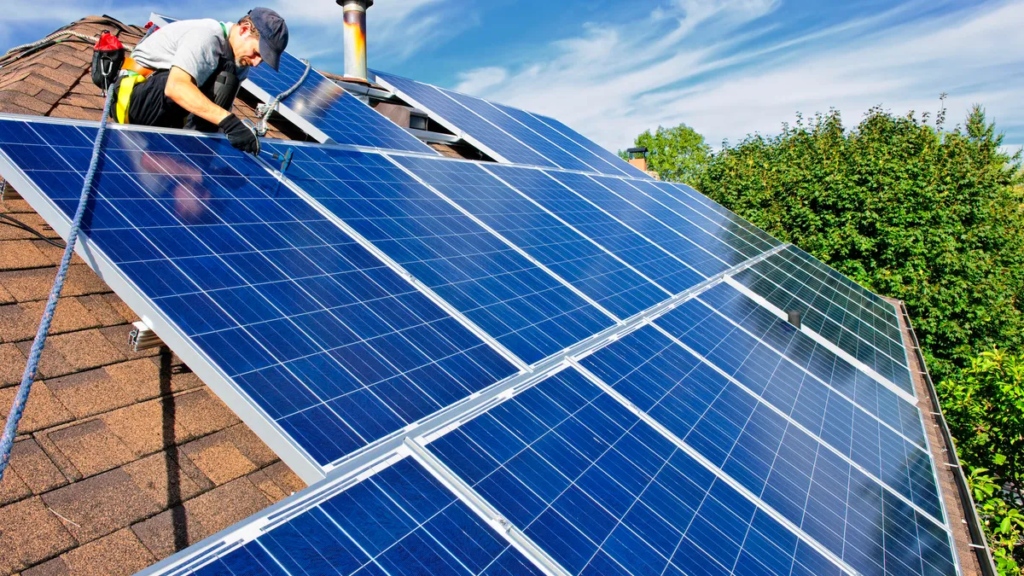
When I began my inquiry into solar panels for my own home here in Georgia, the first question on my mind was, tell me more about the cost. It is, after all, a major investment. With what I’ve seen and researched for 2026, the average cost of solar panels in GA is currently at an approximate of $3.06 per watt. In other words, a typical 7.2-kilowatt system will cost you about $22,000 after you take that sweet federal tax credit into account. It’s not bad to be in the ballpark of the national average.
Factors Influencing Solar Panel Costs in Georgia
There are a few factors that could slightly raise or lower those Georgia solar installation costs. It’s not a one-size-fits-all number. Here’s what I found mattered:
- System Size: This is a major one. Larger systems require more panels, and therefore the overall price rises. But the cost of each watt tends to go down when you purchase in bulk for a bigger system.
- Quality of Equipment: As with anything else, you can get entry-level panels or the top-of-the-line. And the brand, efficiency, and warranty are all factors.
- Installer Choice: Overhead and Cost are not the same. A few quotes are definitely the way to go.
- Home Specifics: Your roof’s condition and angle, as well as any shading from trees, can impact how many panels you’ll need and how complicated the installation will be.
Cost Breakdown: Panels, Inverters, Installation, and More
But what, really, is it that you’re paying for when you see Georgia solar installation prices? There’s more to it than just the shiny panels. Here’s an approximate look at what happens to the money:
What’s Included in Your Solar Quote
Every line item you’re actually paying for
Typically the largest single expense in your quote. Panel brand, efficiency rating, and warranty length all affect the price.
Convert the direct current your panels generate into usable AC electricity for your home appliances. String inverters are cheaper; microinverters cost more but perform better with shade.
The racks and brackets that keep your panels securely attached to your roof or ground. Roof type and pitch affect complexity and cost here.
What you pay the crew to physically install and connect the system. Varies significantly between installers — one of the biggest reasons to get multiple quotes.
Local government charges to approve and inspect your system before it can connect to the grid. Usually handled by your installer but baked into the quote.
The wiring, conduit, disconnects, and all other electrical components that tie everything together. Often underestimated but essential to a safe, functional system.
The cost of solar energy for Georgia homeowners averages a wide range. Even though a national average can give you a ballpark figure, your home’s individual situation (how big it is, what kind of equipment you’ll buy) will determine how much you’ll actually spend. As always, custom quotes are your friend.
Here’s a look at how Georgia solar installation prices can break down by system size, giving you a clearer picture:
Georgia Solar Pricing by System Size
2026 estimates · After 30% federal tax credit
| System Size | Cost Per Watt | After Tax Credit | Best For |
|---|---|---|---|
|
4 kW
~12 panels
|
$3.66/w | $10,248 | Small home |
|
6 kW
~18 panels
|
$3.21/w | $13,482 | Average home |
|
8 kW
~24 panels
|
$2.98/w | $16,688 | Most popular |
|
10 kW
~30 panels
|
$2.85/w | $19,950 | Large home |
If you want this Actual Cost Please Fill Up our Free Solar Qoute Form. Thank you.
Georgia Solar Incentives and Rebates: Reducing Your Investment
Federal Solar Investment Tax Credit (ITC)
When I started considering solar for my Georgia home, I was really hoping to see a bunch of state action, but the biggest incentive by far is federal. The Federal Solar Investment Tax Credit, or ITC, is kind of a big deal. It lets me subtract 30 percent of the total price of my solar panel system from what I owe in federal taxes.
So if my system costs $20,000, I can subtract $6,000 from what I owe the IRSPendid you do 10 percent adjusted toward any of our/or meet halfway? I mean that it’s not a refund, as such — it’s a credit toward my tax bill. This really does cut down the total expense, making solar feel so much more possible. You must claim this in the year after your system is installed.
Georgia State and Local Solar Incentives
Now, on Georgia-specific help, it’s also a little more sparse than in some other states, which I found initially disappointing. I couldn’t find a statewide solar tax credit or rebate program. But that doesn’t mean there’s nothing. Some local utility companies provide their incentives and they can be significant.
I’ve heard that at least one (Jackson EMC?) will give you a rebate based on the size of your system, up to a certain dollar amount. Definitely worth checking with your actual electric company to see what they might have available. These community programs are just the local aspect to Georgia’s overall residential solar incentives that can help reduce your costs.
Here’s a quick look at what to keep in mind:
- Federal ITC: Still the main player, offering a 30% tax credit.
- Local Utility Rebates: Varies by provider; check with yours.
- Property Tax Exemption: In Georgia, installing solar panels generally doesn’t increase your property taxes, which is a nice perk.
Georgia hasn’t offered many state-level incentives for solar, but the federal tax credit is sizeable. Couple that with any local utility rebates, and it can really lower the out-of-pocket cost to go solar. It’s all a matter of trying to do your homework, to see what applies specifically for you and regarding where you are in the state. These factors combine to affect the complete Georgia solar incentives and costs.
Want the actual cost for your home? Fill out our free solar quote form →It’s also helpful to know that while net metering is not mandated at the state level, it may be offered by some utilities. This means you can get credit for the extra energy that flows back onto the grid. If your utility does not have a net metering program, you could consider buying a solar battery, though that increases the upfront cost. Knowing these Georgia solar incentives and costs are important when looking to go solar.
Calculating Your Potential Solar Savings in Georgia
So, you’re considering solar panels for your Georgia home? That’s great! The big question now is, “How much money will this actually save me?” It’s not just what it costs up front; it’s also the long game. I’ve been asking myself that same question and it boils down to a few things.
Estimating Your Electricity Bill Reduction
The most straightforward way solar panels will save you money is by decreasing your electricity bill. The less power you purchase from the utility company, the less money you’re giving them. It’s pretty straightforward. To determine how much money you could save, two bits of information are necessary: 1) How much electricity is consumed in your home; and 2) how much the power you use costs.
- Check Your Past Bills: Check out electricity bills dating back a year. Calculate the monthly number of kWh used. The average Georgia household consumes just a little more than 1,000 kWh per month, which is above the national average. This is a positive for solar savings, actually!
- Calculate how much you are spending now: Multiply the number of average monthly kwh you use per month by your current electric rate. This provides a reference level of what you’re spending now.
- Calculate Solar Production: Your solar installer should be able to calculate for you and give the estimate of how much electricity your new solar system will likely produce based on its size, as well as the amount of sun exposure your roof gets. This production subtracts what you would buy otherwise.
For instance, if your system generates enough power to satisfy 80% of your home’s needs, you’ll notice a big reduction in your monthly bill. It’s also worth mentioning that Georgia doesn’t require net metering, so if your panels generate more electricity than you consume, you can’t necessarily get paid for the excess unless your utility company specifically offers a buy-back. This is why some people think of installing a battery. You can learn more about the average cost for solar panel installations, but not before incentives.
The Payback Period for Solar Panel Systems in Georgia
Fine, so you’re saving money month to month, but when do the panels start paying for themselves? This is known as the payback period. It is the length of time it will take your accrued electricity bill savings to reach parity with the upfront installation cost of your solar system.
Here’s a general idea:
- Average Payoff in Georgia: Other than that, the average payoff time in Georgia is also estimated at 12 years. That is OK, compared with the national average.
- What Influences Time to Payback The time it takes for your system to pay itself off depends on how much you spend on the system, as well as how much electricity the panels generate and the cost of your existing electricity, plus any incentives. A system that is more expensive, or generates less energy, up front will have a longer payback time.
- Long-Term Value: But keep in mind, too, while you wait for that slightly longer payback period to come around, solar panels typically last 25 years or more. Once they’ve paid for themselves, all the electricity they generate is essentially free savings for the remainder of their working lives.
You will want a good estimate of what you can expect in savings and payback period before committing. Don’t use general averages; start by getting some quotes from installers who will give you a personalized estimate based on your actual home and energy consumption. This way, you have some idea of what to budget for and can see the actual value that your investment returned.
It even helps to think about the payback period in order to put this type of investment into perspective. It’s not only the initial cost, but also how much you will save over the years. Hearing what a few different musicians have to say can be quite helpful in unraveling this
Choosing the Right Solar Installer in Georgia
Choosing the right firm to put in your solar panels is a major decision. I mean, it’s an investment, and you want to do it right. It’s not just a matter of getting the panels on your roof, it’s making sure they’re designed for your particular home and that the install is top tier. I have learned, however, that not all installers are equal and some may not have your best interests at heart.
The service I received when I first started looking made me realize how much you need to find reliable solar installers in Georgia can provide. This means doing your homework.
I was searching for firms that are well-established, well-rated, and open upfront about their pricing and warranties. It’s tempting to be lured in by “free panels” but they typically mean a lease, and leases are not as good as buying outright. I would rather pay for something and own it.
Here’s what I’ve found helpful when vetting installers:
- Check their experience: How long have they been installing solar in Georgia? Do they have experience with homes like yours?
- Read reviews and ask for references: What do past customers say? Are there any red flags?
- Get multiple quotes: Don’t just go with the first company you talk to. Compare pricing, equipment, and warranties from at least three different installers.
- Understand the warranty: What does it cover, and for how long? This is super important for peace of mind.
- Look for certifications: Are they certified by industry organizations? This can be a good sign of quality.
It is tempting to go for the cheapest, but I find that I would rather pay a little more and have quality and reliability. A good installer should explain everything, answer your questions, and help you make financial sense of the long-term benefits as well as potential pitfalls. They should also tell you up front if there are any factors with your roof or shading that could impact how well the system is likely to perform.
After all, I’d rather have an installer who seems like a partner, not just a salesperson. Someone who is dedicated to helping me maximize my solar investment for decades.
The Future of Solar Panel Costs in Georgia
Looking ahead, I’m cautiously optimistic about how the math of solar panel costs in Georgia might play out. Although it is difficult to predict the exact solar system prices for Georgia 2026, based on the general trend of prices falling in the current year, you can expect that either it will stay at the current average solar panel cost gA or will continue going down. The technology continues to improve, and as more people get solar, the economies of scale will keep residential solar panel cost in Georgia within reach.
Several factors will play a role:
- Technological Advancements: Expect more efficient panels and inverters, which could mean smaller systems can produce the same amount of power, potentially lowering the overall solar panel system price in Georgia.
- Supply Chain Improvements: As manufacturing scales up and logistics get smoother, the cost of materials and installation labor might stabilize or even decrease.
- Policy and Incentives: While the federal tax credit is a big deal now, state and local incentives can fluctuate. Their continued availability or evolution will impact the final residential solar pricing in Georgia.
- Market Competition: More installers entering the Georgia market could drive prices down as companies compete for customers.
It’s impossible to say conclusively what the solar energy system cost in Georgia 2026 will be at this time, but based on current data, it should still offer a viable level of savings.
If a 10kW system costs ~$23,906 (pre-incentives) today, I’d be surprised if you don’t see something close to that in the coming years as well or slightly lower particularly when you consider ongoing gains in efficiency and installation.
Looks good into the future in terms of cost for solar being viable here long term. As technology improves and more homeowners take advantage, the cost of entry fronted by financing companies will probably drop, making solar an increasingly appealing option for a greater number of people.
So, What’s the Bottom Line on Solar in Georgia?
OK, so with all of that, I’ve crunched the numbers for Georgia on solar panels over 2026. It’s definitely no casual buy, with the average system running some $33,400 before any help from incentives. But here’s the kicker: these are lifetime panels. When you add up the numbers around that kind of time period, and especially with electricity prices always on the rise, it starts to make a lot more sense.
Want the actual cost for your home? Fill out our free solar quote form →You are effectively locking in your energy costs for decades. And that federal tax credit can take a solid slice off the price. It’s a win-win for the majority of people in Georgia, especially since we get so much sun down here. Going solar is definitely rock solid and certainly pays off in the long run, even if you may have to wait a little while to see it shine.
Frequently Asked Questions
How much will solar panels cost me in Georgia in 2026?
In early 2026, the cost of typical solar panels in Georgia is approximately $33,400 before applying local incentives, and they will generate around $108 worth of electricity every month once they’re paid off. This price may vary based on the amount of system you need. For instance, a more modest 5 kW system might be around $11,953, and larger ones would cost even more. Keep in mind, though, that this is only an estimate; the actual price may differ.
Are there any ways to lower the cost of solar panels in Georgia?
Yes, there are! The biggest is the Federal Solar Investment Tax Credit (ITC), which allows you to take 30% of how much your solar system costs off of your federal taxes. Committing to an energy-efficient window isn’t cheap, but the initial investment can quickly be recouped thanks to a variety of tax credits, relief programs, and other rebates that installers or your municipality might offer. These freebies can make a big impact on your total costs.
How long will it take for my solar panels to pay for themselves?
In Georgia, these systems pay for themselves after 15 or 16 years on average. This means that, after about 15 or 16 years, you’ll have paid as much for the solar system as it saved you in electricity bills. Then you get free electricity!
What factors influence the price of solar panels for my home?
Several things affect the price. The bigger, more expensive systems are a large one – the size of the system you choose will depend on how much electricity your home uses. The kind and brand of equipment you use matters, too. And the company you used to have them installed will have differing costs, too. Even the orientation of your roof and any shading by trees can determine how much power you create and therefore affect, indirectly, the value.
Are solar panels a good investment in Georgia?
For most of you reading in Georgia, the answer is yes, solar panels are worth it. Georgia gets a fair amount of sunshine, and electricity costs can be higher here, so solar has more value. Also, while the upfront costs can be fairly substantial, the savings on your electricity bill over 25-30 years and potential incentives, generally make it an intelligent financial move. Essentially, you are locking in your energy costs for the next 10 to 20 years.
What should I look for when choosing a solar installer in Georgia?
When choosing an installer, I’d recommend that you look for local companies with a bit of history behind them. They usually care more about doing a good job for you because they’re trying to build a reputation in the community. Verify they come with a good warranty for their work and the equipment. It’s also smart to get a few quotes to compare prices and the specifics of what they are offering, and beware companies that promise “free panels” without saying how they can give them away, since it could be a lease.