I’ve been looking into different ways to generate clean energy, and I stumbled upon floating solar panels. It’s a pretty neat idea, basically, solar panels that float on water. I decided to dig a bit deeper to see what they’re all about, covering what they are, why someone might want them, how much they cost, and how you’d even go about installing them. It seems like a smart way to use space we might not be thinking about for solar power.
Key Takeaways
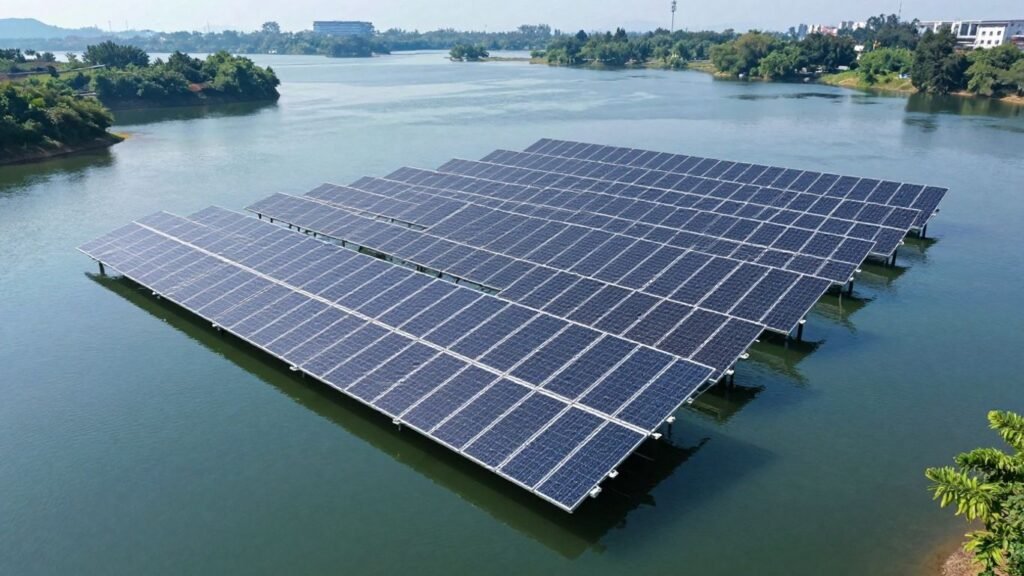
- Floating solar panels, also called floatovoltaics, are solar arrays placed on a buoyant structure that sits on top of water bodies like lakes or reservoirs.
- These panels can generate more electricity than ground-mounted ones because the water helps keep them cool, and they often don’t take up valuable land space.
- While the initial cost for floating solar panels is typically higher than traditional systems, they can be more cost-effective over time due to better energy output and lower maintenance needs.
- The installation process involves specialized equipment for floating structures and anchoring systems, requiring careful site assessment and planning.
- Benefits include using unused water surfaces, conserving land, and potentially reducing water evaporation and algae growth, making them a growing option in renewable energy.
What are Floating Solar Panels?
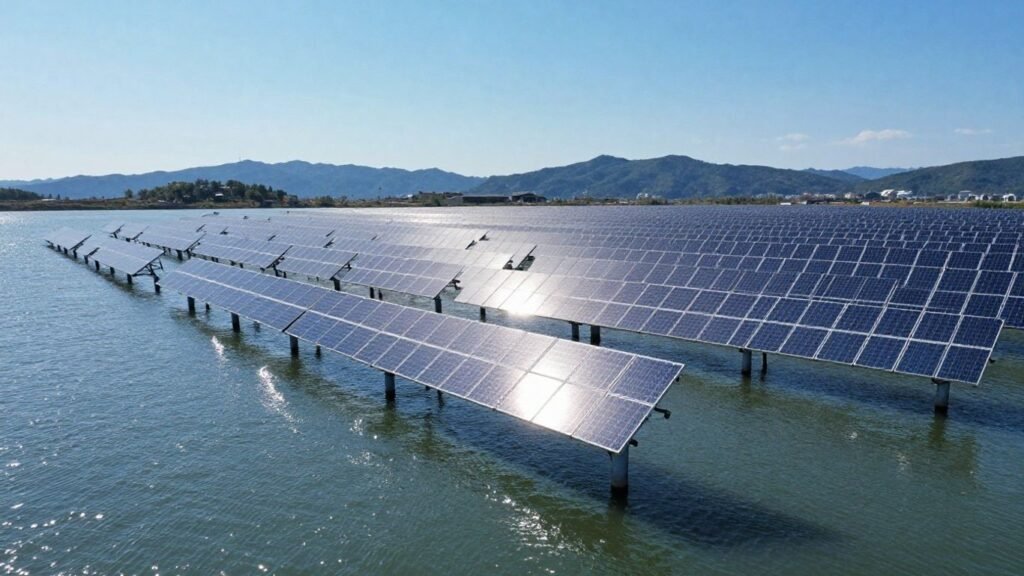
So, I’ve been looking into some different options to power the planet without trashing it, and I found something really nifty: solar panels that float. Well, it’s in the name; floating solar. Consider lakes, reservoirs or large ponds.
These are not ordinary solar panels carelessly thrown into the water, however. They perch on specially designed, floating platforms typically made out of rugged plastics such as High-Density Polyethylene (HDPE) to help them stay high and dry above a water’s surface.
It’s a bit of a neat idea, especially when you consider how much real estate solar farms can take up. Unlike urban farming, where land could be better used for growing food or housing, because we’re using water surfaces, we are not consuming land potential. And there is an unexpected benefit to having them as floaters: the water cools down the panels. Have you ever notice how your electronics tend to get sluggish when they get too hot? Solar panels not so much. They produce more electricity when they are cooler. It’s a win-win of efficiency and land use.
These systems are designed to take on life on the water, too. They are rust-resistant and designed to be bestacked into place with anchoring systems. The electricity generated is then transmitted back to shore through underwater cables. It’s still young, but it seems to be really catching on, and I’m interested to see where it goes.” It’s a neat trick to just pile on more clean energy. If you’re interested in the initial costs, you might want to check out information on solar panel installation to get a general idea.
Electricity travels to shore through underwater cables and connects to inverters similar to those explained in what is a solar inverter
The Benefits of Floating Solar Panels
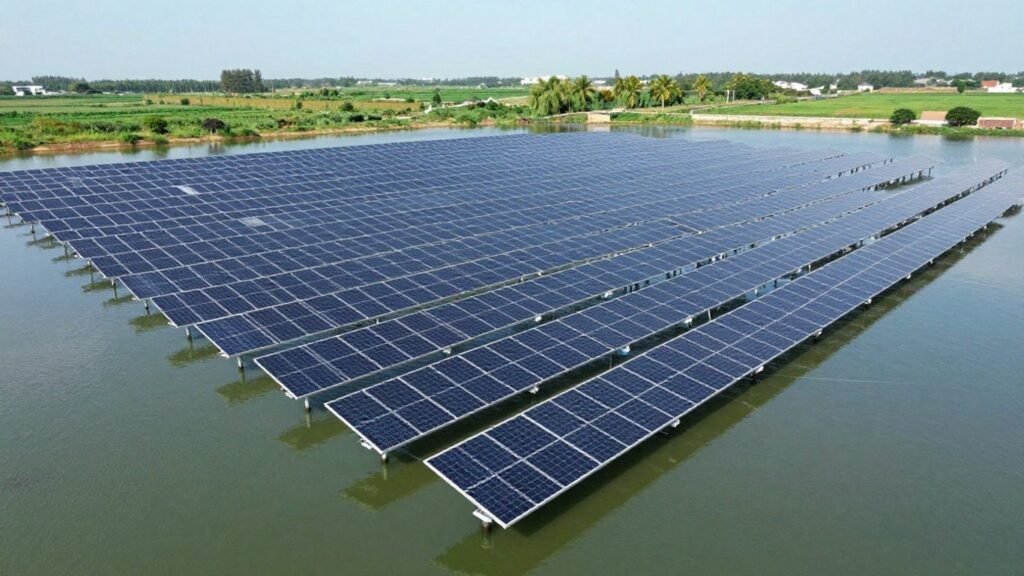
When I first started looking into solar power on water, I was really struck by how many advantages these floating PV systems offer. It’s not just about generating electricity; there are some pretty neat side effects, too.
Increased Energy Production
That solar panels actually do better when they’re cold.” Surely, the logic goes, more sun equals more power? Well, sort of, but excess heat can decrease the efficiency of panels. The water is a natural air conditioner and beneath the floating solar panels it contains less oxygen, so it prevents algae that will eventually create biofilms.”
This cooling process can increase energy output, generally from between 5% to 15%, when compared with panels on land. I have seen some data where some installations are getting over 10% efficiency benefit from just this cooling effect. That’s a substantial difference, for sure, particularly in hotter climates where land-based panels may struggle.
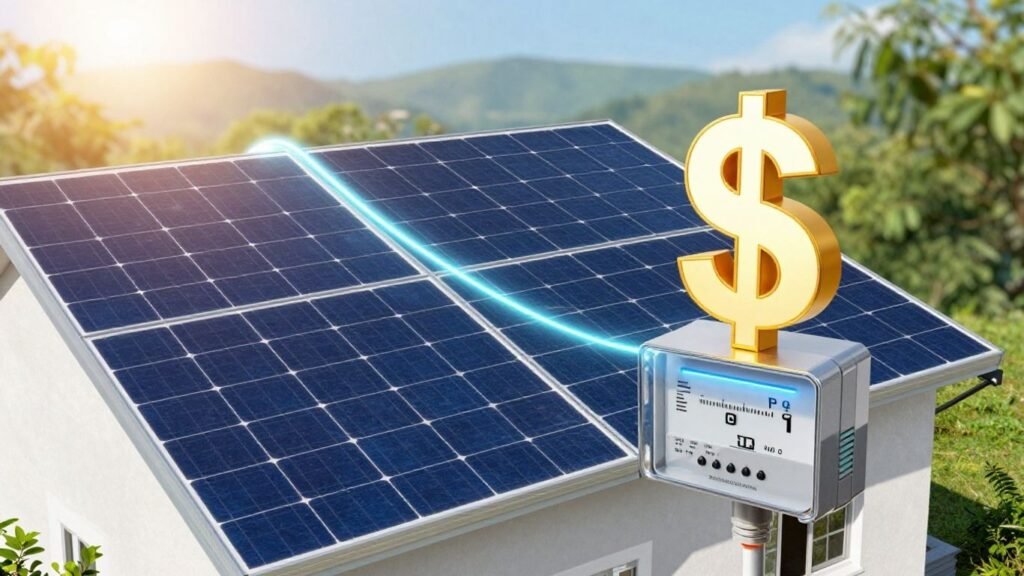
This improvement directly impacts long-term savings, which ties into topics like how solar energy can help you save on your energy bills and even how to calculate the ROI on solar panels for your business.
Land Conservation
This is a big one for me. We have so much undeveloped surface out there, our lakes and reservoirs, even some industrial ponds. And rather than consuming valuable land needed for farming or housing, we can install solar panels on these bodies of water. It’s a clever way to make existing spaces work harder.
This approach also means we don’t have to strip forests or natural habitats to make way for solar farms. This is where the benefits of aquatic solar really become apparent, enabling us to increase renewable power without encroaching on land.
This reduces pressure on agricultural land and housing development. In regions where land costs are high, like those covered in solar panel cost by state, this can make a noticeable financial difference.
Water Conservation
It may sound counterintuitive, but floating solar panels can actually help save water. The panels shade the water’s surface and reduce evaporation. In a drought-prone area, this can really add up and save millions of gallons of water each year.
Plus, by minimizing exposure of the water to direct sunlight and wind, such systems can mitigate the growth of algae as well. This is of particular importance to drinking water supply reservoirs, since it helps to keep the water cleaner and healthier.
From an environmental perspective, this aligns with discussions in the environmental impact of solar energy and supports broader clean energy goals outlined in why solar energy is the future of renewable energy
Reduced Algae Growth
On the subject of algae, this is another I found intriguing. An algae bloom can also be quite a nuisance in freshwater bodies. If it is a drinking water source, they can be harmful to human health; if it isn’t, they can cause harm to aquatic life.
The shading effect of the floating solar panels is obstructing sunlight, an essential element required for algae production. So, it’s not just the clean energy generated from these systems that we are gaining by installing them, but also a service to keep the water bodies on which they float healthy. It really is a win-win in terms of renewable energy and the health of the environment.”
The synergistic use of our limited water resources to harness solar energy while simultaneously conserving water and increasing panel efficiency through cooling, puts floating as a competitive solution for clean power capacity expansion. The benefits of water-based photovoltaic systems are gaining importance as a real tool for overcoming land shortage and energy necessities.
Here’s a quick rundown of the main benefits:
- Improved Efficiency: Water cooling leads to higher energy output.
- Land Savings: Utilizes existing water surfaces, preserving land for other uses.
- Water Conservation: Reduces evaporation from water bodies.
- Algae Control: Shading limits harmful algae blooms.
- Environmental Impact: Supports clean energy goals and reduces greenhouse gas emissions.
Understanding the Costs of Floating Solar
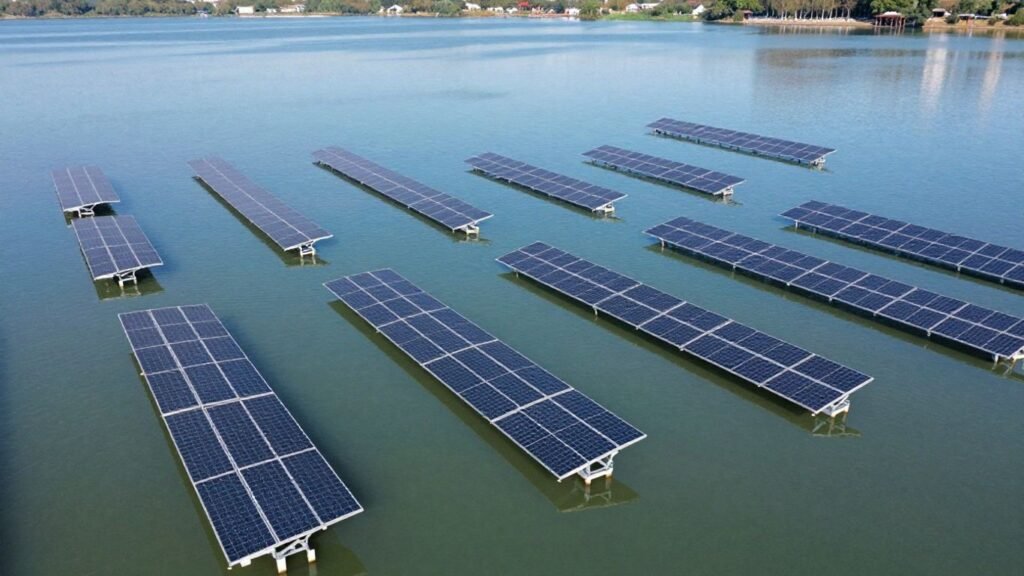
When I first started hearing about floating solar, I thought: Floating solar? That sounds incredibly frickin’ expensive, way more expensive than building panels on the ground. And honestly, there’s a grain of truth in that.
The initial cost for floating solar farms can be slightly higher, particularly if you’re talking about pontoon-based ones; we’re looking at perhaps 10-25 percent more than a traditional ground-mounted installation. This premium is the result of specialized floatation systems and anchoring required to keep everything in place on water.
Financing options remain similar to traditional systems, so reviewing understanding solar panel financing and payment options is still relevant.
Initial Investment
Certainly, upfront costs are forfloating solar farms. You’ve got the solar panels and inverters, which are a large part, Mr. Lasley said, but there’s the cost of the floatation system itself, as well as anchoring and mooring to keep the whole enterprise in place.
Electric components must also be a little bit more durable to withstand the watery environment. It’s not just the hardware, either; installation frequently needs specialized equipment and a crew with special knowledge, which all adds to the labor costs.
Here’s a rough idea of what goes into the initial price tag for a 1MW system:
| Component | Estimated Cost Range (per MW) | Percentage of Total |
|---|---|---|
| Solar Panels & Inverters | $400,000 – $500,000 | 40–45% |
| Floatation System | $150,000 – $200,000 | 15–18% |
| Anchoring & Mooring | $100,000 – $150,000 | 10–13% |
| Electrical Infrastructure | $120,000 – $180,000 | 12–16% |
| Installation & Soft Costs | $180,000 – $270,000 | 18–27% |
Putting them all together, the installed cost of a 1MW floating solar farm ranges somewhere between $950,000 and $1,300,000. It’s a big number, no question. But all this is for the cost of solar farms built on lakes and the like, where land values are cheap.
Maintenance and Operational Costs
Now, about the ongoing costs. Initial capital expenditure may be a bit higher, but the operational and maintenance (O&M) cost for floating solar can actually be pretty competitive if not lower than ground-mounted systems in the long term.
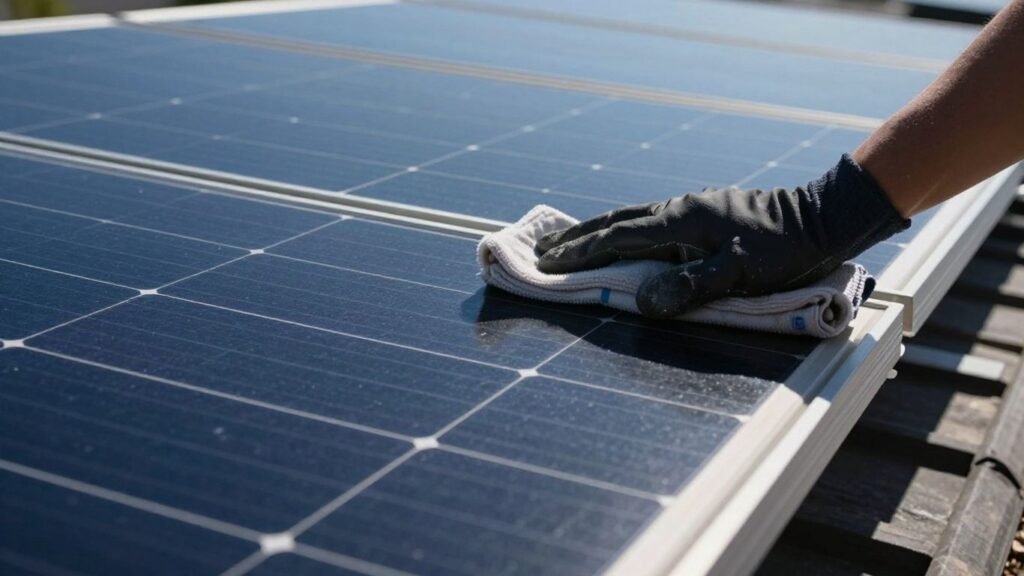
The water also keeps the panels cool, which allows them to produce more electricity. And less dust and dirt can settle on these panels in a water environment, meaning they will require cleaning less often.
However, there are still costs involved:
- Annual Inspections: Regular checks on floatation, anchoring, and electrical connections are a must.
- Replace Components: Of course, as with any system, some components may need to be replaced/added at some point in its life-cycle.
- Insurance: It’s important to protect your investment on the water.
- Decommissioning: The system needs to be disposed of at the end of its life, which has associated costs with it, and they usually run $20k to $50k for a 1MW plant.
Long-term, though, the economics for floating solar are really looking pretty good, even if you have to pay more up front. With higher energy production and no requirement to purchase or lease land, the levelized cost of energy (LCOE) can be particularly appealing. The equipment has also been improving and getting less expensive as more of these projects get built, bringing down the costs of floating solar farms.
Floating Solar Panel Installation Guide
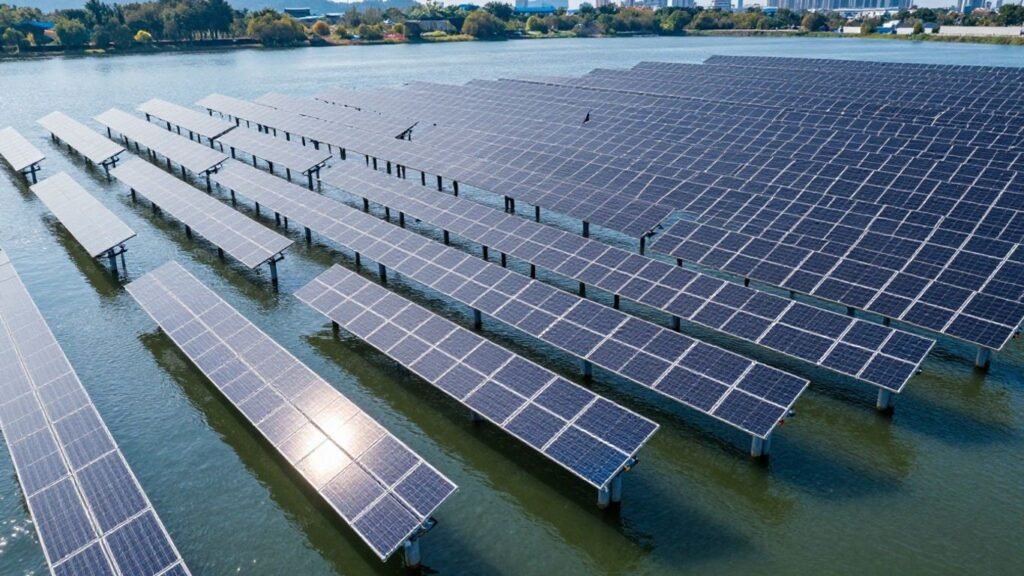
Really, the installation of solar panels on lakes or other bodies of water is much more hands-on than many folks realize. No cutting corners here, safe and effective all comes down to careful prep and good hardware from Square One. When I started to investigate, it was nearly like trying to conquer and assemble a gigantic floating puzzle, with a lot more anchors and cables thrown in for good measure. And here’s the breakdown of what goes into putting those panels out on water.
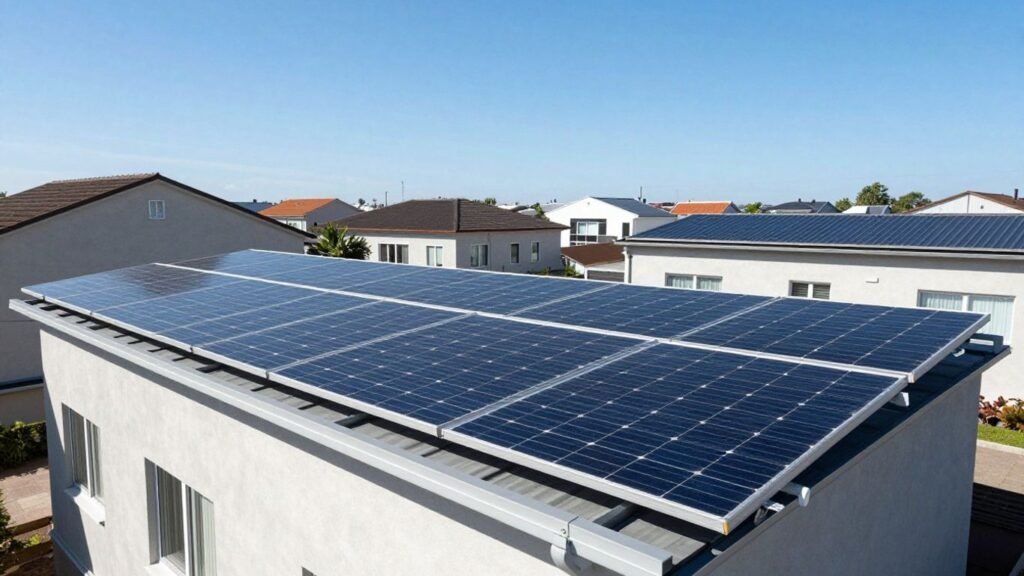
Installing panels on water requires structured planning. Many of the principles match steps to install solar panels on your roof, but water introduces extra complexity.
Site Assessment and Planning
But I like to kick things off with a battery of old-school tests. There’s a lot of homework to do before you ever even see a solar panel touch the water:
- Bathymetric survey: Determine the depth and shape of a body of water. This lays out the land to give you an idea of where floating platforms belong.
- Environmental Review: Look for wildlife, vegetation, and ecosystem; don’t want to muck up the local area when I install Solar reservoirs.
- Permit award permits for water-based solar vary from those on land. Local, state and perhaps even federal authorities will have their say.
- Water’s Heightened Status: I also consider the seasons; no one wants to wake up to find their investment high and dry (or underwater).
Proximity to Power Infrastructure: It’s a lot easier (and cheaper) if the floating solar can be relatively close to shore and transmission lines compared with cramming everything on a roof.
As I’ve discovered, the better my estimate up front, the more smoothly everything else goes. Even one miscalculation, say, ignoring a shift in depth of water, can mean starting from scratch.
System Components and Assembly
When it comes time to assemble the pieces must not only fit with each other but also with the site. Floating solar stations have several parts, and I’ve become pretty familiar with most of them:
- Supporting Frame: Generally constructed of HDPE or similar plastics to be buoyant and durable.
- Solar Panels: They use special anti-corrosive models to take the extra humidity.
- Aluminum/Steel Frames ~ The lock-down frame that keeps the panels secure to the floats, whether it’s wind or a small wave.
- Mooring and Anchoring Chains, steel cables or deadweights, or even another thousand-pound anchor, these are all indispensable for keeping the array from blowing downwind with wind, waves, and current.
- Waterproof Inverters and Wiring: All of the electrical components must be capable of working in wet environments without failure.
- Access Walks or Docks. Some installations have walks or docks at grade for viewing and maintenance.
Many technical fundamentals align with guidance in how to setup a solar panel system.
Here’s a quick table that spells out what the core parts are and their uses:
| Component | Role |
|---|---|
| Floating Platform | Keeps solar panels afloat on the water surface |
| Solar Panels | Generates DC electricity from sunlight |
| Mounting Structure | Holds panels securely in place |
| Mooring / Anchoring | Secures the array to the waterbed and prevents drifting |
| Inverters | Converts DC electricity into usable AC power |
| Underwater Cables | Transmits power safely to the onshore grid |
Assembly and Deployment Steps
- Create floating frames and platforms in advance on land.
- Connect solar panels and test.
- Getting floating sections down in water (crane or small boats)?
- Anchor platforms securely.
- Wire the system to the grid using insulated wires.
- Run initial tests and calibrations.
The real lesson I learned when deploying solar on lakes is that working together and being patient matters as much as the engineering. “A good site assessment, good hardware, and proper assembly make sure that the floating solar gives constant, clean power for decades,” S.P. Gon Choudhury, vice chairman of the CEEW Centre for Energy Finance, told me in an email about a study he conducted on floating solar power in India.
Wrapping Up: My Thoughts on Floating Solar
So I did some digging on floating solar panels, and here’s what I found: I’m impressed. They look like a really clever way to add additional clean energy without burning up already-scarce land. Although the up-front price may be a bit higher, they function better in the heat and require less fiddling with over all.
And they can even help save water, not to mention cut down on algae, a pretty sweet bonus. It seems like this technology is really taking off, particularly in places with not a lot of open space. We will be seeing a lot more of these on lakes and reservoirs in the near future, I suspect.
If you’re still comparing options, reviewing pros and cons of solar energy and is solar energy worth it for your home gives helpful context before making decisions.
Frequently Asked Questions
What exactly are floating solar panels?
Basically, I regard these as normal solar panels, yet instead of being placed on somebody’s roof or the earth, they float on a special structure that floats on water, like a lake or reservoir. They generate clean electricity, like that you see on houses and buildings, but they cover water surfaces that might not be used for anything else.
Are floating solar panels better than regular ones?
They have some cool advantages! The one that I most frequently think of is that they don’t consume valuable land space. And the water also helps cool them, which can actually help them produce more electricity, especially when it’s hot. But they can be pricier in the beginning to set up and require special care because they are out on the water.
How much do floating solar panels cost compared to regular ones?
The upfront cost of deploying floating panels is more expensive than ground-mounted ones, perhaps 10-20% extra to install. This is due to the special floating parts and how they have to be installed. But since they generate more power and may require less maintenance over time, the total cost to get electricity from them can be pretty much the same in the long run or even lower.
Can floating solar panels handle bad weather like storms?
Yes, they’re meant to be tough, yes! The floaters, constructed to be stable, are moored securely to the bottom of the water body. This enables them to stay put even in strong winds or waves. It’s just important to keep it checked and make sure everything is staying strong.
Do floating solar panels cause any harm to the environment or water?
It’s something that I have to factor in. If not carefully installed, they may change the water temperature or quality. That’s why it can be so important to carry out studies ahead of time, in order to make sure the design is good and won’t harm the plants or animals living in the water. On the positive, they can also help to reduce evaporation from the water and prevent algae from growing out of control.
How much more electricity do floating solar panels generate?
I have seen studies that suggest they produce something like 5-15 percent more electricity than regular panels on the ground. It’s in no small part due to the cooling from the water below, which helps the panels to operate more effectively, particularly in hot weather. Besides, the water can help rinse away dust, meaning that the panels will stay cleaner.