Maintaining solar panel efficiency ensures a consistent energy supply for your home. However, these systems can be affected by a build-up of snow, dust, and other debris. Frequent cleaning should be a key part of any solar panel maintenance routine.
Whether you’re the owner of a solar panel system or are considering making the investment, we’ll explain how solar panel cleaning works. Read on to discover how to maintain a reliable renewable energy system.
Why is Solar Panel Cleaning Necessary?
How do solar powered systems work for your home? PV cells capture the sunlight and generate direct current (DC) electricity.
The DC is then turned into a 230V alternating current (AC)and exported to your home. Blocked-panel PV cells, though, can’t soak up this sunlight and will deliver less power. Common blockages include:
- Dust build-up
- Fallen leaves
- Soot
- Sand
- Bird droppings
- Ice
- Snow
By sweeping this debris aside, solar panels keep working up to their highest potential. Avoiding staining or corrosion increases the lifespan of the solar system with regular cleaning. This also makes the solar panel warranty enforceable.
When Should I Clean Solar Panels?
Most solar panels start to accumulate filth and grime after 6 months. But a number of things can influence how often you should clean your home.
For optimal solar panel cleaning, here are a few environmental factors to consider:
Geographic Location
The wettest states in the US are Louisiana, Mississippi, Alabama and Florida. Rain naturally cleans solar panels.
By comparison, those who live in drier states may find themselves having to clean their solar panels more frequently of dust and debris.
Location of the Panels
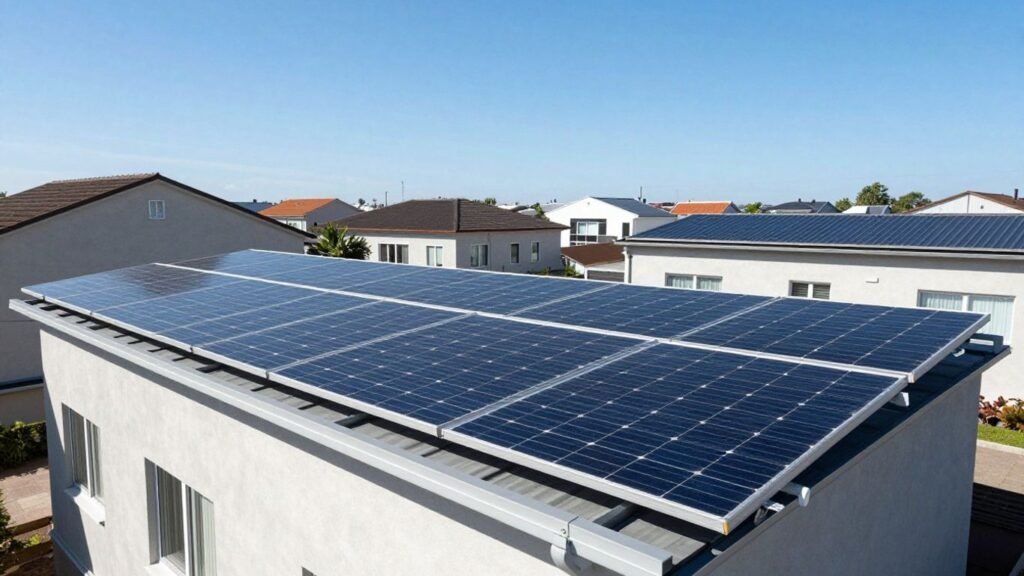
Solar panels are installed on the rooftops/carports/canopies without any blocking of sunlight. But if you have a yard that is adjacent or nearby your home, leaves and pollen, as well as twigs from trees and other vegetation, can start to accumulate on top of them.
And for residents near construction or industrial sites, the rain may not be sufficient to wash dust away. Lowpitch roofs take frequent cleaning as well.
How to Clean Solar Panels
Our Schedule of Solar Panel Cleaning is user-friendly. But there are a few safety points you’ll want to keep in mind as you get started.
Hari recommends a sturdy ladder to anybody with a rooftop system. Make sure you have someone on the ground holding it in place as well. The easiest way to do this is to wear rubber-soled, non-slip shoes, which will help you to grip, as well as important safety equipment such as a harness.
Make sure to consult the manufacturer’s instructions before cleaning solar panels: Not all brands are created equal and some need a bit more care than others. (If you’re unsure about safely performing the following manual cleaning, invest in professional cleanup services.):
1. Collect All Tools and Cleaning Materials
Before you begin to climb onto your roof, make sure all of the materials and tools that you will use for solar panel cleaning are nearby. This should include:
- An extension ladder
- Garden hose
- Soft brush
- Handheld sprayer
- Extension pole with squeegee
- Rubber-soled shoes
- Safety harness
- Gloves
- Cleaning solution
The ladder is anchored and held firmly at the bottom, making sure that it’s nice and close to the roof, and also checking to make sure the rungs are not wet or slick.
2. Get Rid of Loose Debris
Turn the solar panels off to roof height before climb. Afterward, spray the panels with the garden hose with a sprayer attachment to remove dirt, dust, or leaves.
Avoid hot or high-pressure water, as it can crack solar panels.
3. Use a Cleaning Solution
Combine eight parts water, one part vinegar, and a bit of non-abrasive soap. Or you can use a mild store-bought window cleaner.
Do not use harsh cleaning products or abrasive scouring pads. Those corrosive chemicals can also be lethal to wildlife in the area.
Use the handheld sprayer to clean your solar panels, starting with just one small section of a panel—apply product at a thin layer. This gives the solution a few minutes to break down any grime, without letting it dry.
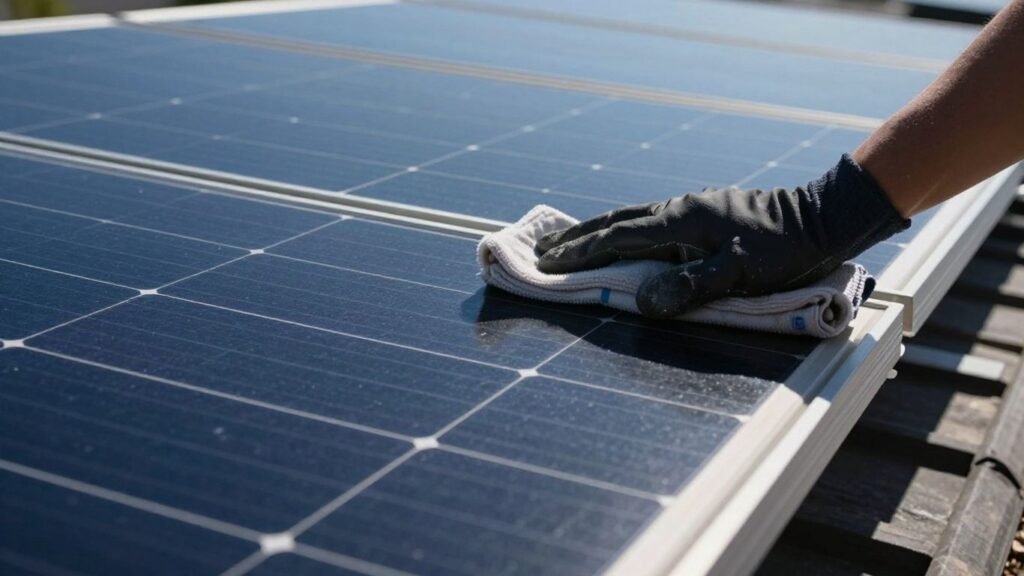
Then clean this one up with a soft brush or extension pole and squeegee if you’re a little short to reach there. Repeat this process to wash solar panels throughout the array.
4. Rinse the Solar Panels
Finally, rinse off the solar panels using the garden hose. Use the squeegee to remove any excess water. Wipe additional water droplets with a using a lint-free, soft cloth to prevent scratches.
Once dry, you can then turn the solar panels back on.
Switch to Solar Power Today with Living With Solar
Whether you’re interested in installing solar panels or are hoping to boost the efficiency of your existing system, trust Living With Solar to make the transition to efficient solar energy simple.
At Living With Solar, we’re committed to helping you maximize your lifetime savings, providing better control over your monthly budgets, and increasing equity in your home with reliable residential solar panel installation. Our experts can connect you with leading solar installation companies, helping you to navigate the decision quickly and with ease.
Call us or contact the team online for more information on solar panel maintenance and installation.