I’ve been doing some research on solar power recently, and one type of panel makes frequent appearances: monocrystalline solar panels. They’re meant to be ultra-efficiency and to save you money in the long term.
So I decided to get into them and learn everything I could about them. This guide contains virtually everything I learned, from how they are made to how they compare to other forms of solar panels. I will paint a vivid picture of what monocrystalline solar panels are so you can determine if they’re right for your home.
Key Takeaways
- Efficiency: Monocrystalline solar panels are sourced from a single, pure silicon crystal, which makes it efficient in converting sunlight to electricity.
- The process for the fabrication of these monocrystalline solar panels is a meticulous, multi-stage one, which includes the growth of a large silicon ingot and then the cutting of it into very thin wafers.
- Overall, monocrystalline solar panels tend to be more efficient than other types, having higher efficiency rates, so they require less space or less panels to generate the same amount of energy.
- Although monocrystalline solar panels may come with a higher price tag upfront, you might be able to save more money in the long run due to their lifespan and superior performance.
- When you stack monocrystalline solar panels up against polycrystalline or thin-film varieties, you’ll notice that they tend to beat out the competition in terms of efficiency and durability (though other types might be cheaper or more flexible).
What Are Monocrystalline Solar Panels?
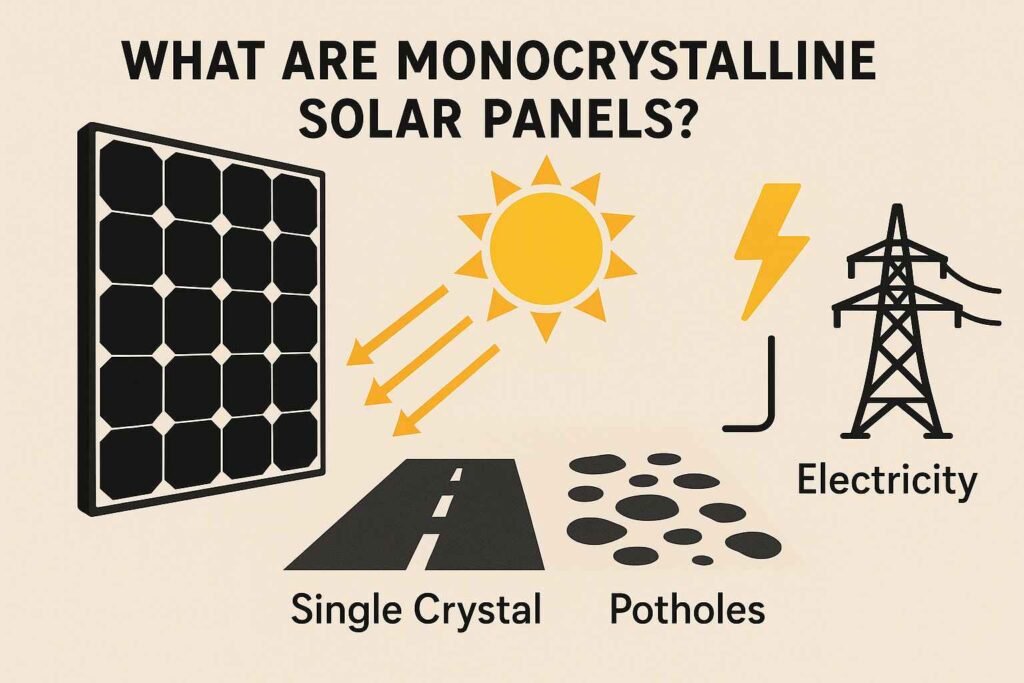
Fine, then let’s have a chat about monocrystalline solar panels. When I first heard of these guys, with all the technical jargon, I admit to being befuddled. In essence, they are a variety of solar panels made out of a single, uninterrupted crystal of silicon. This single-crystal structure is what allows them to be so efficient.
Consider the comparison in this way: A super-smooth highway versus one full of a lot of potholes. Electrons generate electricity, and on that smoothly rolling, single-crystal “highway” of a monocrystalline panel, the traffic can flow far more freely. That explains why they are better at converting sunlight into electricity. They also seem to have a rather fancy, black appearance, one which (as one man) I find more attractive than a couple of the other types. These are a great choice if you are in the market for high-quality solar panels.
How Monocrystalline Solar Panels Are Manufactured
Alright, so you want to know how those sexy black monocrystalline panels are born? It is a pretty fascinating process, and it’s why they are so efficient. Ultimately, it’s all about making one big silicon crystal.
There are several methods, but the Czochralski process is the usual one.
Super-ultra-pure silicon is melted into a crucible. Then, a seed crystal is dipped into the pool of molten silicon and pulled slowly upward as it is rotated. As it is drawn, the molten silicon cools around the seed to form a large, solid cylinder of single-crystal silicon.
That ingot is then cut into thin wafers that are the solar cells. Because the silicon forms a single crystal, electrons can move more easily, which is why these things get so hot. It’s more involved and expensive than manufacturing polycrystalline panels, but the performance increase is worth it, in my opinion. Want to learn how all this ties into the panel function? Check out how solar power works for a great explanation.
How Efficient Are Monocrystalline Solar Panels
If I’m thinking about solar panels, efficiency is massive. Because I want to extract as much power as I can out of the space I have to work with. Monocrystalline panels are considered to have the highest efficiency of other types of solar panels. This enables them to convert a greater proportion of sunlight into electricity.
Noticed a drop in solar performance or weird panel issues? Check out our step-by-step guide on how to troubleshoot common solar panel problems and keep your system running smoothly.
I usually come across monocrystalline panels from around 17% to above 22%. Some of the newest and best panel technology can even edge closer to 24 percent. That’s pretty impressive! This greater efficiency is one reason they are frequently the best choice for such residential installations, particularly in cases where roof space is limited. Learn more about maximizing your system’s output in how to maximize the efficiency of your home’s solar system.
I want to make sure I’m getting the most for my money, and a higher efficiency is always a good start. It should be mentioned that the higher efficiency solar panels can pay for the higher cost.
Solar Panel Efficiency Comparison
| Panel Type | Typical Efficiency Range |
|---|---|
| Monocrystalline | 17% – 24% |
| Polycrystalline | 15% – 17% |
| Thin-Film | 10% – 13% |
As you can also see, monocrystalline tends to perform the best out of all the types based on efficiency. This is because the single-crystal structure of silicon gives electrons more room to move, so the sunlight is converted more efficiently. When I’m weighing decisions, I always remember this difference in efficiency.
Pros and Cons of Monocrystalline Solar Panels?
As I balance the options for solar panels, I weigh the pros and cons. There are certainly some great benefits to monocrystalline panels, but you should also understand a few of the drawbacks. Let’s break it down.
Pros
Perhaps the best aspect of it, as I see it, is their efficiency. Monocrystalline panels tend to be more efficient, resulting in higher efficiency rates, as high as 20% or even more. As a result, I can produce more power with less space if roof space is at a premium. And they look prettier too, with their sexy flat black panel finish (so much cooler than that blueish polycrystalline panel color, I reckon).
Pros of Monocrystalline Panels
- High Efficiency (17–24%). Converts more sunlight into electricity than other types.
- Needs less roof space for the same power output.
- Works better on cloudy days or in partial shade than some other panels.
- Often lasts 25+ years, with strong warranties.
- Uniform black color looks modern and blends well on roofs.
Plus, they tend to last longer, so you don’t have to fret as much about replacements in the future. I also like that they do better in low light than some other types of panels. This can be the difference, especially on cloudy days or in places with less direct sunlight. Monocrystalline panels are a good option for a lot of homeowners. Learn how solar performs in all seasons in do solar panels work in winter?.
Cons
It’s not all sunshine and roses, of course. The all-out major con for me is the price. Monocrystalline panels typically have a higher initial cost than polycrystalline options. It’s because it is more complicated to manufacture! Then you have a consideration of time versus benefit, which over the long run could be more in your favor, but still a massive factor.
Cons of Monocrystalline Panels
- More expensive upfront than polycrystalline or thin-film panels.
- Production process wastes more silicon than polycrystalline panels.
- Like all silicon panels, loses some efficiency in high temperatures—but monocrystalline panels handle heat slightly better than poly panels.
Matt Ferrell has pointed out that, because monocrystalline panels are made from a single crystal, blocking a part of the panel or causing damage to it can significantly impact its output more so than with other types. So, they’re durable, but a little more prone to the problems of shading. I need to take into account the cost of the solar panels when I decide. Curious about solar’s overall value? Check out is solar energy worth it for your home?.
How Much Do Monocrystalline Solar Panels Cost?
Okay, let’s talk money. Calculating the price of monocrystalline solar panels can be confusing, so let me simplify it for you. The upfront cost is certainly something to think about, but don’t forget about the long-term savings and other advantages.
In general, you’ll see that monocrystalline panels are pricier upfront than some of the other types, like polycrystalline. This is primarily due to the manufacturing process, which is more complex, and the silicon is of higher purity. But this premium paid upfront more than makes up for itself over time, as they are incredibly efficient and last much longer.
Curious how much it really costs to go solar? Explore our detailed guide on the cost of installing solar panels and learn what impacts pricing, savings, and ROI.
As far as I can tell, homeowners can expect to pay in the range of $1 — $1.50 per watt for monocrystalline panels before they even think about installation. So with the average power system in Australia being, say, 6kW, you’re probably looking at $6,000 – $9,000 for the panels and inverter before rebates and Renewable Energy Certificates (RECs) are factored in; however, solar panel pricing can vary.
It’s also good to remember that SunPower, LG, REC, and Q CELLS are among the major monocrystalline panel names. Prices can vary from brand to brand, so a little digging can pay off.
Monocrystalline vs. Polycrystalline Solar Panels
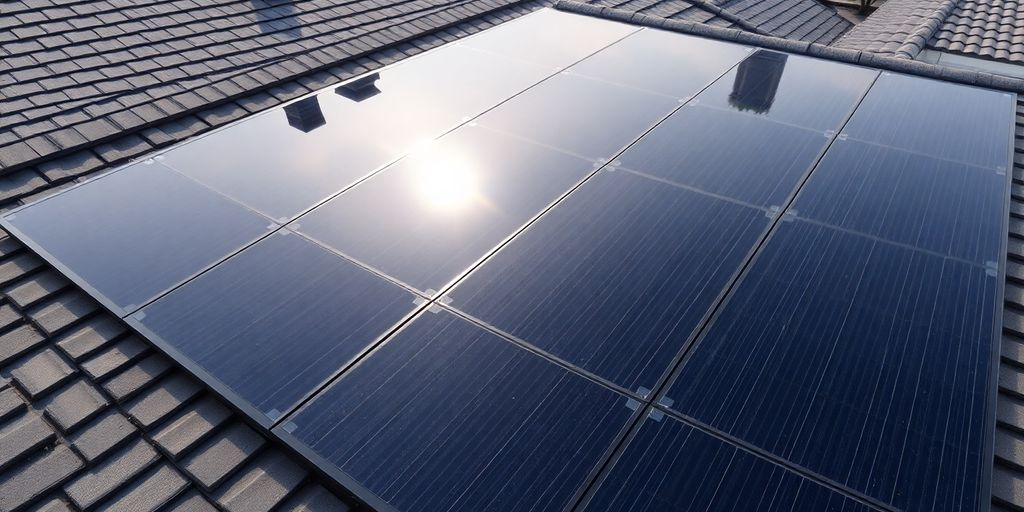
Alright, so you’re wondering what kind of solar panel is the best fit for you. So, what exactly is the difference between monocrystalline and polycrystalline panels? Both are produced from silicon, but the way each is made and the way they perform are very different. I’ll attempt to explain it in such a manner that is accessible.
Monocrystalline panels are manufactured from a single silicon crystal, whereas polycrystalline panels are molded from different silicon fragments melted together. This disparity in production will not only change how they work but also how they look, how well they work, and how they are priced. Monocrystalline panels are generally more efficient, but they also typically are more expensive at the outset. Polycrystalline panels are usually less expensive, but they tend to be slightly less efficient. It’s a trade-off.
Not sure whether monocrystalline or polycrystalline panels are right for your home? Check out our detailed comparison of polycrystalline vs. monocrystalline solar panels to learn about costs, efficiency, and performance differences.
And, I think also one of the things to think about is your budget and how much space you have. If space is a concern or you want a high level of power production, monocrystalline might be the best option. But if you’re pinching pennies and have the real estate, polycrystalline might work. Here are some of the major contrasts.
Monocrystalline
- Silicon TypeSingle crystal
- EfficiencyHigher (typically 15-22%)
- AppearanceUniform black
- CostHigher
- ManufacturingMore complex and expensive
- Space EfficiencyBetter (more power per square foot)
Polycrystalline
- Silicon TypeMultiple silicon fragments melted together
- EfficiencySlightly lower (typically 15-20%)
- AppearanceBlue – somewhat speckled looking.
- CostLower
- ManufacturingSimpler and less expensive
- Space EfficiencyInefficient (needs more space for same power)
In the end, it really comes down to what you require and what’s most important to you. Polycrystalline may be the right option if budget is a consideration. For maximum performance that will last a long time in limited space, however, monocrystalline panels tend to provide a better ROI.
Monocrystalline vs. Thin-Film Solar Panels
So with that in mind, how does a monocrystalline panel compare to a thin film? I believe it’s a fairly crucial comparison if you’re attempting to determine which is better for your situation. The difference, at its core, comes down to a few main things: efficiency, flexibility, and cost.
Thin-film panels are attractive because they are light and can flex. That makes them useful for some industrial and commercial applications that aren’t conducive to traditional panels. But, and let’s be clear, they aren’t very efficient. We’re in the range of 10-13% efficiency, meaning you need way more space to produce the same amount of power as other kinds. And they just don’t seem to last as long, which isn’t ideal for residential settings. You may want to use solar energy for your home.
On the other hand, monocrystalline panels are the reigning champs in terms of performance and durability. They also look a bit prettier, in my opinion, which is why they’re the standard for homes and small businesses. They’re just more reliable overall.
Here’s a quick rundown:
Monocrystalline
- EfficiencyHigher
- FlexibilityLow
- LifespanLonger
- Space NeededLess
- Typical Use CasesResidential, Commercial
Thin-Film
- EfficiencyLower
- FlexibilityHigh
- LifespanShorter
- Space NeededMore
- Typical Use CasesSpecialized Applications
So, thin-film has its place, but monocrystalline usually takes the cake for most people searching for a good, long-term solar panel dimensions option.
Frequently Asked Questions
What are the unique features of monocrystalline solar panels?
Monocrystalline solar panels are very efficient in turning sunlight into electricity. They’re carved out of a single, pure silicon crystal, and that makes them efficient. You might compare them to the Lamborghini of solar power.
What is the difference between monocrystalline panels and polycrystalline panels?
The difference is primarily in how they are made and work. Monocrystalline panels are made from a single, pure silicon crystal, which means they are more efficient and have a nice, black look. Polycrystalline panels consist of lots of little bits of silicon melted together, so they’re somewhat less efficient and look a good deal bluer. Monocrystalline panels are typically the ideal option if you have limited space and want more power.
Which is cheaper, a monocrystalline or a polycrystalline solar panel?
Yes, they tend to be more expensive upfront. This is because the process of manufacturing them is more involved, and they are composed of higher-quality materials. But because they are so efficient and last so long, they might save you more money over the years by creating more electricity than they cost.
Do these work well in various types of weather?
Absolutely! Monocrystalline panels, for instance, tend to perform well even when it isn’t blazing sunny, such as on cloudy days or during the early morning and late evening. They’re tailored to grab as much light as they can.
What is the lifespan of monocrystalline solar panels?
Many monocrystalline panels are doled out with a supreme warranty, backed of which lasts for 25 years at the very least. That means they are assembled to last and to keep generating power for a long time. It is a worthwhile investment for your home.
Are Monocrystalline Panels Good for Home Use?
And they’re great for homes as well, because they’re efficient. That translates to a lot of power for a smaller number of panels, which is good news if your roof isn’t massive. And homeowners often prefer their sleek look.