I’ve been doing a bit of research on renewable energy recently, and the whole solar power vs wind power thing keeps coming up. It’s a big decision, for your home or business, and frankly, it’s not as straightforward as picking the “greenest” one.
Each has its upsides and downsides, and what’s right for one person might be a complete miss for the next. I wanted to break it down the things I’ve learned about solar power vs wind power to help cut through the noise.
Key Takeaways
- For premises like most homes, especially in urban and suburban areas, solar power almost always makes more sense. Solar panels can be placed on roofs and do not require the large amounts of open space that wind turbines need, and are generally less noisy and require less maintenance.
- Wind power can be very effective, especially in large operations or remote areas with constant strong winds. Wind turbines produce power around the clock, unlike solar panels.
- Wind may occasionally be more productive and generate more energy than solar, particularly from larger turbines. That said, solar provides a more consistent energy output built on weather data.
- Both solar and wind are much better for the environment than fossil fuels, but they do affect the environment differently. Wind turbines can be disruptive to wildlife and create noise, while big solar farms may use up a lot of land.
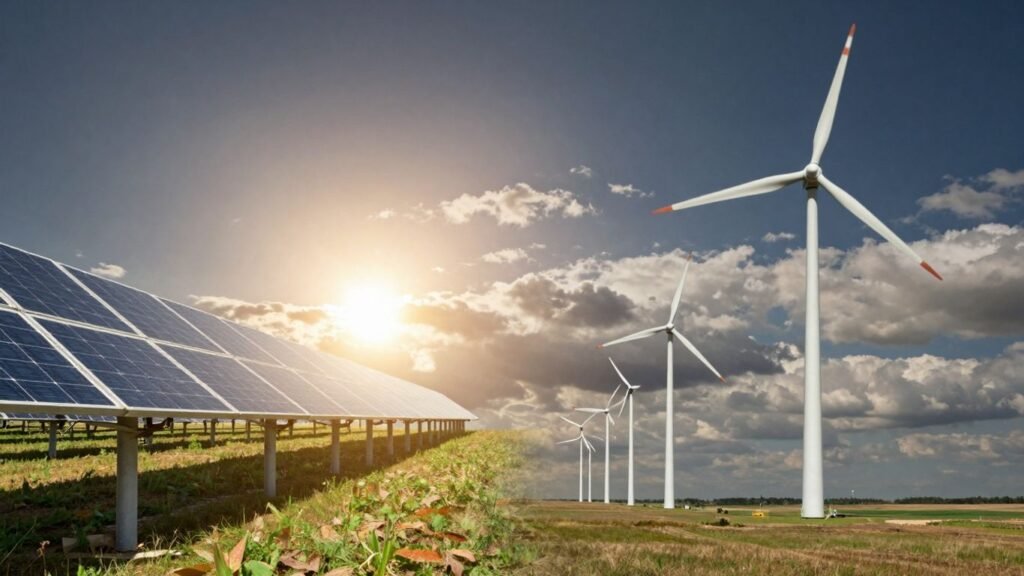
- So solar power vs wind power— which is really the better option? A sunny place may be better suited to solar, for example, and a consistently windy one to wind power.
Understanding Solar Power
When I first became familiar with renewable energy, solar power was something that really caught my attention. Essentially, it’s about taking the sun and turning it into electricity. I’m talking about those shiny panels you see on rooftops or in large fields; those are the stars of this story. They are composed of photovoltaic (PV) cells that absorb sunlight and directly convert it into electricity.
This electricity, though, starts off as quite a bit more than a trickle of direct current (DC), and a little box known as an inverter turns it into the alternating current (AC), that we all use to power our homes and appliances.
Some of the biggest selling points, and something I thought was very cool, were the solar energy benefits. For one thing, it’s a renewable resource. Let us not forget, the sun is not going anywhere, at least in the foreseeable future, a comfort from our perennial anxiety about running out of fossil fuels. And once installed, panels produce power without pumping out greenhouse gases.
As far as carbon goes, the footprint is limited mostly to the manufacture and transportation of the panels themselves. And in all honesty, the notion of producing my own power is fairly rad.
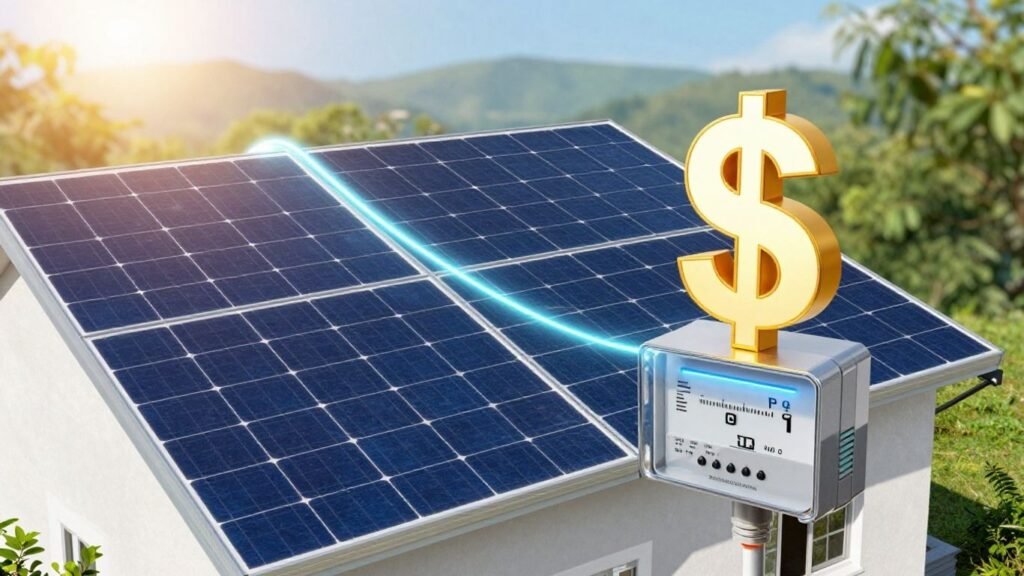
And now, the practical. The price of installing solar has dropped significantly in recent years, making it considerably more accessible than in the earlier days. There are even options, such as leases or power purchase agreements, among some of the installers Spotlight contacted, if making a purchase outright is too expensive up front. Maintenance is usually pretty minimal as well.
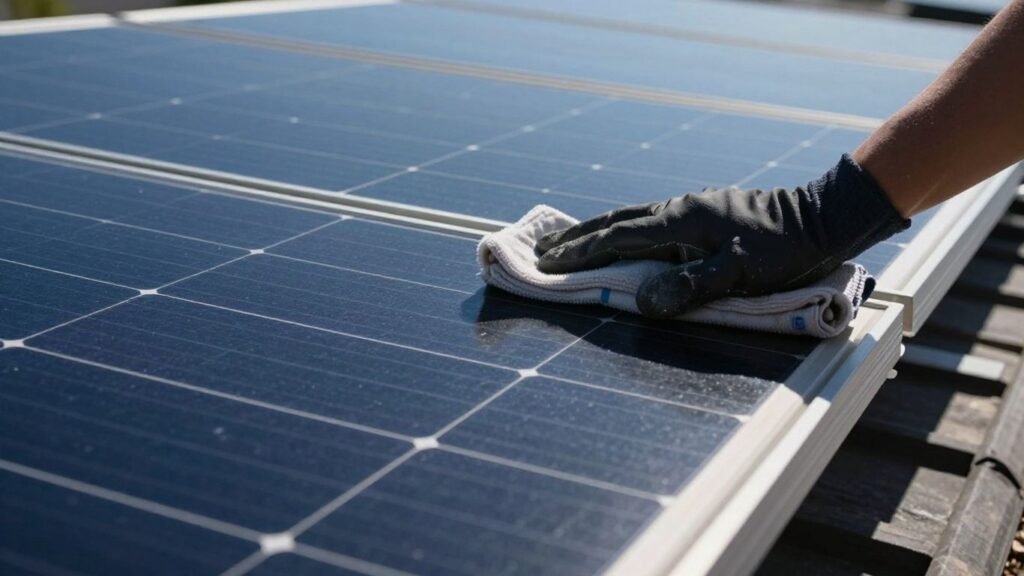
They don’t have as many moving parts, and they don’t break down the way mechanical things do. For most systems, it’s merely a matter of having them cleaned and checked every now and then. They’re designed to last, usually 20 to 30 years, which is a good investment.
And of course, well, it’s not all sunshine and rainbows. Since solar panels require sunlight to operate, cloudy days equate to less power. They also require space, either on your roof or the ground. And though they endure for such a long time, they do become slightly less efficient as the years go by, albeit slowly in most cases. That’s something to be aware of for long-term planning.
How Solar Panels Work
So how on earth do these things turn sunlight into electricity? It has everything to do with a phenomenon known as the photovoltaic effect. At its heart, when sunlight shines on the photovoltaic panels that sit on your roof, it causes electrons to buzz around within the silicon cells.
These electrons now begin to circulate, generating a direct electrical current (DC) of electricity. Think of it as a small, controlled electrical storm erupting within each cell.
Pros of Solar Power
Pound for pound the best pro is that solar power is clean. They don’t pump out any greenhouse gases while they work; once the panels are manufactured and installed. And the sun is a limitless supply of energy, so it’s renewable. And I appreciate the fact that they don’t have moving parts, so there’s less to break and not much in the way of maintenance.
You don’t hear them clattering away, either, like those giant wind turbines. And the price has dropped a lot, so it’s more affordable to people like me. You can even have them installed on your roof; that way, they won’t take up additional yard space (of which you may not have much).
Cons of Solar Power
Of course, the obvious problem is that solar panels require sunlight. You won’t get much or any if it’s cloudy, raining or at night. That leaves you often needing a battery backup or additional power source in those moments. They also occupy space, whether on your roof or across the ground if you have the land. And though they last a long time, their solar panel efficiency does decrease a little bit each year.
It’s not enough that you’d likely never notice it, less than 1 percent a year on average, in fact, but it’s something to keep in mind when it comes to long-term planning. And the up-front purchase and installation cost can be high, though there are financing options.
Understanding Wind Power
Wind power is one of the first things I think of when I consider the subject b, renewable energy. It’s pretty awesome that we’re able to harness the force of wind and convert it into electricity. In basic terms, a wind generator (wind turbine) uses blades that are attached to a rotor, which in turn is connected to the main shaft.
This rotation, among other things, is able to be transmitted over an internal transmission mechanism which produces mechanical energy as a result of wind energy. Next, a generator captures that mechanical energy and converts it into the electric power we need.
Wind has become a big deal, as well it should. It’s a clean way to get power, and the technology has advanced by leaps and bounds. In the United States, wind turbines generated a record amount of electricity in 2023; enough to power millions of homes. You notice these big wind farms all over the place now, and they’re not just a sight on land; some of them are popping up miles from shore.
Wind turbines are flexible, and that is one of the things that makes them so cool. You can put them in a lot of different places, whether that’s out in the hinterlands or offshore. They are thus a viable candidate for large-scale power production. While the idea of some giant turbine in your backyard is common, you can also get smaller ones, similar to how different-sized solar panels are on the market.
The larger the turbine, generally speaking, the more power it can generate. It’s a really interesting technology that is already transforming how we’re thinking about energy.
How Wind Turbines Generate Electricity
So just how does that work, and what is it about these giant pinwheels that allows them to turn wind into the electricity that powers my home? It’s really nifty when you think it out. At its most basic level, a wind turbine creates electricity by using the power wheel physics formula and it is all focused around one thing: the wind, of course.
It’s the big blades you see that are the main players here. The wind, when it’s blowing, presses against these blades and makes them turn. It is rather like a vast windmill, but with a greater role to play.
Pros of Wind Power
It’s the spinning that starts the magic. The blades turn on a shaft that passes through to a generator. The generator is the heavy lifter here: It’s what converts that mechanical energy from the spinning shaft into electrical energy. It’s a fairly efficient process, and modern wind turbines have gotten much better at it than older models.
I read that newer turbines can generate a lot more power than ones from just a few decades ago. What’s more, unlike solar panels, which require sunshine, wind turbines can generate power day or night as long as the wind is blowing. That makes it a super stable source of renewable energy, particularly in naturally windy areas.
They can also be sited somewhere you may not want solar panels, on farmland where they do not displace too much space used for crops. And the best part? No pollution. It’s simply clean energy that comes right from the air.
Cons of Wind Power
Now, it’s not all perfect. The biggest roadblock, for me and seemingly most of us, is where you can even put these things. Wind turbines require steady, strong winds to be of much use. To be sure, if I were living in an insulated valley or a place with lots of tall buildings, it probably wouldn’t be worth the investment.
They must be in open areas, often up high or by the coast. Then there’s the noise. Those whirling blades can make a certain whooshing sound, which could be annoying to neighbors or wildlife.
On the subject of wildlife, birds and bats can occasionally fly into the blades of wind turbines, a legitimate concern. And even though they don’t rely on fuel, the turbines themselves incorporate moving parts, so they require maintenance regularly. This can contribute to cost and aggravation over time. The upfront cost can also be pretty steep, particularly for larger turbines.
Differences Between Solar and Wind Power
When I first began to research renewable energy, I wanted to compare solar (PV) and wind (actually, the question is simpler than that: “the sun or the wind?”). I mean, trying to pick a favorite child, basically. And, both are great but shine in different ways, and you Key to figuring out what’s best for you.
Efficiency and Output
Probably the biggest one is how much power each thing can actually create. Solar panels are wonderfully simple: You get sun, you get power. It’s a predictable thing, especially on a clear day. Wind, though, is a little more of a wild card. It can produce power in the daytime or at night, a big plus, but its output can swing wildly depending on how hard the wind is blowing.
I understand that generally wind turbines are better at converting the raw energy in both renewable resources to electricity compared with solar panels, especially when you compare how much CO2 emissions per kWh produced.
For example, it can be as little as approximately 4.64 grams of CO2/kWh for a wind turbine, or closer to 70 grams of CO2/kWh for a solar panel. Still, you can stretch solar farms over large swathes of land and install roof panels, which is a big advantage for space-strapped parts of the country.
Wind turbines, however, require certain areas with regular strong winds to be truly effective, and they can also be fairly noisy, which is not everyone’s cup of tea. For residential applications, it is usually solar that makes sense because it will be quieter and won’t require a monstrous open space as you might need for a wind turbine.
It’s also quite something that wind is itself a type of solar energy, created by the sun heating up the Earth inconsistently, which then causes differences in air pressure.
Environmental Impact and Land Use
Solar and wind are both great for reducing our dependence on fossil fuels and helping to clean up our planet. That’s the main draw, right? But they are different in their effects. As a bonus, solar panels are pretty low-profile; you can stick them on your roof or down in a field. And they are not very noisy. The most prominent issue of land use is for big solar farms, which require lots of space. Wind turbines, however, are the ones that really stick out quite literally.
They are tall and, though they can be installed in different places, from rural plots to offshore, there may be sacrifices. There’s also the noise factor, which can be an inconvenience to people and wildlife in proximity. And the whirling blades can be dangerous to birds and bats, interrupting their flight paths and migration.
So yes, both are green power, but through its elements, I’ve found that solar often has a smaller physical footprint, and when given a choice, it is more amenable to the local wildlife than wind is.
Installation Requirements: Land, Location & Weather
When I consider installing solar panels or a wind turbine, the first thing that jumps out is where to put it. It’s not a matter of simply sticking it anywhere. For solar, this taught me that you need a good location with lots of sunlight. If trees or a taller building shade my roof, or if the roof itself faces the wrong way, my solar panels are not going to perform as effectively.
I have seen some folks put them on the ground if they have room, which makes it more versatile for optimal sunlight. Solar seems like it still should be able to produce some power even on overcast days/right after a storm, but definitely drops.
Wind turbines are an entirely different matter. They actually require consistent forced winds to work effectively. This includes locations such as open plains, coastal regions, or even offshore. If I am in a valley or somewhere with a lot of trees and buildings obstructing the wind, a wind turbine likely isn’t going to be cost-effective.
I understand they also can be problematically loud, so one close to neighbors or in a town is rarely appreciated. You do want a fairly unobstructed space for them to truly work. So the location really determines which is typically going to be my most ideal option.
Solar Power vs Wind Power for Off-Grid Living
When I first began contemplating an off-grid life, it was really hard to choose between solar versus wind. Both are brilliant sources of clean energy, but there are some major differences, especially when you’re off-grid and not connected to power lines. It’s an entirely different animal than grid-tied vs off-grid configurations.
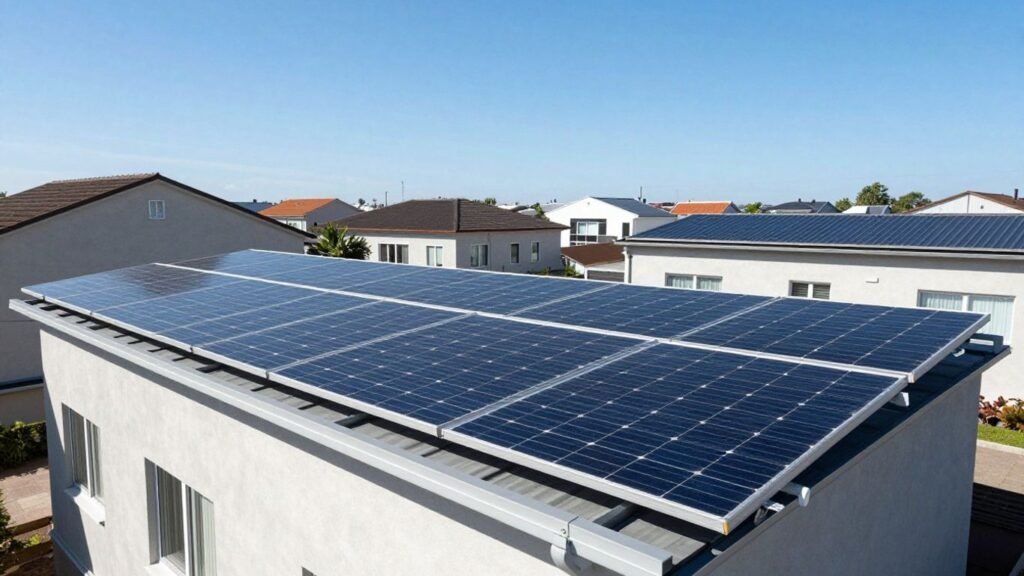
For most people considering a residential renewable system for their homes, solar panels are a more sensible choice. They’re generally less work to install on a typical house, even in suburbia. You can install them on your roof , and they make no sound. And the cost has come down quite a bit; it’s at least as good a value as you’d expect.
What I discovered is that solar panels are the cheaper alternative when it comes to renewable energy production when compared with wind turbines. They can generate a similar level of power, which makes them cost-efficient for people wanting to conserve the environment but who don’t have enough budget.
Wind turbines, on the other hand, require a particular type of location. What you need is open space and a steady wind, typically at least 12 miles per hour in strength on average. This frequently means farmland, and you will need a tall building, sometimes up to around 80 feet off the ground, to get enough wind.
They can produce power around the clock, a major advantage, given that both are intermittent sources of energy. But there’s more to maintain in a sound garden due to all of the moving parts, and local regulations or neighbors might not be enthusiastic about either the noise or the sight.
Frankly, for me, solar felt like the more realistic option. I didn’t have the best windy location and was hoping for something that was somewhat low maintenance. While the two can be combined to great effect, it is generally only practical if you own large amounts of land and have the right circumstances. For most homeowners who want to be off the grid, solar power is usually a simpler and more reliable option.
Lifespan and Durability Comparison
Monica Araya: The world’s solar energy hero lands in Costa Rica (and more)When I’m comparing solar panels to wind turbines to how long they will work, part of the first question is how durable these things are and how not… If it’s going to all explode in a few years anyhow, then what good does getting a system do you, right?
As for solar panels, the general consensus seems to be that they have had a pretty good run. Most manufacturers’ warranty is for about 20 to 25 years, and they’ll likely continue to generate power beyond that, maybe 30 or more years. They are not full of moving parts, and that’s a big thing for durability. Consider it no gears to grind or motors to falter.
The principal change that occurs over time is a gradual decline in how much electricity they can produce, which is generally referred to as degradation. This generally isn’t a very large number, perhaps less than 1% per year, but it’s worth considering for long-term planning purposes. Extreme weather can sometimes accelerate this process, but for the most part, they are built to take a few hits.
Wind turbines, on the other hand, are a bit more complicated. The large ones that you see on wind farms out there generally have a lifespan of about 20 years. They are intricate pieces of machinery with many moving parts, blades, gearboxes, and generators that must operate in concert. That complexity makes them require more frequent maintenance.
I understand those need some check-ups every six months or so to keep them humming along safely. Though they offer the possibility of generating a lot of power, that mechanical nature just offers more room for wear and tear than a static solar panel might. There are also smaller, residential-scale turbines, and their life span can depend on different things (though those same mechanical parts to maintain do still exist).
Best Places for Solar vs Wind Energy in the U.S.
When I’m trying to figure out where the best place to put solar panels as opposed to wind turbines in the United States, it ultimately just depends on the geography and what you want. For solar, you need sunshine and a lot of it. States in the Southwest, Arizona, Nevada, and California, among them, are almost tailor-made for solar power.
They receive consistent, intense sunlight 365 days a year, meaning more electricity is produced. I’ve looked at some numbers, and in sunnier states is possible to generate way more energy with solar cells than a single wind turbine ever will be able to. Plus, solar is pretty flexible. You can install panels on city and suburban rooftops or lay them out in open fields.
Generally, better solar resources are found in rural areas, where solar noise/reflectance is lower and relative humidity is low. This enables more effective energy harvesting compared with an urban or suburban environment, where there is a greater frequency of obstructions. Rural locations offer space.
Wind power, by contrast, requires wind. Big surprise, right? This is, by definition, wherever there are consistent, strong winds. The Great Plains region, also known as the “wind corridor,” is an ideal place. Think of states like Texas, Oklahoma, Kansas, and the Dakotas. These places have plenty of wide-open spaces and few obstacles, just what wind turbines need to operate effectively.
Offshore environments are also great for wind, since the winds tend to be stronger and more stable over the ocean. They are often liked by utilities because they can produce a large amount of power, but aren’t really practical for most homes in crowded areas, given noise and space considerations.
So if I’m staring at a roof in a city, it’s solar that seems like the no-brainer. If I am in the middle of nowhere, with open fields and a steady wind, maybe a wind turbine makes more sense. It’s simply a matter of tailoring the technology to the conditions.
Which Is More Scalable for Businesses?
Although when I look at scaling renewable energy for a business, solar vs wind is more of an issue based on what sort of business I run and where it’s located. For a lot of businesses, particularly those in urban or suburban settings, solar power is likely to be the one that scales. Think about it: I can install solar panels on the roof of my warehouse, my office building, or even incorporate them into awnings or facades.
That means I’m not a purely additional use of ground space, which is often at a premium in business districts. And solar panels are modular, so I can start with a smaller system and add panels as my energy needs increase (or my budget expands). Expanding a rooftop solar array seems pretty easy.
Wind power, on the other hand, is typically more of a utility-scale enterprise. Although small wind turbines do exist, they frequently don’t generate enough power to justify the expense for a commercial operation, and can also be loud and require certain siting.
Large wind farms, the most efficient way to capture wind energy, require a lot of open space, usually found in rural areas that are some distance from where most businesses are located. “So, if there’s a big industrial plant in the middle of nowhere with reliable, strong winds blowing 24/7, yes, you can consider scaling up wind farming.
But for your normal business owner like me who wants to cut energy costs and carbon emissions without having to disrupt the business or purchase large plots of land, solar seems a more practical and scalable approach when it comes time to grow your business.
Battery Storage: Solar vs Wind
When I ponder storing energy produced by solar panels or wind turbines, my first thought is usually batteries. It’s like you’re trying to save up a few morsels for later, wouldn’t you agree? You can’t always eat dinner the instant it’s cooked, and you can’t always consume electricity in the moment it sees daylight. That’s particularly the case for solar, which operates only when the sun is shining. Wind can be a little more regular, but it’s still not steady.
For solar, the battery storage is pretty much a must-have if I want to have power at night or on cloudy days. The technology for solar batteries is so much better, and they can store enough to keep my lights on and my fridge going. It’s a simple enough idea: the panels charge the battery by day, and I draw down from the battery at night. I’ve seen certain systems where the battery is a part of the solar setup, so it all kind of feels in line.
Wind is a little different in its storage. Because wind turbines can, on occasion, make power even when it’s dark, the urgency of storage might appear to be less critical. However, wind is also unpredictable. Some days it’s blowing a gale; other days, barely a breeze.
So if I want a dependable energy supply from the wind, I’d need to figure out some way of storing that energy for those calm days. If I used batteries, they would operate much like solar batteries do, storing up extra energy when the wind is blowing strongly and releasing it when it’s not.
One thing I’ve found is that the scale of battery storage is very different. For a normal home, the battery requirements are not the same as for a sprawling wind farm or giant solar array. And then, of course, cost is a massive consideration. Larger batteries result in a greater storage capacity — and more damage to my finances. I can’t decide on what size battery would be best for me, considering some compromise between reliable power and affordability. It’s an endless trade-off.
Comparison of Solar to Wind Power in terms of Efficiency
When I compare solar to wind power, efficiency is not a straight ‘one is better’ answer. It does depend, though, on what you’re measuring and where. On paper, wind farms frequently look as though they’re better at turning the energy that they capture into usable electric power. Some sources say they can capture upwards of 60% of the wind’s energy, while solar panels usually range around 15 to 20%, though some high-end models may hit up to 23%.
That sounds like a victory for wind, yes? But here’s the thing: wind doesn’t blow all the time, and it doesn’t always blow at a speed that works. Solar, on the other hand, has this thing called the sun that tends to be fairly predictable during daylight hours. So, though a wind turbine may be better when the wind blows, a solar panel can often yield a more consistent energy output over time.
Let’s consider the actual energy output in terms of kilowatt-hours (kWh). One giant wind turbine can generate an insane amount of electricity, sometimes claimed as equal to many acres’ worth of solar panels. But for the average homeowner, a small wind turbine may not be as feasible — or cost-effective as rooftop solar. Solar panels are easier to install on homes and businesses, and the electricity they generate is more predictable from day to day.
Also interesting is the CO2 emission per kWh. Wind has a generally lower CO2 output compared to solar power. But, again, this is an incomplete picture. The amount of efficiency is just one factor I’m looking at when trying to determine what the best renewable source for a given situation might be.
Frequently Asked Questions
What is better for my home: solar or wind power?
For the vast majority of homes, especially in a neighborhood or city setting, solar power is likely your better option. (You can simply slap some solar panels on your roof; there’s no need for extra land, just sunlight.) While wind turbines can produce electricity night and day, they require a lot of clear space as well as consistent wind to be effective; such environmental conditions are hardly ever present in the typical residential setting. I’ve seen research that solar panels can provide much more electricity than small wind turbines for the average house.
Do wind turbines produce electricity at night?
Wind turbines can power up at any time of day or night when the wind blows. This is a major advantage over solar panels, which can only able to produce electricity when the sun is out. So if you live in a place where winds are pretty constant, wind power won’t let you down: It’s generating electricity 24/7.
What is the larger environmental cost: solar panels or wind turbines?
Both solar and wind are enormously better for the environment than fossil fuels. But a downside is that large solar farms can be land-intensive, which could impact local wildlife. Birds and bats can sometimes be at risk due to wind turbines. But when I look at the total impact, they’re just both really clean forms of energy that help reduce pollution.”
What is more efficient, wind energy or solar power?
In general, wind produces more power than the space it inhabits. Sometimes, a single wind turbine can generate as much electricity as an extremely large expanse of coverage with solar panels. And, according to reports I’ve read, wind turbines produce fewer greenhouse gases per unit of energy than solar panels.
What are the disadvantages of wind power?
The challenge with wind power is that it really requires particular, strong winds in places. That’s because they tend to work best in open plains, near coastlines, or on high ground, which is not where most people live. Wind turbines can also be relatively noisy, and some may find them an eyesore. In addition, they require more upkeep because they involve moving parts.
What costs more: Solar panels or wind turbines?
On a smaller scale, such as for one household, solar panels are generally cheaper to install or maintain than wind turbines. But in the case of large-scale projects, like wind farms that power whole communities, wind energy can sometimes be less expensive per unit of produced electricity. It really depends on the size of the project and where it is located.