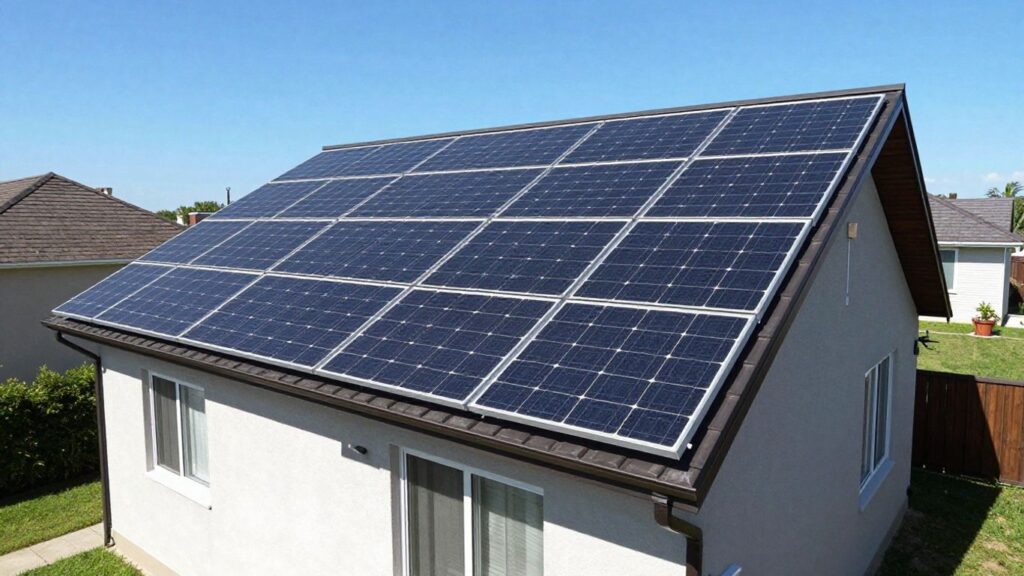
Thinking about powering your whole house with solar panels? It’s a big question, and honestly, the answer is usually yes, but with some important details to consider. We’ve all seen those sleek panels on roofs, and the idea of generating your own clean energy is pretty appealing. But can they really handle everything your home throws at them, day in and day out?
We have all seen those sleek panels on rooftops, and if you are new to the topic, it helps to first understand _What Solar Energy Is and How It Works_. The idea of producing your own electricity is attractive, but the real question is whether it can handle everything your home uses every day.
This complete 2026 guide breaks down how much electricity your home actually needs, how systems operate, and what determines if your house can run fully on solar.
Key Takeaways
- Solar panels can power an entire house, but the system must be properly sized based on your home’s electricity usage and available sunlight.
- Solar panels generate electricity during daylight hours, and battery storage is essential for powering your home at night or during cloudy conditions.
- Your location, sun exposure, appliance usage, and total wattage directly influence how large your solar panel system needs to be.
- Modern solar technology is more efficient and affordable, making whole-home solar power a realistic option for many households.
- Although the upfront investment can be significant, solar panels provide long-term energy savings and support a cleaner environment.
Understanding Your Home’s Energy Needs
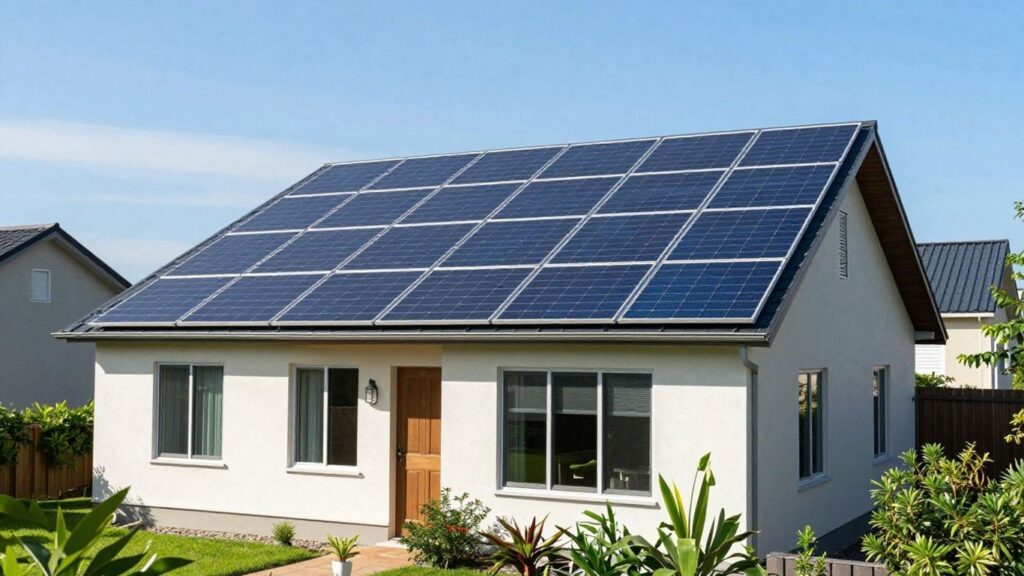
The first thing you want to do, even before you start thinking about installing solar panels, is determine how much electricity your house actually consumes. This may sound simple, but it’s more than a hunch. Understanding your home’s energy usage is the foundation of any solar system plan, particularly if you are intending to run the entire property.
For a step by step method, check _How to Calculate Your Home’s Solar Energy Needs_ to get precise figures.
How Much Electricity Does a Typical House Use?
This number can flex quite a bit based on where you live, the size of your house, and, of course, how you live in it. But to provide a rough frame of reference, U.S. homes use an average of about 800 to 1,000 kilowatt-hours (kWh) every month in electricity. That is the energy that heats your lights, your refrigerator, and your television, and is turned on by everything else you are putting in a wall.
For a more specific number for your home, the best source is your previous electricity bills. Most utility companies offer a breakdown of your usage for the previous 12 months. Tallying those monthly bills and dividing by 12 will provide you with a good average. This is all better than taking a lucky guess, since your actual usage could be higher or lower than average.
If you want to understand what that means in real savings potential, see _How Solar Energy Can Help You Save on Your Energy Bills_ for a realistic financial breakdown.
Factors Affecting Your Home’s Energy Consumption
So, what makes one house use more juice than another? A bunch of things, really.
- Appliances: Older appliances (especially refrigerators, washing machines, and dryers) are energy hogs. Newer, Energy Star–rated models can be huge.”
- Heating and Cooling: This is typically the largest component of your energy bill. If you’re in an area that experiences extreme temperatures, your HVAC system is running double time. The size of your residence and how well insulated it is are also factors here.
- Electronics: We can never get enough gadgets. The TVs, the computers, the gaming consoles, the smart home devices — they all add up, even when they’re on standby.
- Lifestyle: Do you work at home, have 24/7 computers whirring away? Do you have teenagers for whom it seems like the shower is home? Are you running the dishwasher several times a day? Your daily routines have an immediate effect on the energy you consume.
- Lighting: LED bulbs are great, but if you have a lot of lights on for extended periods of time, it can still add to your overall consumption.
Knowledge of these factors gives you insight into where your energy is flowing. You know, it’s not just about the total number; it’s about finding out what your biggest ones are so that you can adjust and potentially change them, or so you can accurately size your solar system if that time comes to cover those specific needs.
Older refrigerators and HVAC units use far more energy. If you are unsure how solar impacts your monthly bill structure, review _How Solar Panels Affect Your Monthly Bill_ for clarity.
Also, small loads add up. Learn how panels can help with standby consumption in _Do Solar Panels Reduce Vampire Power?_.
The Basics of Solar Panel Systems for Homes
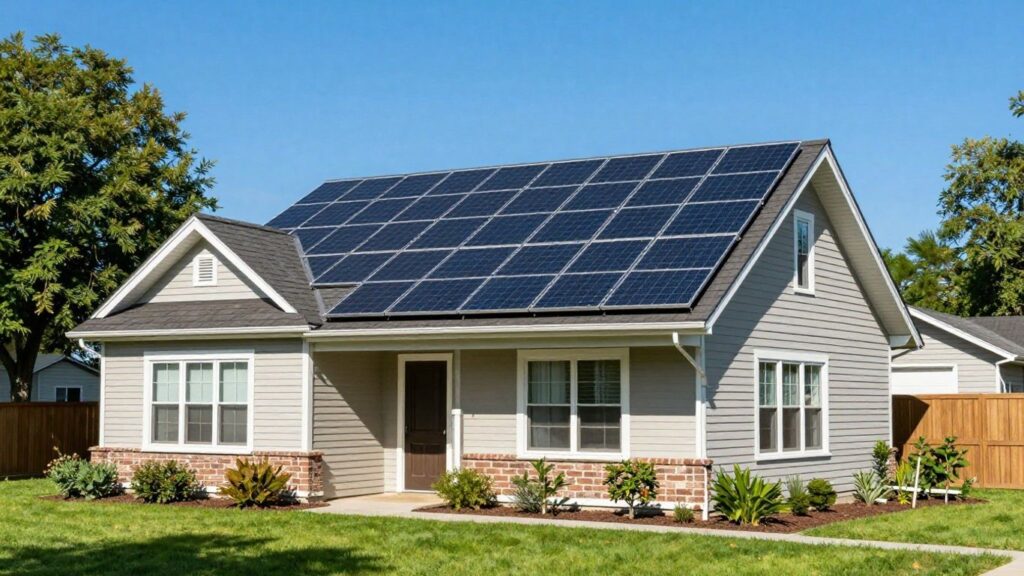
So just how do the shiny things on your roof turn sunshine into power for your toaster and TV? It’s actually pretty straightforward. A solar panel is a group of multiple small solar cells. When sunlight strikes these cells, it excites electrons to create a flow of electricity.
This electricity is Direct Current (DC), and your home appliances run on Alternating Current (AC). And that is where the wizardry of the inverter comes in. It’s the device that converts the direct-current electricity coming from the panels into alternating-current electricity, which your home uses.
How Solar Panels Generate Electricity
It all begins when photons from the sun strike photovoltaic (PV) cells, typically composed of silicon. These photons displace electrons from their atoms. The structure of the PV cell then channels these free electrons to move in one direction, producing an electrical current. This is the crux of solar power for home energy. This means that the more sunlight they receive, the greater the amount of electricity generated.
If you want a deeper technical explanation, explore _How Solar Power Works_.
Components of a Residential Solar Power System
A typical residential solar power system isn’t just panels. You’ve got a few key players working together:
- Solar Panels: The panels that you see on the roof capture sunlight. System capacity is determined by the number of panels and their total output.
- Inverter(s), i.e., convert DC to AC power as discussed earlier. You could have a single central inverter or microinverters on each panel.
- Mounting System — This is the hardware that holds your panels down on the roof or ground.
- Battery Storage (Optional – But Recommended): Becoming more important for the reliability of solar energy for home electricity. They store excess energy generated during the day for use at night and during cloudy periods.
- Monitoring System: This allows you to monitor your system’s performance and energy generation.
Getting the appropriate solar panel system capacity for your home involves optimizing these components to suit your individual requirements. It’s not just haphazardly slapping up some panels on a roof; it is an engineered capacity to generate solar energy for residential purposes. For example, how many solar panels for a house you’ll need is heavily reliant on your energy consumption and the sunlight in the area. This entire setup constitutes a whole residential solar power system.
To understand inverter options, compare _String Inverter vs Micro Inverter_ and also review _What Is a Solar Inverter?_.
If you are planning a full setup, the step by step guide _How to Setup a Solar Panel System_ explains configuration basics.
Solar Panels to Power an Entire House The Key Factors
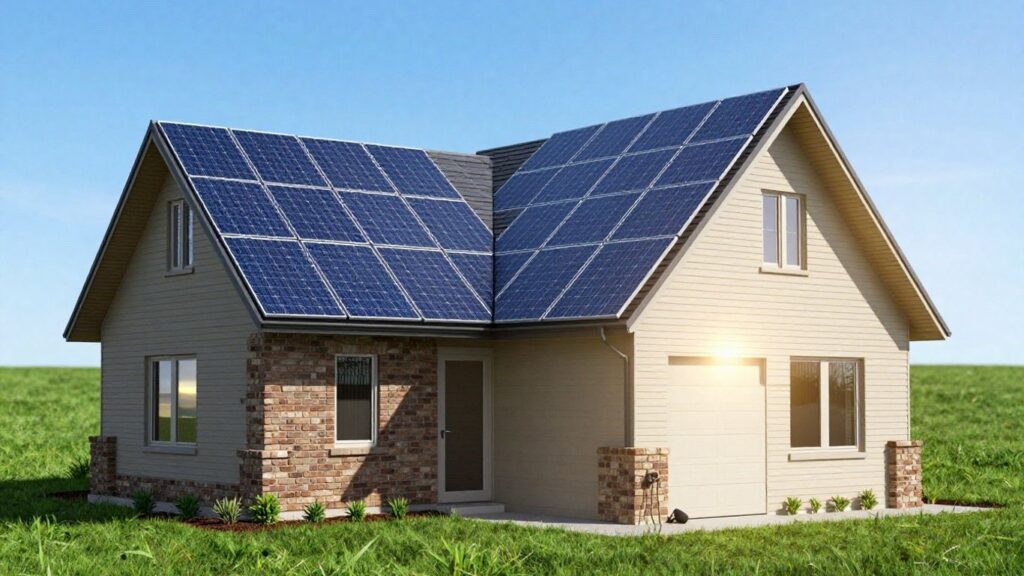
So, can you actually run your whole house on solar energy? The short answer is yes, but it’s not as simple as just slapping a few panels on the roof. Several things really matter here. It’s about matching your home’s energy habits with the power your solar setup can produce and store.
Solar Panel System Size and Your Energy Usage
Calculating how much solar energy your home needs is the first big step. You can’t just guess. You must know precisely how much electricity is consumed by your home. Think about every single light, every appliance, your TV, your computer — everything. You can get a solid estimate by looking at your old electricity bills.
For reference, the average home consumes 20 to 30 kilowatt-hours (kWh) per day. For a more specific number, you can track down all your appliances, determine their wattage, and estimate the hours per day you use them. Calculate watt-hours (Wh) for each device by multiplying wattage times hours, and then sum all your devices up to get your daily total.
Here’s a quick way to estimate:
- Electrical list: Create the list of every item that requires electricity.
- Then calculate the wattage: find the label on each appliance that indicates how much power it consumes in watts (W).
- Estimate Usage: How many hours each day does each appliance run?
- Daily Usage: Define the daily usage per appliance (W x hours = Wh). Add these up for your daily total of Wh.
This calculation helps you decide the correct solar system size for your whole house. One that’s too small won’t meet your needs, and one that’s too big is simply a waste of money. If your home, for instance, consumes about 25 kWh per day, then you’ll need a system that can produce at least that much volume of electricity (taking into account inefficiencies in the way systems operate).
Sunlight Availability and Your Location
Your location factors in big time. Some places just get a lot more sunshine than others. If you live in Arizona, you’re likely to have access to more usable sun hours than someone who lives in Seattle. This is typically given in “peak sun hours” per day.
As a general rule of thumb, most of the US receives about 4 to 6 peak sun hours per day. This number directly informs how big your solar array should be. A system in a sunnier place can be smaller than one in a cloudier location to generate the same amount of energy. However, this is a critical consideration in planning off-grid solar house power.
The Role of Battery Storage
Solar panels produce energy only when the sun shines. So, what does happen at night or on a particularly cloudy day? That’s where battery storage plays a role. A solar panel system for an entire house typically comes with batteries to store the extra energy produced during the day. This is the power that you will draw on when your panels aren’t generating enough.
Having sufficient battery capacity is vital for the reliable functioning of a house on solar energy, especially if you’re trying to break free from grid dependency. A decent target is storage for 2-3 days of your average consumption, in the event that you get a spell of terrible weather. This keeps you from being left in the dark.
The initial price of solar can appear hefty, but treat it like a real estate investment. The savings on electricity bills can be significant over the panel’s life span, which is typically 25-30 years. And it’s a good way to lower your carbon footprint.
From the panels themselves to the inverter and battery bank, choosing the right components is all about balancing your energy needs with what your resources can support. It’s a mystery, but one definitely figured out with the right information. If you’re interested in solar, looking up tutorials for residential solar systems is a good way to get your bearings.
Pros and Cons of Going Solar for Your Whole House
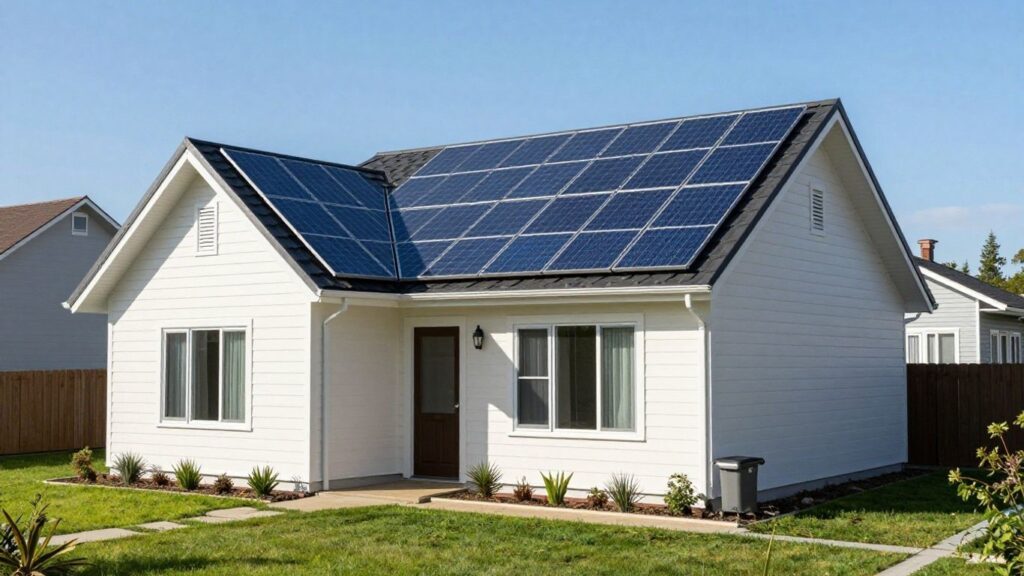
So you’re considering running your whole house on solar energy. That’s a crucial move, and like all major decisions, it has its own pros and cons. Let’s break it down.
On the plus side, you’ll be saving money; in other words, the most obvious advantage is reducing electricity bills. Once your complete home solar power system is operating, the energy provided by the sun is almost free. This can save substantial amounts over the life of the panels, which is generally 25 to 30 years.
And you’re helping the planet by reducing reliance on fossil fuels and cutting down on your carbon footprint. It’s sort of nice to know you’re helping the environment.” You also get a little more energy independence, which is always a good feeling.
Here’s a quick look at the main points:
- Pros:
- Reduced or eliminated electricity bills
- Environmental benefits (lower carbon footprint)
- Increased energy independence
- Potential increase in home value
Cons:
- High initial installation cost
- Reliant on sunshine (needs battery storage for continuous generation)
- Keep up with the data till October 2023
. - Weather and shading can affect performance
The solar home completely run off the sun sounds good when you are having it; however, lower your expectations. Yes, a well-designed system, usually coupled with battery storage, can theoretically cover most or all of your energy needs. But it takes careful planning and is costly upfront. It’s a long-term move that pays off financially and environmentally for a lot of homeowners.
For financial returns, read _The Financial Benefits of Installing Solar Panels_ and _How Solar Panels Increase Home Value_.
Challenges include:
- High upfront cost
- Weather dependency
- Space requirements
- Maintenance needs
To estimate full costs, see _How Much Does It Cost to Install Solar Panels?_ and _Solar Panel Cost by State_.
The Future of Solar Power in 2026 and Beyond
Solar power is not only a trend; it has truly become the essential source of energy. By 2026, the technology will have improved so much and costs so little that it’s a practical option for most people. We’re seeing panels that perform great even if it’s not super sunny and batteries that last way longer and are safer than ever. (N-type TopCon and HJT panels – which are quite common now, also handle heat and low light better).
As we gaze into the future, we also see smarter systems that allow you to track your energy usage and generation from your smartphone. Integration with electric vehicles is a thing now, too; systems are sized to accommodate charging. And for the ultimate in independence, off-grid solar solutions are becoming more powerful and user-friendly. It’s a good time to be considering solar, whether you want to power your entire house or just have a dependable backup.
Smart monitoring systems allow real time tracking. Maintenance is also simpler than most expect. For upkeep tips, see _How to Clean Solar Panels_ and _Solar Panel Cleaning and Maintenance Tips_.
To maximize performance long term, review _How to Maximize the Efficiency of Your Home’s Solar System
Here’s a quick look at what’s common in advanced systems:
- Smart Monitoring: Provides real-time data about production and usage through apps.
- EV charging integration: Systems that are capable of powering electric vehicles.
- Hybrid Setups: Incorporating grid connection and storing energy.
- Automatic Backup: Instant transfer when the city shuts down.
Keeping your panels clean remains one of the easiest ways to ensure your system continues to operate efficiently. A little dust can go a long way.
Conclusion
Having looked at all this, it’s pretty safe to say that yes, solar panels can definitely power your entire home. Thanks to all the improvements and cost reductions in technology, it’s no longer a fantasy. You just have to find out how much power it is that you actually use and then get enough of the right panels and storage to fit that amount.
It’s like planning a big trip, you don’t want to pack too much stuff. With the proper installation, you can have a steady power source when sunlight doesn’t shine and save some money on your bills. That’s the big step, for sure, but it seems to be a very good one for many in 2026.
Before committing, evaluate suitability using _Is Solar Energy Worth It for Your Home?_ and review preparation steps in _What to Do Before Installing Solar Panels_.
With smart planning, solar can cover nearly all household electricity needs in 2026 and beyond.
Frequently Asked Questions
Can I really power my entire house with solar panels?
Yes, absolutely! If configured properly, solar panels can provide electricity for your entire home. A mini power plant on your roof, pretty much. The trick is to have a system that is scaled and stores enough energy for the times when the sun isn’t shining, such as at night or during cloudy days. A smart energy system that works for you 24 hours a day, 7 days a week.
How many solar panels do I need to power my house?
The number of panels depends on a couple of things. We need to consider how much electricity your home consumes each month, the amount of sun you get where you live, and the wattage rating of the panels themselves. There is no set answer, though we can calculate the right one for you based on your real needs at home.
What happens to my power at night or on cloudy days?
Solar panels generate electricity only when the sun is shining. Markup, mark up, as things will not come out! The energy collected by your panels throughout the day can be charged in specialty batteries, like a power bank for your home. When the sun is not shining, this stored energy is used to provide your home with electric power 24/7.
What are the main parts of a home solar system?
A typical solar system features a handful of key players. You’ve got all the solar panels, which capture sunlight and convert it into electricity. Then there’s an inverter, which converts that electricity into a type that your home appliances can use. And (3) battery storage to store that excess power for later use. These two branches make up a full energy system.
Is it expensive to set up a solar system for my whole house?
Although the upfront cost for purchasing and installing a solar system may appear high, these prices have decreased significantly over the years. And you’ll save on your electric bills over time. Consider it an investment that delivers immediate returns and can even increase the value of your home. But many find it pays off in the long run.
How do I figure out how much energy my house uses?
It’s pretty straightforward! You can check your past electricity bills to see how much energy you consume each month. You can also make a list of every appliance you use, check how much power each one uses (it’s typically on a sticker somewhere), and estimate how many hours per day you use them. This allows us to see the habits of your home more specifically.