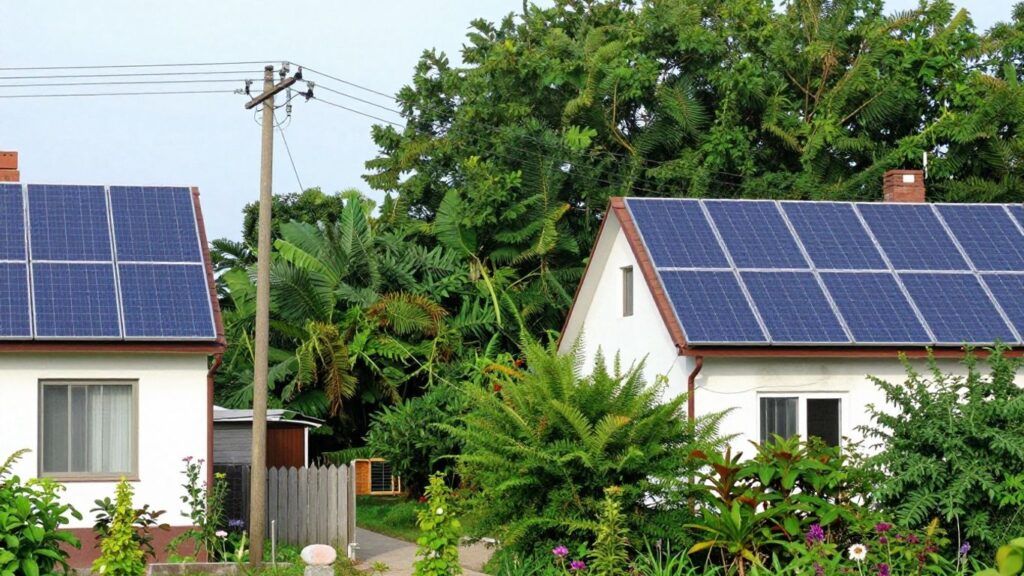
Thinking about going solar? It’s a big step towards cleaner energy and potentially lower bills. But before you jump in, I wanted to break down the two main paths: on-grid and off-grid solar.
It’s not a one-size-fits-all situation, and figuring out which one fits your life means looking at a few key things. I’ve been digging into the details of off grid solar vs on grid solar, and I’m here to share what I’ve learned to help you make the best choice.
Key Takeaways
- On-grid solar systems connect to the utility grid, offering a reliable backup and the chance to send excess power back for credits. They’re usually simpler and cheaper to start with if you have grid access.
- Off-grid solar systems are completely independent, relying on batteries to store energy. This is ideal for remote locations but requires a bigger upfront investment and careful energy management.
- The main differences boil down to grid connection, the need for battery storage, installation costs, and how reliable they are during power outages.
- If you have stable grid access and want to reduce bills while keeping things simple, on-grid solar is likely your best bet. It’s a common choice for most homes.
- If you’re aiming for total energy independence, live somewhere without grid access, or want protection from grid failures, off-grid solar might be the way to go, provided you’re ready for the investment and lifestyle adjustments.
What is On-Grid Solar?
So, you’re thinking about solar power, huh? One of the most common setups you’ll hear about is an “on-grid” solar system. Basically, it’s a solar setup that’s connected to the regular power grid that your utility company manages. Think of it like having a solar power plant on your roof that works with the grid, not completely separate from it.
When the sun is shining and your panels are cranking out electricity, that power first goes to your house to run your lights, your fridge, your TV – whatever you’ve got on. If you’re making more power than you’re using at that moment (which happens a lot on sunny afternoons), that extra juice doesn’t just disappear. Instead, it gets sent back out to the grid.
This is often where things get interesting because many places have something called “net metering.” It’s a system where your utility company gives you credit on your electricity bill for the power you send back to the grid. Pretty neat, right?
Now, what happens when the sun isn’t shining? Maybe it’s nighttime, or it’s super cloudy for a few days. That’s where the “on-grid” part really comes in handy. Your home automatically switches over to drawing power from the utility grid, just like it always did before you had solar. You don’t have to worry about running out of power because the grid is there as a backup. It’s a pretty reliable way to get the benefits of solar – like lower electricity bills and a smaller carbon footprint – without having to worry about being completely cut off if your panels aren’t producing enough.
Here’s a quick rundown of how it generally works:
- Sunlight hits panels: Your solar panels capture the sun’s energy.
- DC to AC conversion: An “inverter” changes the direct current (DC) electricity from the panels into the alternating current (AC) electricity your home uses.
- Powering your home: This AC power runs your appliances.
- Excess power to the grid: If you make more than you need, it goes back to the utility.
- Grid power when needed: If you don’t make enough, you pull power from the utility.
It’s a system that balances using clean energy with the security of having a constant power supply.
“For many people, an on-grid system is the most straightforward and cost-effective way to start using solar energy. It offers a good mix of savings and reliability without the added complexity of storing all your own power.”
What is Off-Grid Solar?
So, what exactly is an off-grid solar setup? Basically, it means I’m completely on my own for power. No connection to the utility company, no monthly bills from them – just me and the sun. It’s all about energy independence, which sounds pretty cool, right?
When I think about off-grid solar, the first thing that comes to mind is being totally self-sufficient. This means all the electricity I use has to be generated right here, on my property. It’s not just about slapping some panels on the roof, though. I need a whole system in place to make this work.
Here’s a quick rundown of how it generally functions:
- Solar Panels: These are the heart of the system, soaking up sunlight and turning it into electricity (DC power).
- Charge Controller: This gadget acts like a traffic cop for the electricity, making sure the batteries get charged up properly without getting overloaded.
- Battery Bank: This is where all the generated solar power gets stored. Think of it as my personal power reserve for when the sun isn’t shining, like at night or on cloudy days.
- Inverter: Since most of my appliances run on AC power, the inverter takes the DC power from the batteries and converts it into AC power that I can actually use.
One of the biggest benefits of off-grid solar is that I’m not affected by power outages that might hit the main grid. If everyone else is in the dark, I’m still good to go, as long as my system is sized correctly and my batteries are charged. It’s a pretty neat feeling to know I’ve got my own reliable power source. Plus, not having to pay a monthly electricity bill is a huge plus.
If you’re curious about how this compares to other options, explore our complete off-grid solar system guide.
View the Full Off-Grid Solar Guide →it’s a significant upfront investment, for sure, but the long-term savings and the peace of mind are major draws. For anyone looking for true energy independence, going off-grid is definitely something to consider. It’s a big step towards managing my own power needs and reducing my reliance on external sources, offering the benefits of off-grid solar in a very tangible way. If you’re curious about how this compares to other options, you might want to look into going off the grid.
“Being completely disconnected from the utility grid means I’m responsible for generating and storing all the power I need. This requires careful planning to ensure I have enough electricity, even when the weather isn’t cooperating.”
How On-Grid Solar Systems Work
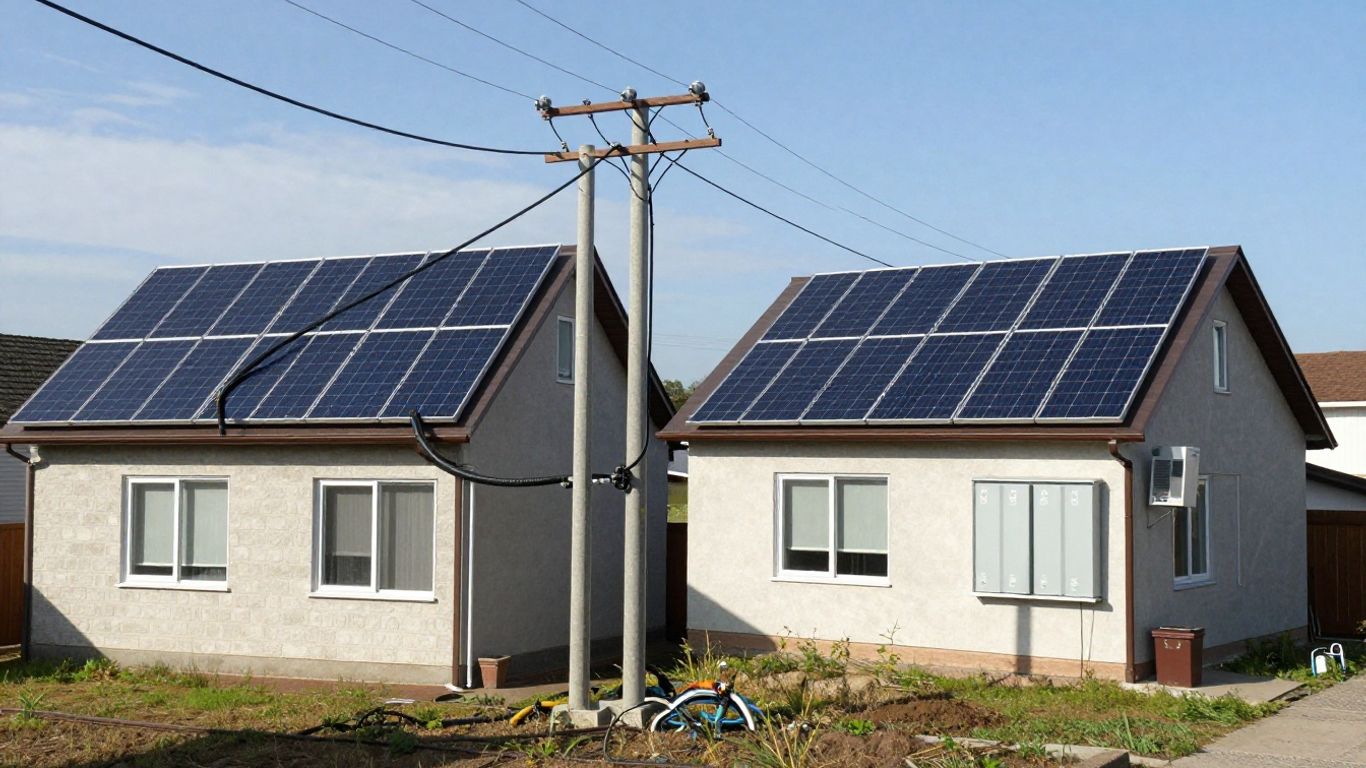
When I first looked into grid-tied solar power systems, I was surprised by how simple the setup actually was. Here’s how it all comes together on a typical day:
- Solar panels sit on your roof and soak up sunlight, turning it into direct current (DC) electricity. This is thanks to photovoltaic cells as explained in this piece on how solar panels convert sunlight.
- An inverter steps in right away, switching that DC to alternating current (AC). This is the type of electricity everything in my home runs on—from the fridge to my laptop.
- The solar AC power runs to my main switchboard, directly powering the things I use every day. Simple enough.
- If I happen to make more electricity than I use, the leftovers go out to the utility grid. My meter tracks this, and I get credits for every extra kilowatt-hour sent back. That’s called net metering.
- When the sky’s gloomy or it’s nighttime, I still have a safety net—the grid. My home pulls power from the utility company, ensuring I never run out of electricity, even when the sun’s not being helpful.
Here’s a table to organize the basic flow of how grid-tied solar power works:
| Step | Process | What Happens |
|---|---|---|
| 1 | Solar Collection | Panels generate DC power |
| 2 | Inverter Conversion | DC switches to AC power |
| 3 | Power Home | AC runs household devices |
| 4 | Net Metering | Excess sent to the grid |
| 5 | Grid Backup | Grid fills solar shortfall |
- With a grid-tied solar system, you don’t have to buy or maintain expensive batteries. Although you can learn about string inverter vs micro inverter options if you want to add battery backup, it isn’t required from day one.
- Utility bills often shrink because any extra power you make goes straight to the grid and gets credited to your account. The more sun you get, the more likely you are to see serious savings.
- Unlike off-grid systems, you always have power, even if your panels aren’t producing.
On-grid solar feels pretty seamless in everyday life. Most of the time, I don’t think about where my electricity is coming from—unless I notice just how much lower my bill is at the end of the month.
How Off-Grid Solar Systems Work
So, how does an off-grid solar setup actually keep the lights on when you’re completely disconnected from the utility company? It’s a pretty neat process, really. First off, you’ve got your solar panels, usually mounted on the roof or somewhere with good sun exposure. These panels soak up sunlight and convert it into a type of electricity called DC (direct current). Think of it like the raw energy straight from the sun.
This DC electricity then flows to a charge controller. This little gadget is super important because it manages how the electricity goes into your battery bank. It makes sure the batteries don’t get overcharged, which can damage them, and generally keeps things running smoothly for your energy storage. It’s like a traffic cop for electricity heading into the batteries.
Next up are the batteries themselves. This is where all the solar energy gets stored for later use. You can imagine it like a big rechargeable battery pack for your whole house. The bigger your battery bank, the more energy you can store for cloudy days or nighttime. Understanding how long solar batteries last is key to sizing your system correctly.
Now, here’s the catch: most of the appliances in your home run on AC (alternating current) electricity, not DC. That’s where the inverter comes in. The off-grid inverter takes the DC electricity stored in your batteries and converts it into AC electricity that your lights, TV, fridge, and everything else can use. It’s the translator between your stored solar power and your home’s needs.
Here’s a quick rundown of the main parts:
- Solar Panels: Capture sunlight and turn it into DC electricity.
- Charge Controller: Regulates the flow of electricity to the batteries, preventing overcharging.
- Battery Bank: Stores the DC electricity for later use.
- Inverter: Converts stored DC electricity into AC electricity for your home appliances.
It’s important to get the sizing right for all these components. If you don’t have enough panel capacity, you won’t generate enough power. If your battery bank is too small, you’ll run out of stored energy quickly. And if your inverter isn’t powerful enough, it might struggle to run multiple appliances at once.
The whole system is designed to be self-sufficient. You generate your own power, store it, and use it whenever you need it — completely independent of the outside grid.
This means you’re in charge of your energy supply, but it also means you’re responsible for making sure it’s sufficient for your needs, especially during periods with less sunshine.
Sometimes, especially in places with really inconsistent weather or if you use a lot of power, you might need to think about a backup generator. This is usually a gas or propane generator that can kick in if your batteries get too low and the sun isn’t cooperating. It’s like a safety net to make sure you don’t get left in the dark.
Key Differences: On-Grid vs. Off-Grid Solar
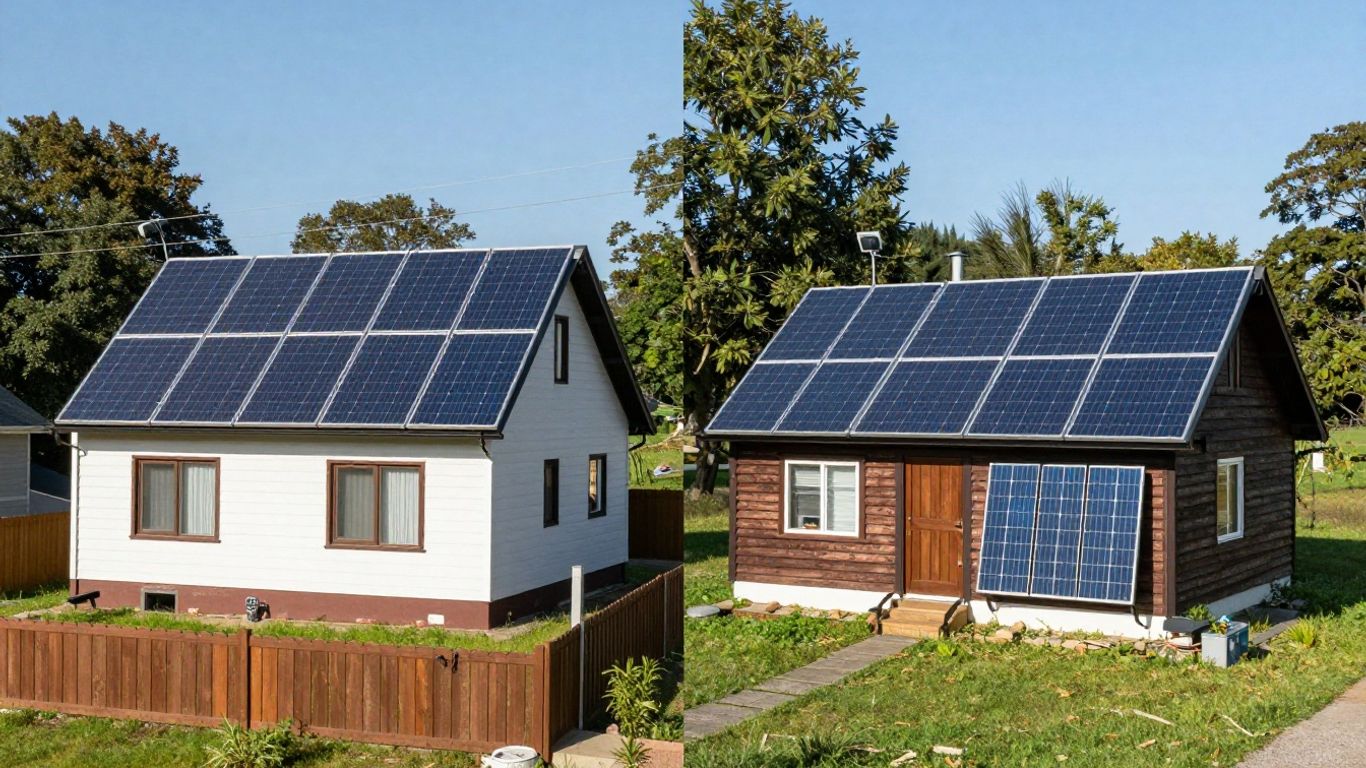
When I started looking into solar power systems, the biggest question I had was how they actually differ. It’s not just about slapping some panels on the roof, you know? There are some pretty big distinctions between being connected to the grid and going completely solo. Understanding these differences is key to figuring out which solar power systems comparison makes sense for my situation.
Grid Connection and Independence
This is probably the most obvious difference. On-grid solar systems, also called grid-tied systems, are connected to the public utility grid. This means they work alongside your regular electricity provider.
If your solar panels aren’t producing enough power, say on a cloudy day or at night, you automatically pull electricity from the grid. It’s like having a backup, but it’s also your primary source when solar isn’t cutting it. This connection is what makes them generally less expensive to install because you don’t need all the extra gear for complete self-sufficiency.
On the flip side, off-grid solar systems are completely independent. They don’t connect to the utility grid at all. This gives you total energy independence, which sounds pretty cool, but it also means you’re solely responsible for generating and storing all the power you need. This is a big deal if you live somewhere remote or if the grid in your area is unreliable. For those seeking true energy freedom, grid-tied vs standalone solar setups are a world apart.
Energy Storage (Batteries)
Because off-grid systems need to provide power 24/7, batteries are a non-negotiable part of the setup. These batteries store the excess energy your solar panels generate during the day so you can use it when the sun isn’t shining. The size of your battery bank is super important; too small and you’ll run out of power, too big and you’re spending more than you need to.
On-grid systems can have batteries, but they aren’t always required. Many grid-tied setups just send excess power back to the grid (often earning you credits through net metering) and draw power from the grid when needed. So, while batteries are central to off-grid reliability, they’re more of an optional add-on for on-grid systems.
Cost and Installation
Generally speaking, on-grid solar power systems tend to have a lower upfront cost. This is mainly because they don’t require the expensive battery banks that off-grid systems do. Installation can also be a bit simpler since you’re not dealing with the complexities of a completely standalone power setup.
Off-grid systems, however, require a larger initial investment due to the batteries, charge controllers, and potentially a backup generator.
While the long-term savings from not paying electricity bills can be significant with off-grid, that initial price tag is definitely something to consider. When looking at solar companies, it’s important to get quotes for both types if you’re unsure, like I did when I was researching solar companies in Irvine.
Maintenance and Complexity
Off-grid systems, while offering independence, can sometimes be more complex to manage. You’re essentially running your own mini power plant. This means keeping an eye on battery levels, ensuring your charge controller is working correctly, and potentially dealing with a backup generator.
On-grid systems are generally simpler to maintain because the utility grid acts as a buffer. The main components, like the inverter and panels, still need occasional checks, but you don’t have the added layer of managing a large battery bank for daily power needs. The advantages of grid-connected solar often include this simpler maintenance profile.
Reliability and Power Outages
This is where the choice really matters for some people. If you live in an area prone to frequent power outages, an off-grid system offers the ultimate peace of mind. You’re not affected when the grid goes down. An on-grid system, however, will typically shut down during a power outage for safety reasons.
This is a built-in safety feature to protect utility workers. So, while on-grid systems are reliable in terms of consistent power when the grid is up, they don’t provide backup power during outages unless paired with batteries. This is a major point in the grid-tied vs off-grid energy debate for many homeowners.
The decision between an on-grid and off-grid solar power system comparison hinges on your specific needs for energy independence, your tolerance for upfront costs, and your local grid’s reliability. It’s not a one-size-fits-all answer — what works for one household may not be suitable for another.
Who Should Choose On-Grid Solar?
So, you’re thinking about solar, and I’ve been looking into the whole choosing between solar systems thing myself. If you’re like me and live in a place with a pretty reliable power grid, an on-grid solar setup is probably your best bet. It’s the most common type for a reason – it just makes sense for most folks.
On-grid systems are great because they work hand-in-hand with your existing utility company. When your solar panels are cranking out more electricity than you need, the extra juice gets sent back to the grid. You might even get credits for it, which is a nice bonus. Then, when the sun’s not shining, like at night or on a really cloudy day, you just pull power from the grid like you normally would. It’s a pretty straightforward setup.
Here’s a quick rundown of why an on-grid system might be the right fit:
- Lower Upfront Costs: Generally, these systems cost less to get started with because you don’t need to buy a big, expensive battery bank. That was a big plus for me when I was looking at the numbers.
- Simpler Installation: Because you’re not dealing with the complexities of storing energy and managing a completely independent system, installation is usually less complicated.
- Grid as Backup: You always have the utility grid as a backup. This means you don’t have to worry as much about running out of power if your solar production dips unexpectedly.
- Net Metering Benefits: In many areas, you can take advantage of net metering, where you get credit for the excess energy you send back to the grid. It’s a way to get more value out of your solar investment.
Basically, if you’re not looking to go completely off the grid and want a more budget-friendly, less complicated way to harness solar power, an on-grid system is likely the way to go. It’s a solid choice for reducing your electricity bills and your carbon footprint without a huge hassle.
Before deciding, it’s worth checking whether solar energy is worth it for your home based on your specific situation. For a good comparison of different solar options, checking out resources on residential solar panels can be really helpful.
Who Should Choose Off-Grid Solar?
So, if you’re thinking hard about which solar power connection options really fit your life, off-grid is the choice for folks who want complete control over their electricity—not just a cheaper power bill, but real independence. I often tell people that off-grid solar is more than a technical setup; it’s a different way of living.
| Circumstance | Off-Grid? |
|---|---|
| Remote or rural property | ✓ Yes |
| Frequent power outages | ✓ Yes |
| Must have total energy control | ✓ Yes |
| Low upfront budget | ✕ No |
| Want ongoing electric bills | ✕ No |
The people who should be looking closely at off-grid, in my experience, often have at least one (sometimes a few) of these situations:
- You live somewhere remote – Where power lines don’t reach or the cost to extend them is off the charts, off-grid just makes sense. For example, off-grid systems are perfect for remote cabins or properties far from urban centers. I read that off-grid solar is ideal for areas where grid access is impossible or too expensive.
- Power outages are a big problem – When storms or weak grids cause frequent blackouts, independent solar energy solutions give you security. An off-grid system with batteries means your home keeps running, no matter what’s happening at the utility company.
- You want complete self-sufficiency – There are people who dream about cutting all ties with utility companies. By managing your own energy, you gain more than just savings—you get the benefits of solar power independence with no reliance on outside providers.
- Budget isn’t your main worry – Off-grid systems require a larger up-front investment. Between the panels, batteries, and extra equipment, the cost is higher than on-grid. But you avoid electricity bills for years. Think of it as a trade-off: more up front, but possibly a better return in the long run.
Here’s a quick table I usually use to sum up who’s a fit for off-grid solar:
Expert Insight“I’ve noticed that people who truly benefit from off-grid solar are those who prioritize energy independence above everything else. If you’re ready to take on the responsibility, upkeep, and initial cost, the freedom it gives is unmatched.”
Last thing: before choosing a solar setup, get realistic about your energy needs and daily habits. The best choice comes from knowing where your priorities are. And remember, even the best off-grid system needs careful planning—don’t jump in without weighing both the financial and lifestyle trade-offs.
For more tips on how to pick trustworthy solar companies and what to look for in battery options, especially if you’re installing in places like Santa Clara, check out this info on solar installers and battery installations for backup power. You can also use our free solar calculator to estimate what size system you’d need before committing.
Frequently Asked Questions
What’s the main difference between on-grid and off-grid solar?
Think of it like this: an on-grid system is connected to the regular power lines from the electric company, like a helper. If your solar panels don’t make enough power, you can still get it from the company. An off-grid system is totally separate; it’s just you and your solar panels, usually with batteries to store power for when the sun isn’t shining. You’re completely on your own, like living on your own little island of power.
Do I need batteries for an on-grid solar system?
Generally, no, you don’t need batteries for a standard on-grid system. The main idea is that if your solar panels aren’t making enough electricity, you just pull power from the electric company’s grid. If you make *too much* power, you can often send it back to the grid and get credit for it. Some people add batteries to on-grid systems for backup power during outages, but it’s not required for the system to work.
Is an off-grid system more expensive to set up?
Yes, setting up an off-grid solar system usually costs more at the start. This is because you absolutely need batteries to store the energy you generate for when the sun isn’t out. You also need special equipment like charge controllers to manage the batteries. On-grid systems don’t need these expensive batteries, so their initial price tag is often lower.
What happens if I use more power than my off-grid system can make?
This is a big consideration for off-grid living! If you use more electricity than your solar panels are generating and your batteries can provide, you could run out of power. This might mean you have to change how you use electricity, like running appliances during sunny hours or using less power overall. Some off-grid setups might include a backup generator for these situations.
Can I still get electricity from the power company if I have an off-grid system?
No, that’s the whole point of an off-grid system! It’s designed to be completely independent from the utility company. You generate all your own power from the sun and store it in batteries. This means you won’t have an electricity bill from the power company, but you also won’t have their grid as a backup if your solar system isn’t producing enough.
Which system is better for saving money?
It really depends on your situation. On-grid systems can help you save money by lowering your monthly electric bills and sometimes by giving you credits for extra power you send back to the grid. Off-grid systems eliminate your electricity bill entirely, but you have to pay a lot upfront for the equipment. Over many years, both can save you money, but the way they do it is different.