Living With SolarClarity before commitment.

Find Trusted Solar Installers in Virginia — Before the Net Metering Deadline

Get Matched With Local Installers

Virginia homeowners are facing a critical window in 2026. The State Corporation Commission is currently reviewing Dominion Energy’s proposal to cut net metering export rates by up to 65% , with a ruling expected by May 1, 2026. Every system interconnected before that ruling is expected to be grandfathered at today’s full retail rate.

This page exists to help you find a licensed, experienced Virginia solar installer,  not to sell you anything.

Share a few details and connect with trusted Virginia solar installers, no obligation.

Get Your Free Solar Quote

Connect with vetted installers in your area

Virginia Net Metering Alert — Act Before May 1, 2026

Dominion Energy has proposed reducing solar export credits from the current ~$0.14/kWh to as low as $0.048/kWh — a cut of up to 65%. The SCC ruling is expected by May 1, 2026. Systems interconnected before the ruling are expected to keep the current full-retail rate.

What This Means for You

Net metering at full retail rate is worth thousands of dollars over a system’s 25-year lifetime compared to a reduced export rate. The difference between acting now and waiting could mean a payback period of 15–16 years versus 18–22 years.

  • Current export rate: ~$0.14/kWh (full retail)
  • Proposed reduced rate: $0.048–$0.095/kWh
  • Ruling deadline: May 1, 2026
  • Grandfathering: Systems interconnected before ruling keep current rate


Key Resources

Understand the full picture before making your decision:

The single strongest reason to act now is the May 2026 SCC ruling. Full retail net metering is worth thousands of dollars over a system’s lifetime.

Why Solar Makes Sense for Virginia Homeowners in 2026

Virginia may not make headlines for solar incentives the way California or New Jersey do — but the economic case is genuinely strong for the right homeowner in 2026.

🎸

Rising Utility Rates

Dominion Energy rates have increased 4–6% per year since 2020. A solar system locks in your energy cost for 25+ years.

💰

SREC Income

Virginia's SREC programme pays $22.50–$70 per credit. A 13kW system earns an estimated $585–$910/year in passive income — separate from bill savings.

🏠

Property Tax Exemption

Active localities including Fairfax, Loudoun, Albemarle, Arlington, and Alexandria offer 100% property tax exemption on solar-added home value.

🍃

VCEA Mandate Growing

Virginia's Clean Economy Act RPS mandate climbs from 1% (2022) to 3% (2026) to 5% (2028) — meaning SREC values are expected to rise, not fall.

How Much Do Solar Panels Cost in Virginia?

The average installed cost of solar panels in Virginia is $2.65 per watt (EnergySage, Q1 2026). For a typical 13 kW system — the right size for most Virginia homes — that works out to around $34,450 before any incentives.

Virginia homes generally need a larger system than homeowners in sunnier states. With solar irradiance averaging 4.2–4.7 peak sun hours per day, you need more panels to generate the same amount of electricity as a home in Arizona or California.

System Size Gross Cost 2026 Out-of-Pocket* Typical Home Size
8 kW $21,200 $21,200 1,200–1,800 sq ft
10 kW $26,500 $26,500 1,800–2,400 sq ft
13 kW $34,450 $34,450 2,400–3,200 sq ft
16 kW $42,400 $42,400 3,200+ sq ft

*Note: The 30% Federal Investment Tax Credit expired for residential installs in 2024. Figures above reflect 2026 out-of-pocket costs without a federal credit.

Estimated Payback Period

  • With current full retail net metering + SREC income: 15–16 years
  • If Dominion’s reduced rate proposal passes: 18–22 years
  • Both scenarios: 25+ years of free electricity after payback

Financing Options

Most Virginia installers offer $0-down options. Available financing includes:

  • PACE loans
  • Solar-specific lenders (Sunlight Financial, GreenSky)
  • HELOC (Home Equity Line of Credit)

Full Virginia solar cost breakdown →

How to Calculate Your Home's Solar Energy Needs in Virginia

Smart System Sizing

Before getting quotes, understand what size system your home actually needs. Getting this wrong costs you money.

01
Find Usage
Gather 12 months of kWh from bills
02
Sun Hours
Virginia averages 4.2–4.7 hrs/day
03
Calculate
Annual kWh ÷ 365 ÷ Sun ÷ 0.85
04
Roof Check
Assess pitch and shading
05
Set Goals
Decide offset and battery needs
Sun Hours by Region
  • Northern Virginia: 4.2 hrs/day
  • Richmond / Central: 4.5 hrs/day
  • Hampton Roads: 4.6 hrs/day
  • Roanoke / SW: 4.7 hrs/day
Roof Efficiency
  • South-facing (Optimal): 100%
  • Southwest / West: 85-95%
  • East-facing: 70-80%
  • Heavy Shading: Variable
ESTIMATED SYSTEM SIZE CALCULATION
15,000 kWh ÷ (365 × 4.5 × 0.85) = 10.76 kW System

What to Look for in a Licensed Virginia Solar Installer

Not all solar companies operating in Virginia are legally qualified to install there. Here's what actually matters when evaluating a contractor.

Virginia Solar Installer Checklist
🪪
⛔ Non-Negotiable
AES Licence (Electrical)

Virginia requires all solar installers to hold an Active Electrical Services (AES) licence issued by DPOR. Ask for the licence number and verify it before signing anything.

→ Verify at dpor.virginia.gov — search the licence number directly before you sign
🏅
✅ Quality Signal
NABCEP Certification

The NABCEP PV Installation Professional certification requires 58+ hours of advanced training, a proctored exam, and documented field experience. Every NABCEP installer has genuinely earned it.

→ Ask "Is the lead technician NABCEP certified?" — not just the company.
⚡
⚠️ Important
Dominion / APCo Interconnection Experience

Virginia's two main utilities have different interconnection processes and timelines. An installer who regularly works in your utility's territory will navigate this faster and with fewer surprises.

→ Ask "How many systems have you interconnected with Dominion / APCo in the last 12 months?"
📋
⚠️ Important
SREC Registration Expertise

Your system must be registered with PJM-GATS. This isn't automatic — your installer needs to set it up correctly from the start. If they don't mention SREC registration, that's a red flag.

→ Red Flag Ask: "Will you handle PJM-GATS registration?" If they look confused, walk away.
📝
🚨 Critical
SREC Ownership Clarity

Your contract must explicitly state that the SRECs belong to you, not the installer. Some lease and PPA agreements transfer SREC ownership to the installer — costing you $585–$910/year.

→ Check Contract Look for the word "SREC" in any lease or PPA. If it isn't there, ask for it in writing.
🔧
📌 Minimum Standard
Workmanship Warranty: Minimum 10 Years

Virginia's freeze-thaw cycles, ice storms, and summer humidity are hard on roof penetrations. A 10-year workmanship warranty is the minimum acceptable. The best installers offer 25 years.

→ Ask "Is the warranty backed by your company or a third party insurer?"

How to Avoid Bad Solar Installers in Virginia

Virginia’s solar market has grown fast, and with growth comes bad actors. These are the red flags that should stop you cold.

🚫

"You still qualify for the 30% federal tax credit"

This is false. The 30% residential ITC expired at the end of 2024. Any salesperson claiming otherwise is either uninformed or deliberately misleading you. Walk away immediately.

⏳

High-Pressure Same-Day Offers

"This price is only good today" is a classic manipulation tactic. Legitimate installers give you time to review quotes, compare, and consult your family.

🆔

No DPOR Licence Number Provided

If an installer can't give you their AES licence number within 24 hours, they either don't have one or it's not in good standing. This is a legal requirement in Virginia.

📝

Lease or PPA Agreements That Include Your SRECs

Read contracts carefully. Some transfer your SRECs to the financing company. You lose $585–$910/year for 10+ years and don't even own your system.

📏

Inflated System Size Claims

A 13kW system is appropriate for most Virginia homes using 14,000–16,000 kWh/year. If an installer quotes 20kW+ without justification, they're likely inflating the contract value.

📍

Third-Party Sales Teams with No Local Presence

Verify the company has a physical office and service presence in Virginia. National brands often use aggressive door-to-door teams who disappear after signing.

6 Questions to Ask Before Installing Solar in Virginia

These six questions will tell you everything you need to know about a Virginia solar installer. A good installer will answer all six clearly and confidently. Evasive or vague answers are a signal.

Can you provide your DPOR AES licence number so I can verify it? 

Correct response: They give you the number immediately and encourage you to verify it at dpor.virginia.gov. Any hesitation is a red flag.

What is your average interconnection timeline with Dominion/APCo in my area?

Correct response: A specific number of days based on recent projects. 60–90 days is typical. Vague answers like “it depends” without specifics suggest inexperience.


Who owns the SRECs from my system, and how do you handle PJM-GATS registration?

Correct response: “You own the SRECs. We register your system with PJM-GATS within X weeks of commissioning and walk you through how to sell or broker them.” If they look confused, that’s a serious concern.


What happens if the SCC rules to reduce net metering rates before my system is interconnected?

Correct response: An honest discussion of interconnection timing and what “grandfathering” means in practice. A good installer will be upfront about timeline risk.


What workmanship warranty do you offer, and is it covered by your company or a third-party insurer?

Correct response: Minimum 10 years, ideally 25. Insurance-backed warranties are safer if the company closes.


Can I speak with two or three recent Virginia customers?

Correct response: Yes, without hesitation. Any installer unwilling to provide references has something to hide.

Areas We Serve Across Virginia

Virginia’s solar market varies significantly by utility territory, local incentives, and sun exposure. Here’s what to know by region before requesting installer quotes.

Virginia Region Cards
Northern Virginia
Fairfax · Loudoun · Arlington · Prince William
☀️ Dominion Energy Virginia  ·  4.2 hrs/day
  • Highest property values = largest return from property tax exemption
  • Fairfax & Loudoun: 100% property tax exemption on solar value
  • Dense HOA territory — verify policy before signing
  • Most competitive installer market in the state
Richmond & Central Virginia
Richmond City · Henrico · Chesterfield · Spotsylvania
☀️ Dominion Energy Virginia  ·  4.5 hrs/day
  • Good balance of sun hours and moderate property costs
  • SREC income particularly meaningful given typical system sizes
  • Strong installer competition — get 3+ quotes
Hampton Roads
Virginia Beach · Norfolk · Chesapeake · Suffolk
☀️ Dominion Energy Virginia  ·  4.6 hrs/day
  • Highest sun hours outside of the southwest
  • Coastal humidity accelerates roof wear — prioritise marine/coastal experience
  • Check HOA restrictions in planned communities
Roanoke & Southwest Virginia
Roanoke · Salem · Lynchburg · Blacksburg
☀️ Appalachian Power (APCo)  ·  4.7 hrs/day
  • APCo interconnection process differs from Dominion — use APCo-experienced installer
  • Fewer installers operate here — vetting is especially important
  • Not subject to Dominion net metering ruling
Shenandoah Valley & Rural Virginia
Winchester · Harrisonburg · Staunton · Fredericksburg
☀️ Mixed (Dominion, APCo, local co-ops)  ·  4.4 hrs/day
  • Rural properties often have ideal roof orientation and minimal shading
  • Verify utility territory — co-operative utilities have separate interconnection rules
  • USDA REAP grants may be available for qualifying properties

Frequently Asked Question

No. The 30% residential federal ITC expired at the end of 2024 and has not been renewed by Congress. Virginia homeowners should base their financial analysis on state-level incentives only: SRECs, property tax exemption, and net metering.

Under Virginia’s Clean Economy Act, utilities must source increasing percentages of their power from solar and buy SRECs to prove compliance. Current Virginia SREC prices range from $22.50 to $70 per credit. A typical 13kW system produces 16–18 MWh/year, generating $585–$910 annually. As VCEA mandates increase, SREC values are expected to rise.
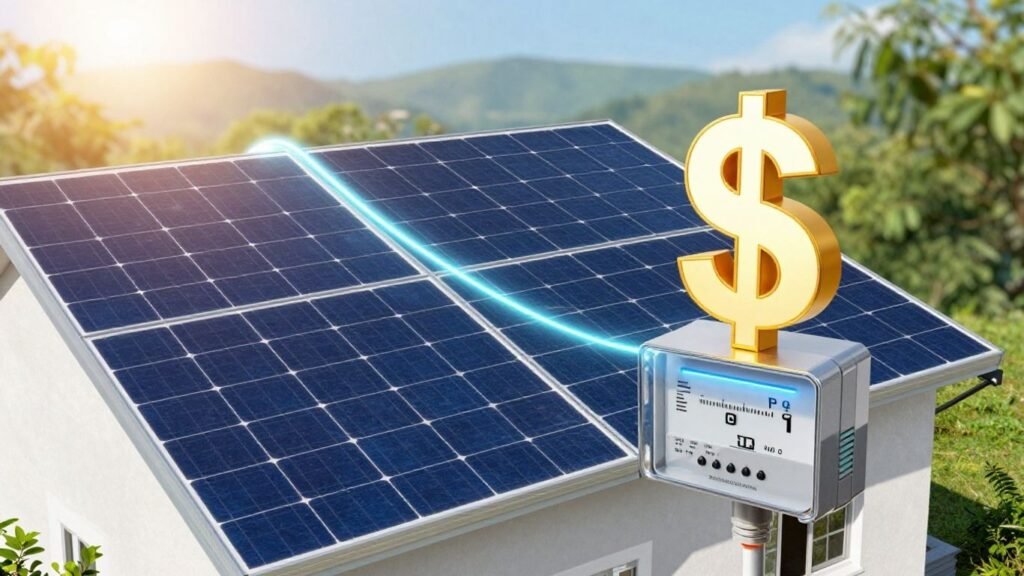
Dominion Energy has filed a proposal with the SCC to reduce the rate paid for excess solar electricity exported to the grid — from ~$0.14/kWh (full retail) to either $0.095/kWh or $0.048/kWh. A ruling is expected by May 1, 2026. Systems interconnected before the ruling are expected to be grandfathered. See our full analysis →

Both can be excellent or terrible — what matters is licence status, SREC expertise, and utility territory experience. National companies often have better financing options but may use subcontractors. Local companies often have deeper utility relationships and better post-install service. We recommend getting at least one quote from each type.

Virginia Code § 55.1-2821 provides some protections against HOA solar bans, but HOAs may still regulate placement and require architectural approval. Review your HOA covenants and get written approval before signing an installer contract.

Typically 3–6 months from signed contract to system activation: site assessment and design (1–2 weeks), permit submission (2–4 weeks), installation (1–3 days), utility interconnection with Dominion or APCo (60–120 days). An experienced installer with strong utility relationships can significantly reduce this timeline.