What Are In Roof Solar Panels? Costs, Benefits, and Installation
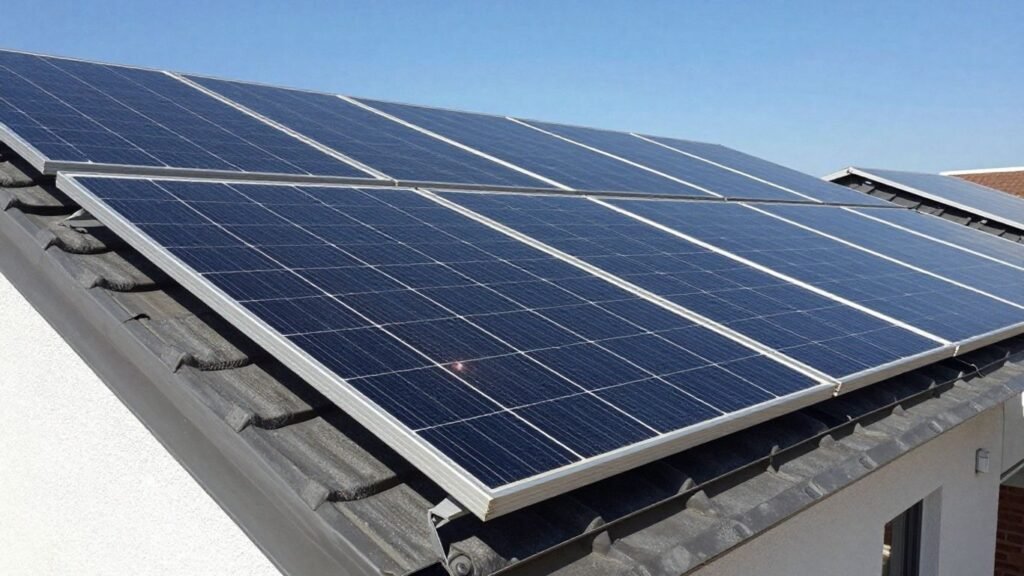
Lately, I’ve been looking into ways to make my home more energy efficient, and one thing that keeps popping up is the idea of in roof solar panels. It sounds interesting, right? Instead of panels sitting on top of the roof, these actually sit within the roof itself. I’m trying to figure out what that actually means, how they work, and if they’re a good option for someone like me. This article is basically my journey to understand solar panels better, covering what they are, why someone might choose them, and what the whole process looks like. ✅ Key Takeaways Quick summary of the most important points TL;DR ✔ In roof solar panels integrate directly into your roofing material, offering a more streamlined look compared to traditional panels mounted on top. ✔ The primary benefits include improved aesthetics, better durability against weather, and a potential boost to your home’s resale value. ✔ Costs for in-roof solar panels can vary based on the system size, materials used, and installation complexity, often being a bit higher upfront than standard panels. ✔ Installation involves removing existing roofing and integrating the solar components, typically requiring specialized installers. ✔ Deciding if solar panels are right for you involves weighing their aesthetic and performance advantages against the initial investment and installation process. Understanding In-Roof Solar Panels: A Modern Alternative When I started looking into solar energy for my home, the image I pictured was of the traditional type, those dark rectangular panels on top of a roof. Then I heard about the integrated solar roofing systems, and it got me thinking. These are not just panels that you glue on top; they’re going to be part of the roof itself. Still, it is a lovely idea, so unlike the usual setup. If you already understand how solar power works, the concept is similar. The main difference lies in integration rather than function. How Do In-Roof Solar Panels Work? At their core, these systems operate on the same principle as their counterparts mounted atop roofs: the photovoltaic effect. Sunlight strikes solar cells, which produce electricity. The key difference is in the installation. These systems typically replace your shingles rather than sit on top of them. They’re like solar tiles or shingles that resemble roof material much more closely. The electricity created is then inverted from the direct current (DC) state to an alternating current (AC), which will be usable by their home’s electrical system via an inverter. Instead of sitting above shingles, these panels replace roofing materials. The electricity produced flows through a what is a solar inverter system that converts DC into usable AC power for the home. Key Differences: In-Roof vs. Traditional On-Roof Solar Panels Aesthetics are the main differentiator, at least for the eyes. Traditional panels are fairly obtrusive, while an integrated system fits in much cleaner. This is significant for owners who fear the effect that solar installations will have on their home’s aesthetics. One is the way they’re installed. With traditional panels, for instance, the installers install mounts on the roof structure itself and attach the panels to it. This is how solar roof mounts work In details, integrated systems are solar components that are designed to mesh or fit directly into your roof structure; they can even provide the main roofing material. For a broader comparison of panel materials, I found types of solar panels helpful. Here’s a quick look at some differences: Feature Traditional On-Roof Panels In-Roof Solar Systems (Solar Tiles/Shingles) Appearance Visible, distinct panels ✔Blends with the roof, often looks like shingles Installation Method Mounted on top of the roof ✔Replaces existing roofing material Roofing Material Added layer ✔Can be the primary roofing material Aesthetics Can be a concern for some ✔Generally considered more appealing It’s also worth noting that ‘panels’ is frequently used as a generic term when conversing about solar tiles vs panels. But in this context, we’re discussing units that are separate from materials embedded within the roof itself. Integrated solar roofing systems aim for a more cohesive look and function. The Benefits of Choosing In-Roof Solar Panels I didn’t know what to expect when I started looking into solar options for my home. Regular panels were okay, but I wanted something that felt a little more… cohesive. That’s when I learned you can also have in-roof solar panels, and quite frankly, I’m pleasantly surprised by what they have to offer. Aesthetic Appeal and Curb Appeal This is probably the biggest draw for me. In contrast to traditional panels, which can be bulky and are typically mounted on racks above your existing roofline, in–roof systems, sometimes called shingles or tiles, mount flush. The fact that they are far more similar to a traditional roof is beneficial in terms of the overall appearance of the property. I was afraid I’d end up with a house that looked like it had turned into a science experiment, but these fit in a lot better. That is a major benefit of solar shingles; they do not protrude and look out of place. Because with this marriage, subtle as it is, you’re leveraging the energy benefits without compromising your home’s looks. If your property’s appearance from the street is a concern, it’s a big plus. For homeowners concerned about resale value, reading how solar panels increase the value of your home changed my perspective. Durability and Weather Resistance I found out that these systems are built to be fairly robust. Because they’re built right into the roof structure, they often have better wind resistance than traditional panels that sit on top. They’re constructed to brave the elements, like a normal roof. Just think: they’re basically part of your roofing material. That means they perform well in rain, snow, and wind. These integrated photovoltaics offer, among others, this solid construction as their advantage. They’re built to last, similar to durability expectations explained in how long do solar panels last. Potential for Increased Home Value It makes sense, right? A new architecturally