What Are Ground-Mounted Solar Panels? A Complete Guide

Thinking about going solar? You may imagine panels on a roof, but that’s not your only option. Ground mount solar panels are a good option if your roof isn’t suitable or if you just don’t want your roof to be covered in solar panels. They operate slightly differently and have their pros and cons. This guide will explain everything about ground mount solar panels, how they work, and what you need to install them so you can determine whether they’re a fit for your home. Key Takeaways What Exactly Are Ground-Mounted Solar Panels? Ground-mounted solar panels are solar energy systems installed directly on the ground instead of the roof. They are mounted on metal racks or poles and can be adjusted for optimal sun exposure. Ideal for homes with shaded or unsuitable rooftops, ground-mounted systems offer flexibility in placement, angle, and size, often making them more efficient than roof-based systems. So, ground-mounted solar panels, you say? Well, let me tell you, it’s about what you’d expect. Not the ones you tack onto your roof; these are solar panels down on the ground, installed on special racks or poles. Would think of them as solar panels, but Julia Hammond did. They’re built to catch the sun like their rooftop brethren, but they have their own configuration. I’ve noticed them on major open fields, and even in people’s backyards if said residents have the room to accommodate them. They require no building attachment, which makes for great flexibility of place and angle. I’ve discovered that ground-mounted solar panels are a great option when your roof isn’t right for solar, or if you simply want more control over the panels’ orientation. They provide an alternative way to capture the sun’s energy, and for some properties, they are the practical option. What separates them from Rooftop Panels? When I first considered solar, I mostly imagined panels on roofs. But ground mounts are another beast entirely. Here are the aspects I found that make them stand out: Location Flexibility: As long as they see enough sun, you can place them almost anywhere around your property, not just on your roof. That’s a big deal if your roof is shaded, irregularly shaped, etc. Better Angling: Being on the ground, you can simply tilt or aim the panels to get the most sun throughout the day and even during different seasons. This can really amplify how much power they produce. Maintenance Access: It’s much easier to clean and maintain since it doesn’t require you to get on the roof. I love the idea of walking right up to them. Components of a Ground-Mounted System It’s not just the panels themselves: It’s a whole system. As far as I can tell, it usually consists of: Ideal Scenarios for Ground Mounts I’ve come to understand that ground mounts aren’t for everybody, but they’re just the ticket in some cases. For example: How Do Ground Mount Solar Panels Work? I’ve been getting a lot of requests for an explanation of how ground-mounted solar panels work, and it’s really a very simple process, much the same as for rooftop solar systems, but with a few key differences in how they are configured. The simple concept is that these panels harness sunlight and transform it into electricity, which can then power your home or be stored away for your use on a rainy day! Think of it this way: sunlight shines on the photovoltaic (PV) cells in the panels. These cells consist of semiconductor materials, most commonly silicon. When solar photons hit these cells, they dislodge electrons from their atoms. This flow of electrons is an electric current. The current that flows is electricity in the form of direct current (DC). Today, most homes and appliances run on alternating current (AC) electricity. So, the DC electricity generated by the panels is passed through an inverter, which converts it to the alternating current that is pumped into the grid. From there, the AC electricity can be consumed directly in your home, stored in a battery storage system, or exported to the grid, or whatever it decides based on the home’s setup. For those looking to get solar panels installed on their roof, the basic process of generating electricity is the same. “Ground-mounted systems are singularly gratifying to thrifty do-it-yourself or small contractors. Whereas rooftop panels are stuck going in the same orientation as the roof, a ground mount can be adjusted to find the most optimal angle to maximally intercept sunlight at every point in the day. That’s because they can usually produce more power, especially if you have a tracking system to move the panels as the sun moves. It’s all about getting the most out of the sun.” – Sophia Green For those interested in the latter, [Chris] has a similar blog post for an [off-grid solar ground install], though with more emphasis on battery storage to keep things running while the sun is down. And this rig will provide energy independence, which is very positive for a large number of people. You can’t fully appreciate the benefits of these systems until you first understand the way that solar works in general. Types of Ground Mount Solar Systems So when I began researching ground-mounted solar panels, I saw that it was not a one-size-fits-all situation. There are several different varieties of solar panel mounting systems, and they all come with their quirks and perks. It does depend on your land, your budget, and what you’re hoping to achieve with installing a solar array. Standard Ground Mount This is likely what most people envision when they hear the phrase ground-mounted solar. It is a metal frame, often driven into the ground, that holds solar panels at a fixed angle. That’s not too complicated, and while the angle is usually never changing, sometimes the orientation can be adjusted a few times a year. This allows you to make adjustments so that they will capture more sun at different times of the year. It’s a good choice for a lot of people, in particular a rural solar installation where you’ve got a large space to work with. Pole Mount Now, a pole-mounted solar system is a little different. Instead of a frame resting close to the ground, your solar panels are hoisted up
What Solar Panel Rebates Can You Get In California 2025 ?
Considering a solar installation in California? Good call! When it comes to solar power, the Golden State is a really big deal. Although some things have changed recently, there are still some killer deals to be had that can save you a significant amount of money on solar panels. This means things like the federal solar tax credit and other local programs. This post will break down what’s available to you, especially if you’re after a solar panel rebate in California. What Solar Incentives Can You Get in California? In California, residents can take advantage of a variety of solar panel rebates and incentives that can drive down the initial solar installation cost. 🌞 Key Solar Rebates and Incentives in California (2025) Incentive Type Description Federal Solar Tax Credit (ITC) Take 30% off the cost of your solar system through a federal tax credit. Previously 26% in Tennessee and elsewhere, now 30% in California for 2024. SGIP (Self-Generation Incentive Program) Get rebates for adding a solar battery to your system, including popular options like the Tesla Powerwall. Property Tax Exclusion Installing a solar system will not increase your property taxes — a major cost-saving benefit for homeowners. Net Energy Metering (NEM 3.0) Receive credits on your utility bill for sending excess solar energy back to the grid. Designed to support self-consumption and reduce utility reliance. Local Utility Rebates Additional rebates may be available through local utilities like LADWP, PG&E, and SCE, depending on your location and installer. When combined, these rebates can reduce the average solar installation cost in California from ~$20,304 (before incentives) to around $14,213, depending on the system size and installer. Why California Is a Top State for Solar Rebates I have been reading a lot about this lately, and it is clear California is very impressive when it comes to solar energy. Even with some recent shifts in policy, the state gets an enormous amount of its power from the sun, and there are still plenty of good reasons why the Golden State is a great place to invest in solar. With the solar rebate programs, CA tax credits, and funding opportunities that are available, you can see why many homeowners are being hard pressed to make the change. And, in my experience, although California’s incentives may not be as lucrative as they once were, the dollars and cents of solar are still overwhelmingly in favor of the decision to go solar. It’s not just that one big rebate; it’s about how all the different levels of industry support and industry growth fit together to make solar make sense. Why California Is A Solar Energy Leader I have always been impressed by how California manages to be ahead of the curve for things, particularly when it comes to renewable energy. It’s not just blind luck: There are some very good reasons for the Golden State’s dominance in solar. Clean power and progressive policies have really paved the way for California to be a leader in solar. First, the state is sunny, which seems obvious but is obviously a big factor. The more sun, the greater the possibility there is for solar. But it’s about more than just the weather. The state government has long championed solar, enacting rules and programs that make it easier and more attractive for people and businesses to adopt solar power. This means things like aggressively setting ambitious goals for renewable energy and incentives that, even with some recent tweaking, make it a smart bet to install solar panels. “I don’t think California is just lucky to be at the top of the solar pack. It’s part natural advantages and part a sustained effort from policymakers to make clean energy a priority. It has been the perfect environment for solar to really thrive, helping everyone from homeowners to global corporations that seek commercial solar solutions.” – Sophia Green A big part of that is the scale of California’s economy and population. With all these people and businesses, there’s a massive need for electricity. Solar power’s ability to meet that demand reduces dependence on fossil fuels, while also making the energy grid more resilient. And all that demand means there’s a big market for solar companies, which spurs innovation and makes solar technology more available and affordable over time. It’s a pretty nifty cycle when you stop to consider it. What Are Solar Rebates? when I first started researching solar, the word “rebate” was plastered all over the damn place and to be quite honest, it was very misleading. In simple terms, solar rebates are financial incentives created to make it more appealing for homeowners and businesses to convert to solar power. Think of them as a courtesy payment from the government, or from your utility company, or from a non-profit, as a reward for you spending money on solar panels. It’s not money for nothing, but it does help to defray initial solar panel setup expenses. These discounts are offered in a variety of ways. With some, you receive it as a direct payment; others give you a credit on your utility bill, while still others are a deduction in your property taxes. The goal is to reduce the cost and improve access to solar, driving the adoption of clean energy more rapidly. its a win—win: You cost less, we have a healthier green ecosystem. “These programs are, I’ve learned, often initiated to fill some predetermined activity target, like lowering fossil fuel use or cleaning up the air. They can also be a means of supporting economic growth by generating jobs in the renewable energy industry. When you stop and think about it, it’s a rather clever system.” – Sophia Green How Do Solar Rebates Work? How, then, do these rebates work? It’s not always as straightforward as buying panels and receiving a check. There’s often an application process. You may have to complete forms, submit evidence of purchase and installation, and even have a visit from an inspector. The steps to do this will depend on which program you are rebating from. There are first things you’ll need to figure out: which rebates you qualify for. This can vary based on where you live, your income,
How Do Solar Panels Affect Your Monthly Bill?

Considering solar panels? It’s a huge decision, and one of the first questions people have is how much it will affect their monthly solar panel bill. It’s not always so straightforward as slashing your electric bill to zero. A bunch of factors play into it, from how much sun your house gets to the agreement you cut with your utility company. Let’s dissect what you can expect after you go solar. Understanding Your Present Electricity Bill The truth is, before I so much as give thought to how solar panels might affect that, I need to first and foremost straighten out my electricity bill situation. There’s more to it than just a number at the bottom; there’s some stuff bubbling around in there, and understanding at least some of that is crucial to being able to see where the savings are going to end up coming from. You know, I used to just look at the total and groan, but now I’m trying to get to the bottom of each line item. Sometimes it’s a little bit like decoding a secret code, but that’s part of the fun. What Am I Paying For? When I look at my bill, I can identify some main categories. For one, there’s the electricity I consume, measured in kilowatt-hours (kWh). Here is the variable bit I get the more I play. There are also set charges I pay no matter how much electricity I use. These can include things like keeping up the grid, as well as customer service. It’s a little frustrating to have to cough that up even when I’m trying to be super energy-efficient, but I guess someone needs to keep the lights on in the literal sense. There are taxes and other fees, which are often a percentage of the total or a flat amount. It’s a fairly standard breakdown, but the individual prices and amounts can differ significantly based on my location and electric provider. How Is My Usage Measured? I have one or more metered devices that measure my electricity consumption somewhere on my property. This meter monitors every kilowatt-hour (kWh) of electricity that is drawn into my home. One kilowatt-hour is what it takes to operate a 1,000-watt appliance for an hour. So if I turn on a 100-watt light bulb for 10 hours, that’s 1 kWh. This meter is read by my utility provider, and a reading is either taken remotely, or a worker would visit the premises to take a reading and then use that reading to calculate how much I owe for my bill, based on the total kw/h consumed during the billing period. It’s pretty simple, but now and then I find myself wondering if I’m getting an accurate read, particularly when my bill is especially high. I’ve found that there’s more to decipher about my electricity bill than just the total due at the bottom. It is the act of dissecting the charges, seeing how my usage affects the cost, and finding ways to scale back. It is that fundamental understanding which will allow me to better enjoy the financial opportunities of the basics of the financial windfall, with which I can capitalize on my monthly expenses. Peak and Non-Peak Rates Explained This is where the matter gets a bit trickier. Some utility companies, mine included, have so-called time-of-use (TOU) rates. This is to say that the price I pay for electricity can change based on the time of day. Generally, there are: I have attempted to modify my behavior to shift demand for more electricity during off-peak times by, for example, running the dishwasher late at night, doing laundry on weekends. It’s a little thing, but it could add up to something big in my overall bill. If I knew the solar needs of my home, I could get a sense (with the help of some data analysis) of how much I could shift consumption to have the greatest impact on savings with a solar system. Components of a Typical Utility Bill I see my electricity bill, and it is not just one huge chunk of money. It’s a breakdown of multiple separate fees that contribute to the total amount. Knowing these parts enables me to see where my money is going and how solar panels might make a difference. The key ingredients generally are charges for the electricity I consume, delivery fees , and often other fixed fees. First, there is the psychiatric power surge. That’s the price I pay for electricity based on how much I use per kilowatt-hour (kWh). That’s the easy part, because it simply equates to how much power my home consumes. For some utilities, it’s a flat rate, so I pay the same rate per kWh no matter when I use it. Others have what’s known as a “time-of-use” rate, so that the cost per kWh varies by the time of day. For instance, electricity might be more expensive in the middle of the afternoon and cheaper later at night. This can have a big impact on my habits, like not running the dishwasher during dinner prep. Then there are the delivery charges, transmission, and distribution fees. These aren’t for the electricity itself, but rather for the service of transporting that electricity from the power plant to my home. It includes the upkeep of power lines, substations, and all the infrastructure that ensures the lights stay on. Even if I produce some of my own power with solar panels, I’ll still be connected to the grid and rely on its lines anyway, so these fees tend to stick around. If I never leave my house, I’m still paying for the road. “I’ve come to understand that my utility bill is an awful lot more than a fee for power. It’s a combination of how much electricity I consume, the cost of getting the electricity to my house, and some basic charges for being connected to the grid. Knowing the parts of that system explains to me how my use of energy affects my wallet and how solar energy can help me save when those monthly energy bills arrive.” – Maria Sew Here is a breakdown of these charges in simple terms: Knowing these factors is the
How Much Are Solar Panels In Calfornia? A Complete Guide

Considering solar panels in California? Chances are you’ve heard it’s a good idea, what with all that sunshine. But, come on already, how much are solar panels going to cost? And with all the changes going on, is it even worth it? This guide dissects the true costs, what influences them, and ways you can save a few bucks. This guide will walk you through everything you need to know and answer the most common questions about whether solar makes sense for you. Key Takeaways How Much Do Solar Panels Cost in California? In 2025, the average price of a solar panel system is $2.50 to $3.45 per watt in CA, and people spend about $15,000 to $20,700 on energy-efficient home upgrades. Once federal and state rebates are applied, the net can come down by 30 percent or more. When I started looking into solar for our own house, my very first question was simple: What’s this going to cost me? But the answer isn’t always cut and dried, primarily because solar pricing itself is a mash-up of size, quality of equipment, labor, and incentives. Which is why it’s crucial to understand the costs that make up a total before moving forward with the decision. Average Price per Watt in CA I’ve seen solar panel costs in California fluctuate from a low of $2.50/watt to a high of $3.45/watt. This wide range reflects many factors, such as the quality of the panels and the difficulty of the installation. It’s a great place to start when considering the total cost of the residential solar panels in CA. This per-watt price is what you individualize to estimate the system price according to your energy requirements. For instance, the more square footage you have or the more you run your AC, the more watts you’re going to need, which makes the total cost higher. When I say system costs, I’m talking about everything, not just the solar panels themselves, but all the solar equipment costs, labor, and everything else that goes into getting your system turned on. The size of your system in kilowatts (kW) is one of the biggest factors that determine how much you’ll spend overall. System Size (kW) Average Total Cost(Before Incentives) 4 kW $10,000 – $13,800 6 kW $15,000 – $20,700 8 kW $20,000 – $27,600 10 kW $25,000 – $34,500 What I discovered is that although the initial cost for solar panels in California may initially seem steep, the “long game” of savings with solar panels should be accounted for. Breaking down the solar installation cost. The full solar installation cost breakdown includes more than just those panels and inverters. It’s also everything from mounting hardware, wiring, and permitting, to labor costs and marketing and overhead for the company installing your system. It is an inclusive price, taking you from the beginning of the process to your home getting powered by the sun. With the electricity savings over the life of the system, it is a sound investment for the many hundreds of homeowners who’ve chosen to go solar. Deconstructing the California solar cost per watt makes it easier for me to understand why some systems cost more than others. It’s not just a question of the number of panels, but the efficiency and the brand of those panels, and also, how “hard” the installation is. For example, a 5kW system, which is fairly common, could cost between $12,500 to $17,300 before any available incentives. This Solar panel system size price has given me more of an idea of what to expect on price according to my home’s needs. What Determines the Price of Solar Panels in California? When I see the price of solar panels, I know I’m not looking at one number. A number of things can make that cost go up or down. It’s like purchasing a car: The base model has an attached price tag, but add-ons and where you buy it make all the difference. Waste Dwelling Property & Utility Supplier (PG&E, SCE, SDG&E) The specifics of where you live in California make a huge difference, largely because of which utility you are served by. Each utility comes with its own rules and rates, which can affect how much you save and, in return, how long it takes an investment in solar to pay for itself. For instance, customers of PG&E, SCE, and SDG&E are subject to different electricity pricing and net metering rates. Those rules determine the credit you receive for the excess energy your panels produce that you send back to the grid. In a few places, electricity rates may be higher, raising the appeal of solar because the savings would be greater. Some areas may have less favorable policies, so you’ll want to be a bit more strategic about your system size and energy needs. Roof Type and Condition They call it “your home’s first responder” because, well, your roof does a ton of work for your solar system. I’ve seen scenarios in which a perfectly good solar quote is derailed by the third step because it turns out the roof needs major repairs first. Here’s what I consider: Age and Condition: If your roof is old or in poor condition, you will likely need to replace or repair your roof before you install panels. This is an expensive cost for the whole project. Material: Some roofing is more difficult (and more time-consuming) to work with than others, such as tile and slate, which can translate into higher labor costs. It is usually easiest with asphalt shingles. Pitch and Shading: An extremely steep roof may require installation that is riskier and therefore pricier. Also, if your roof is heavily shaded by trees or other buildings, you might need even more panels to generate as much power, or it might not be a good candidate for a solar array at all. I tell people that they should start by having their roof inspected before even considering solar. It’s good to know early on if you will have to pay an additional cost for roof work. Trying to ignore it only results in more headaches and costs later, and you want your solar panels to last for decades, not just a few years. Labor and Installation Complexity Here is
What is a Solar Inverter
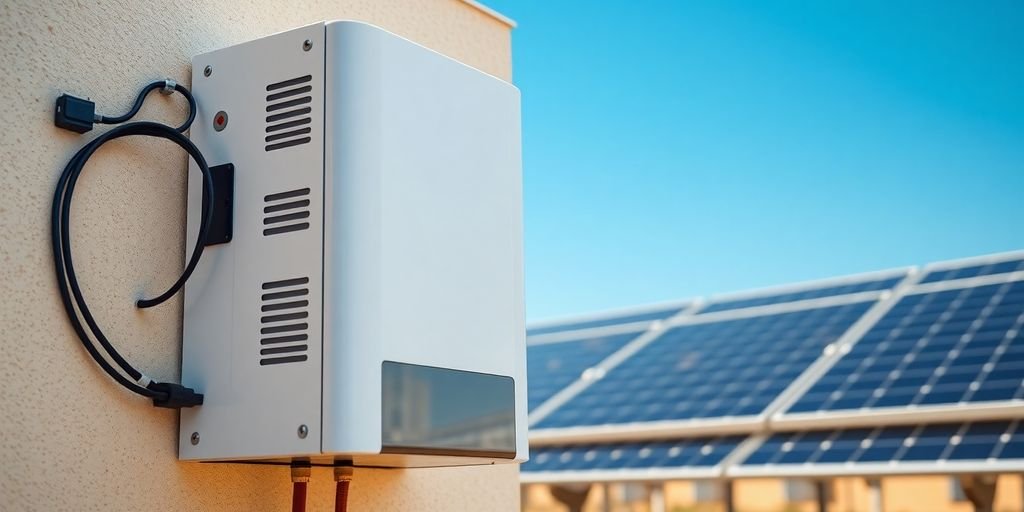
If you’ve ever wondered how solar panels actually power your home, the answer lies in a little device called a solar inverter. This piece of technology plays a vital role in converting the energy collected from sunlight into a form that we can use in our everyday lives. In this article, we’ll break down what a solar inverter is, how it works, and why it’s so important for solar energy systems. Key Takeaways 🔌 Solar inverters convert direct current (DC) from solar panels into alternating current (AC) for home use. ⚡ They can be grid-tied, allowing excess energy to be sent back to the power grid. 🧩 Different types of solar inverters include string inverters, microinverters, and power optimizers. 📈 Using a solar inverter helps maximize energy production and monitor system performance. 🚨 Common issues with solar inverters can include overheating and failure to convert power efficiently. Introduction to Solar Inverters So, you’re thinking about solar panels? Great! But before you install a home solar panel system, there’s something else super important to understand: the solar inverter. It’s not as flashy as the panels themselves, but honestly, it’s the brains of the whole operation. Without it, your solar panels are basically just expensive decorations. The solar inverter is what makes the power from your panels usable in your home. Think of it this way: solar panels generate electricity, but it’s a specific type called direct current (DC). Most of our homes run on alternating current (AC). The inverter’s job is to take that DC electricity and convert it into AC electricity. It’s like a translator, taking the language of the sun and making it understandable for your appliances. I remember when I first started looking into solar, I was totally confused by all the different components. It seemed like a lot of technical stuff, but once you break it down, it’s not too complicated. The inverter is a key piece of the puzzle, and understanding what it does is the first step to making solar energy a smart choice for your home. It’s also important to consider inverter solar systems when planning your solar installation. Solar inverters are a critical component in any solar panel system. They ensure that the electricity generated by your panels can actually be used to power your home. Without a properly functioning inverter, your solar investment won’t pay off. What is a Solar Inverter? So, what exactly is a solar inverter? Well, in simple terms, a solar inverter is the device that converts the direct current (DC) electricity generated by your solar panels into alternating current (AC) electricity, which is what your home appliances use. Think of it as the translator between your solar panels and your household. I like to think of it this way: your solar panels are like a foreign power plant, speaking a different electrical language (DC). The inverter is the interpreter, making sure everything your house needs to run understands what the panels are saying. Without it, you’d have a bunch of unused solar energy just sitting there. It’s a pretty important piece of the solar energy puzzle. It’s more than just a simple converter, though. Modern inverters also do things like monitor your system’s performance, maximize energy production, and even communicate with the utility grid. They’re like the brains of your solar setup, making sure everything runs smoothly and efficiently. How do Solar Inverters Work Solar inverters are essential for converting the direct current (DC) electricity produced by solar panels into alternating current (AC), which is the standard electricity used in homes and businesses. The inverter essentially tricks the transformer into thinking that the DC is actually AC, by forcing it to act in a way like AC – the inverter runs the DC through two or more transistors that turn on and off super fast and feed two varying sides of the transformer. Conversion of DC to AC Power Okay, so your solar panels are soaking up the sun and creating DC electricity. Great! But your TV, fridge, and all those other gadgets? They need AC. That’s where the inverter steps in. It takes that DC power and flips it back and forth, creating the AC power your home can actually use. It’s a pretty neat trick, and modern inverters are super efficient at it. Some can convert DC to AC with efficiency ratings up to 97%! Grid-Tied vs. Off-Grid Inverters Now, there are a couple of different types of inverters, depending on how your solar system is set up. If you’re connected to the grid (which most people are), you’ll have a grid-tied inverter. This type of inverter not only converts the DC to AC, but it also syncs up with the grid’s frequency and voltage. This allows you to send excess power back to the grid and even draw power from the grid when your solar panels aren’t producing enough. If you live in an area with net metering, this can earn you credits that reduce your energy bill. On the other hand, if you’re completely off-grid, you’ll need a different type of inverter that’s designed to work with batteries. These inverters create their own AC power source and manage the charging and discharging of your batteries. They’re a bit more complex, but they give you complete energy independence. The type of solar inverter you get installed at your house will be determined by several factors, including the shape and complexity of your roof. How does Solar Inverters Work Okay, so you’ve got solar panels soaking up the sun, but how does that energy actually power your TV or charge your phone? That’s where the solar inverter comes in. It’s basically the translator between your solar panels and your home’s electrical system. Let’s break it down. Conversion of DC to AC Power Solar panels generate electricity in the form of direct current (DC). Think of DC as electricity flowing in one direction, like a river. But most of our homes and the electrical grid use
How to Choose the Best Solar Panels for Your Home

Choosing the right solar panels for your home can seem overwhelming, but it doesn’t have to be. With the right information, you can make a smart decision that fits your needs and budget. This guide will help you understand what to look for in solar panels, considering factors like your roof’s characteristics, climate, and the types of panels available. Let’s break it down so you can find the best solar panel for home use that works for you. Key Takeaways What are solar Panels? Okay, so what are solar panels anyway? I think most people have a general idea, but let’s get into the specifics. They’re devices that convert sunlight into electricity. It’s not magic, but it sure feels like it sometimes! You stick something in the sun, and boom, you’re making your own power. Pretty cool, right? They’re made of photovoltaic cells. These cells absorb sunlight, and the energy from the sun knocks electrons loose, creating an electrical current. This current is then converted into a form that your home can use. It’s a pretty neat process, and it’s getting more efficient all the time. I’ve been looking into solar energy costs lately, and it’s amazing how much the price has come down over the years. Plus, with incentives and the potential to save on my electricity bill, it’s starting to look like a really smart investment. Here’s a quick rundown of why I’m considering solar panels: And it’s not just the panels themselves that are evolving. I’ve been reading about smart panels that use monitoring systems to optimize energy production. Plus, there are portable solar panels that don’t require installation. It’s a whole new world of solar technology out there! Your Roof’s Size, Shape, and Shading When figuring out which solar panels are best, I always start by looking at the roof. It’s the foundation of the whole project, literally! The size, shape, and any shading issues can really dictate what kind of panels will work best and how much power I can expect to generate. It’s not just about slapping panels up there; it’s about maximizing efficiency within the constraints of my existing roof. Shading Reduces Performance – What to Do Shade is the enemy! Even a little bit of shade can seriously cut down on how much electricity my panels produce. It’s like putting a kink in a hose – the whole system suffers. I need to be realistic about how much sun my roof actually gets throughout the day. If there are trees or nearby buildings casting shadows, I have a few options: Dealing with shading can be a pain, but it’s worth it to get the most out of my solar investment. I’d rather spend a little extra upfront to mitigate shading issues than lose out on power generation for years to come. Complex Roof Shapes? Go with Flexible or Compact Panels Not all roofs are created equal. If I have a roof with lots of dormers, skylights, or other obstructions, it can be tricky to fit standard-sized, rectangular panels. That’s where flexible or compact panels come in handy. They offer more versatility in terms of placement. Here’s a quick comparison: Feature Standard Panels Flexible Panels Compact Panels Size Larger Smaller Smaller Shape Rectangular Variable Rectangular Installation More complex Easier Easier Best For Simple roofs Complex roofs Limited space With a complicated roof, I might need to get creative with panel placement. It might mean using a mix of panel types to maximize the available surface area. It’s like a puzzle, but the reward is clean, renewable energy. I’ll need to consider the best roof for solar panels. Your Region and Climate Where I live plays a big role in picking out the right solar panels. It’s not just about sunshine; it’s about the whole weather package. Hot & Sunny Areas – Watch the Temperature Coefficient If you’re in a place that’s scorching hot most of the time, like Arizona, you need to pay attention to something called the temperature coefficient. This tells you how well a solar panel performs when it gets hot. Solar panels become less efficient as their temperature rises. A lower temperature coefficient means the panel will maintain its efficiency better in the heat. It’s a small detail, but it can make a big difference in how much power you get from your solar panels on those blazing summer days. Cold or Cloudy Regions – Choose Panels with Strong Low-Light Performance On the flip side, if you’re in a place that’s often cloudy or cold, like Seattle, you’ll want to look for panels that are good at capturing sunlight even in low-light conditions. Some panels are specifically designed to perform well when the sun isn’t at its brightest. These panels can make a big difference in your overall energy production, especially during those long, gray winters. It’s all about maximizing the available light. Wind, Snow, and Dirt – Look for Durable, Dual-Glass Panels And then there’s the issue of weather. If you live in an area with high winds, heavy snow, or lots of dust and dirt, you’ll want to make sure your panels are durable enough to withstand those conditions. Dual-glass panels are a good option because they’re more resistant to physical damage and degradation. They’re built to last, even when the weather is trying its best to beat them up. I’d rather pay a bit more upfront for something that’s going to hold up over time. Plus, consider the solar calculator to estimate energy production in your specific climate. “Living in a place with harsh weather means I have to think seriously about the long-term durability of my solar panels. It’s not just about finding the cheapest option — it’s about investing in something that will last and perform well for years, no matter what Mother Nature throws at it. That’s why I’m leaning toward dual-glass panels. They feel like a smart, reliable choice for my peace of mind.” What Can Impact Your Solar Panels’ Performance? As
Best Panels in 2026: Which one should you Buy? (Sophia Green)
As we look ahead to 2025, the solar energy landscape is evolving rapidly. With advancements in technology and a growing focus on sustainability, picking the right solar panels for your home has never been more important. In this article, we’ll explore the best solar panels available this year and what factors you should consider when making your choice. 🔑 Key Takeaways Maxeon 7 is leading the pack for efficiency and reliability. Canadian Solar HiHero 445 HN offers great performance at a competitive price. REC Alpha Pure-R is known for its durability and long lifespan. Panasonic EverVolt HK Black Series 430W stands out for its sleek design and efficiency. When choosing solar panels, consider your home’s specific needs and local climate. Introduction to Solar Energy Trends in 2025 Okay, so let’s discuss what’s happening with solar energy as we move through 2025. Things are changing fast, and it’s pretty exciting, if you ask me. I’ve been monitoring the industry, and there are a few key trends that I think are important for anyone considering solar panels for their home. First off, efficiency is getting better and better. We’re seeing panels with impressive efficiency ratings, some pushing close to 25%. That means you can get more power from the same amount of space, which is a big deal if you have a smaller roof. Another thing I’ve noticed is that prices are becoming more competitive. While the initial investment can still be a hurdle, the long-term savings are becoming more and more attractive. Plus, there are more financing options available now than ever before. I think it’s great that solar energy is becoming more accessible to everyone. Here are some trends I’m seeing: I think one of the biggest changes is the growing awareness of the environmental benefits of solar energy. More and more people are realizing that switching to solar is a great way to reduce their carbon footprint and help protect the planet. It’s not just about saving money anymore; it’s about making a difference. And finally, let’s not forget about the government incentives. Many states and the federal government are offering tax credits and rebates to encourage people to go solar. These incentives can significantly reduce the upfront cost of installing a solar system, making it even more appealing. Electricity generation from solar is at a record high. It’s something to look into when you’re crunching the numbers. Why Choosing the Right Solar Panels Matters Okay, so you’re thinking about solar panels. That’s great! But before you jump in, let’s talk about why picking the right ones is so important. It’s not just about slapping any old panel on your roof and hoping for the best. It’s about making a smart investment that will pay off for years to come. Think of it like this: you wouldn’t buy just any car, right? You’d consider things like fuel efficiency, reliability, and how well it fits your needs. Solar panels are the same. Choosing the right ones can significantly impact your energy savings, the lifespan of your system, and even your home’s value. Here’s why it matters: Energy Production: Different panels have different efficiency ratings. Higher efficiency means more electricity generated from the same amount of sunlight. If you have limited roof space, you’ll want to maximize every square inch with high-efficiency panels. Long-Term Savings: The initial cost of solar panels is an investment. Better panels often last longer and degrade less over time, meaning you’ll get more electricity and save more money in the long run. Plus, a good system can increase your home’s value. Durability and Reliability: Solar panels are exposed to the elements day in and day out. You want panels that can withstand harsh weather conditions like heavy snow, strong winds, and extreme temperatures. Cheaper panels might not hold up as well, leading to costly repairs or replacements. I remember when my neighbor went with the cheapest solar option he could find. A year later, he was already dealing with cracked panels and reduced energy output. He ended up spending more money in the long run than if he had invested in better quality panels from the start. It’s a lesson I won’t forget. So, take your time, do your research, and choose wisely. The right solar panels can make a world of difference. What are the best Solar Panels in 2025 Okay, so you’re looking for the best solar panels this year? It’s a big question, and honestly, there’s no single “best” for everyone. It really depends on your specific needs and situation. But based on what I’ve seen, there are a few brands that consistently come out on top. Brand & Model Living With Solar Score Our Take SunPower Maxeon 7 AC ⭐ 4.8 / 5 Highest efficiency on the market (24.1%), ultra-premium, built to last 40+ yrs REC Alpha Pure-R ⭐ 4.7 / 5 Great for shaded roofs, lead-free, strong HJT tech with sleek black design Panasonic EverVolt HK Black ⭐ 4.6 / 5 Excellent for colder, cloudy climates; solid all-around performance Qcells Q.TRON BLK-G2+ ⭐ 4.5 / 5 U.S.-made, reliable mid-range choice with good performance and IRA benefits Canadian Solar HiHero 445 HN ⭐ 4.4 / 5 Best value high-efficiency panel; strong performance at a competitive price Tesla Solar Panel (2025 Model) ⭐ 4.3 / 5 Seamless integration with Powerwall, smart-home ready, sleek and low-profile Jinko Solar Tiger Neo N-Type ⭐ 4.3 / 5 Advanced n-type cells, reliable and cost-effective for large-scale installs Trina Solar Vertex S+ ⭐ 4.2 / 5 Good for homeowners wanting dual-glass durability and fair pricing Mission Solar MSE PERC 440W ⭐ 4.1 / 5 Made in the USA, great for budget installs and federal tax credit eligibility Silfab Elite SIL-410 BG ⭐ 4.0 / 5 Stylish and U.S.-made, solid performance with a clean aesthetic I’ve been keeping an eye on the market, and here’s my take on some of the top contenders: Choosing the right solar panels can feel overwhelming, but it’s worth doing your research. Think about your energy needs, budget, and the specific