How Residential Solar Panels Work
I’ve been looking into residential solar panels a lot lately, and it’s pretty wild how they work. It’s not just about slapping some panels on your roof and suddenly having free electricity. There’s a whole process behind it, from how sunlight turns into power to what happens when the sun isn’t shining. If you’re like me and curious about how residential solar panels work, stick around. I’m going to break down the basics of how these systems operate and what you need to know. Key Takeaways How Residential Solar Panels Work Okay, so you’re thinking about getting solar panels? Awesome! Let’s break down how these things work. It’s not magic, though it might seem like it at first. Basically, solar panels take sunlight and turn it into electricity that you can use to power your home. The key is something called the photovoltaic effect. Think of it like this: sunlight is made up of tiny particles called photons. When these photons hit the solar panel, they knock electrons loose from the atoms in the panel’s material (usually silicon). These loose electrons then flow through an electrical circuit, creating electricity. It’s like a tiny, sun-powered power plant right on your roof! So, how does solar panel technology do this? Well, the panels are made up of many individual solar cells. Each cell is relatively small, but when you put a bunch of them together, they can generate a significant amount of power. The cells are sandwiched between protective layers to keep them safe from the weather. They also have an anti-reflective coating to help them absorb as much sunlight as possible. The sun makes the molecules on the road’s surface move faster and become warmer. With solar panels, the sunlight doesn’t make them hotter. Instead, the sunlight is absorbed by the cells and transformed into something useful: electricity. Once the solar panels generate electricity, it’s in the form of direct current (DC). But most of our homes use alternating current (AC). That’s where the inverter comes in. The inverter takes the DC electricity from the panels and converts it into AC electricity that your appliances can use. It’s a pretty neat trick, if you ask me. If you add battery storage, you can integrate it to store excess power and create your microgrid. And what happens to any extra electricity that your panels generate? Well, if you’re connected to the grid, you can sell that electricity back to the power company! This is called net metering, and it can help you offset the cost of your solar panels. Or, if you have a home battery storage system, you can store that extra electricity for later use, like at night when the sun isn’t shining. It’s all about maximizing your energy independence and saving money on your electricity bill. Solar panels perform best when they are directly facing the sun and are often tilted to increase efficiency. This allows them to garner the sunshine most efficiently, even on cloudy days. Components of a Residential Solar System When I decided to get solar panels, I was honestly a bit overwhelmed by all the different parts involved. It’s not just the panels themselves! Here’s a breakdown of what makes up a typical residential solar system. Solar Panels These are the stars of the show. They’re what capture sunlight and convert it into electricity. There are different types, like monocrystalline, polycrystalline, and thin-film. Each has its efficiency and cost. I ended up going with monocrystalline because they’re more efficient, which was important since I have limited roof space. You can set up a solar panel system with any of these panels. Inverter Solar panels generate direct current (DC) electricity, but our homes use alternating current (AC). That’s where the inverter comes in. It takes the DC electricity from the panels and converts it into AC electricity that we can use to power our lights, appliances, and everything else. There are different types of inverters, like string inverters and microinverters. String inverters are more common and cheaper, but microinverters are installed on each panel and can optimize performance individually. Mounting System This is what physically attaches the solar panels to your roof. It needs to be sturdy and secure to withstand wind, rain, and snow. The mounting system is designed to be compatible with different roof types, like asphalt shingles, tile, or metal. I had to make sure mine was properly installed to avoid any leaks or damage to my roof. Electrical Wiring All the components need to be connected with proper electrical wiring. This includes wiring from the panels to the inverter, and from the inverter to your home’s electrical panel. It’s important to use the correct gauge of wire and follow all electrical codes to ensure safety. I left this part to the professionals! Monitoring System Many solar systems come with a monitoring system that allows you to track your energy production. This can be a simple display or a more sophisticated app that shows you real-time data. It’s cool to see how much electricity your panels are generating and how much money you’re saving. Plus, it can help you identify any problems with your system. You can transform your home’s electricity usage with solar panels. Battery Storage (Optional) If you want to store excess solar energy for later use, you can add a battery to your system. This is especially useful if you live in an area with frequent power outages or if you want to reduce your reliance on the grid. Batteries can be expensive, but they can provide peace of mind and increase your energy independence. Net Meter If you’re connected to the grid, you’ll likely have a net meter installed. This meter measures the amount of electricity you’re sending to the grid and the amount you’re taking from the grid. This allows you to get credit for any excess solar energy you generate. Through net metering, you can offset the cost of electricity you use at night or on
Solar Panels & Trees: Can They Coexist?
So, you’re considering solar panels, which is great! But then you look at your yard and, wow, there are a lot of trees. Perhaps now you are thinking: “Do solar panels and trees mix?” And that’s a really common question, and, I mean, let’s face it, valid. I mean, solar panels need sun, and trees provide shade. A little bit of a contradiction, isn’t it? And I’m here to tell you: There’s often tarte and ice cream to be enjoyed as well. It just requires a little bit of planning and knowing how it all works. Let’s explore some ways we can still make your solar dreams a reality, even if you happen to have a leafy green backyard. Key Takeaways Can You Have Solar Panels with Lots of Trees? Alright, so say you have a bunch of trees, and solar panels don’t seem like an option. It’s a fair question! I get it. Trees are nice and all, they provide shade and everything, but solar panels need some sunlight to do what they do. The good news is, owning trees doesn’t necessarily preclude you from solar. Maybe it just means you need to be a little more strategic. It depends on the kind of trees, where they are, and how much shade they cast on the roof of your home each day. Sometimes a small haircut can go a long way. Solar technology is always changing, so panels are getting more shade-tolerant than they used to be. In Many cases, I have witnessed people can offset a large amount of their electricity usage, even with some shading issues.” It is about balance and what works best for each individual. Curious about alternative setups? Explore ground-mounted solar systems as another option. The Science of Shade and Solar Panels Alright, so let’s jump into the nitty-gritty of how shade plays with solar panels. It’s not simply a matter of ‘less sun, less power.’ It’s a little more complicated than that. Solar panels are intended to be most efficient in direct sunlight, and even a small amount of shade can greatly diminish their output. Consider it this way: Solar panels are made of many individual solar cells. Because even a dimmed corner of a panel can impede the performance of an entire panel and possibly even the system. This is due to the fact that the cells are typically connected in series. So if one cell is in trouble, it drags down the others. That’s more like a chain, only as strong as its weakest link. This is important for knowing how to maximize your solar ROI with shade. Learn how solar works in detail in what is solar energy and how does it work. Now, power reduction is not a linear quantity with the quantity of shadow. And a little bit of shadow can, occasionally, cause a disproportionately huge power drop. This is where partial shading on solar systems has an impact. There are alternatives to this, like using solar panel optimizers or microinverters. These devices work to de-isolate the panels, so that when one is shaded, the whole system isn’t brought down with it. These are the solar panel optimizer benefits that can act as game changers. Also, the position of the sun changes with the date, so the amount of shade that solar panels receive will also change. What is a sunny spot in the sun could very well be in shade in the winter, and vice versa. That’s why it’s good to keep them in mind when you’re designing your solar panel installation. How Much Shade Is Too Much for Solar Panels? So, your solar panels won’t have an ounce of innovative technology if you don’t know how much shading they can tolerate. It’s a valid question! The short answer is that it depends; there is no clear-cut answer. A little shade in the morning or late afternoon may be acceptable, but all-day shade during the hours when the sun is at its brightest? Which is going to tamper with your energy production? Get Your Free Solar Quote See how much you could save with solar energy. Fast, easy, and free! Request a Quote Don’t give up yet; a solar panel site assessment can help you understand whether panels are right for you. Professionals should take measurements of your roof’s solar access and determine how much sunlight your roof receives during the day, while factoring in any shade that trees or other structures might impose. This will give you an idea of whether solar is still an option for you. One thing to consider is the possibility of solar panel hot spots. These happen when parts of a solar panel are shaded, which leads to those areas becoming extremely hot. Over time, this can stress the panel and shorten its life. The panels are engineered to minimize the phenomenon nowadays, but it’s still something to know. To put [the drone] in a place like that, but also consider the placement of the solar panels. Perhaps you don’t have room for all the panels on your roof, but you might put some of them on a garage or shed that receives more sunlight. Or maybe one that’s ground-mounted is better-suited to your property. So let’s talk about the proper mix of sun and shade to ensure you get the best return on your solar investment. Types of Tree Shading O.K., so there’s more to trees and their impact on solar panels than just shade or no shade. There are several types of shading, and they affect your system differently. That nuance is important, and understanding it can help you determine the best solution for your property. Pro Tip: Periodic trimming of overhanging branches can significantly reduce shading without cutting down entire trees. Cutting Trees Down for Solar (Continued) When I discuss the idea of squeezing out every bit of potential efficiency from my solar panels, we eventually segue into a conversation about trees on my property. It’s a
Best Places to Install Solar Panels at your Home
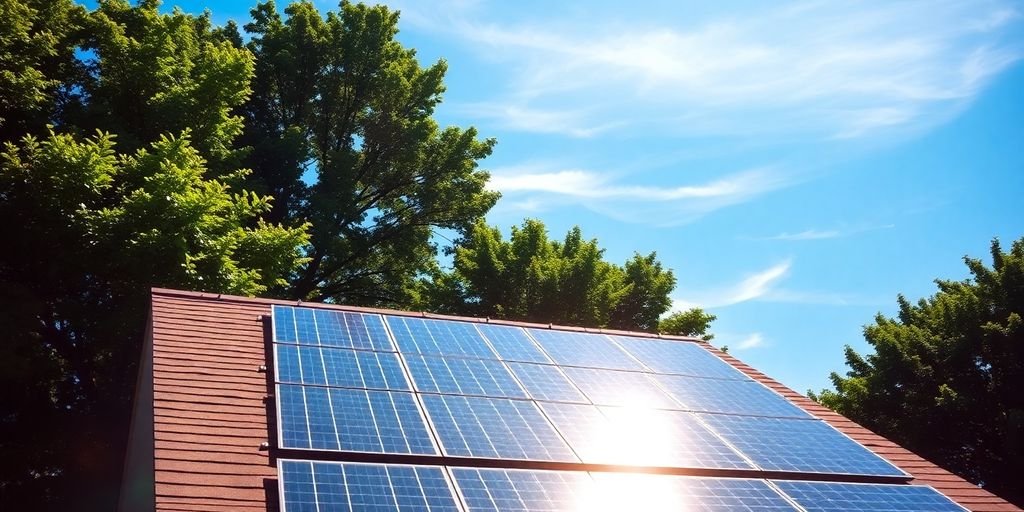
I am investigating putting solar panels on my house, and it’s a matter of where you put them. You can’t just slap them anywhere; the best spot for your solar panels can make all the difference in their output. I’ve done a little digging on where best to place them and what you need to keep in mind when planning an installation. It’s a bit more complicated than it had seemed at first, but getting it right would lead to even greater savings and a happier home. Key Takeaways Understanding Solar Panel Placement It’s not just a matter of slapping solar panels down anywhere when it comes to places to install them. I’ve come to realize that good solar panel placement is the most important factor when it comes to how they will maximize energy production. The orientation of solar panels can play a massive role in how effectively they work. It’s worth taking the time to get this right. There are a few basic details you will also consider for your choice. Your installer will survey your property to decide where your panels will be best located. If you have a definite location in mind, put it past your installer. I have learned how important it is to know the path the sun travels each year. It directly affects optimal solar panel efficiency sites. The idea is to hit the sweet spot at which your panels receive the most direct sunlight possible. This frequently means looking at the roof orientation, the shade from trees or nearby buildings, and even the tilt of panels. It’s a matter of finding the perfect solar panel angle so you get as much of the sun’s energy as you can. I also learned that which way solar panels should face on your roof is a question asked by many, and there is no simple answer. This varies depending on your property and energy needs. An at-home location for solar panels is a good place to start, but it’s always best to speak to a professional. Is your home suitable for solar panels?. It’s always best to speak to a professional for tailored advice. BEST ROOF FOR SOLAR PANELS The roof is the first location most homeowners consider for solar panel installation, and good reason. By contrast, roofs are a present source of unused, sun-soaked real estate, and by getting panels up on the roof, you keep them out of the way, yet aren’t exposing them to potential damage. Roof Orientation: South-Facing is Best If you live in the northern hemisphere, a south-facing roof is usually best. This is the part that will get the most sun exposure as the sun crisscrosses your property. Other directions can work, too: East- and west-facing roofs grab the morning and afternoon sun, respectively. The direction that your roof is facing is a big consideration in how much energy you will be able to produce. North is not so good as you don’t get much sun on the roof. Roof Pitch and Angle Considerations In an ideal world, solar panels would be pointed upward to capture the most sunlight. A lot of roofs boast pitches between 30 and 40 degrees, a nice leveling-off for solar panels to grip and generate substantial electricity. If your roof is steeper or more shallow than this amount, it could impact what type of mounting system is necessary. On flat roofs, special mounting systems can tilt the panels upwards and space them apart so they do not shade one another. The number of these panels, housed on racks that can be adjusted to narrow the angle of the panels and thereby angle them more directly toward the sun, would depend on the original tilt of the roof. 15 to 35 degrees is the best angle for receiving direct sunlight. Shading: Solar’s Biggest Enemy Shading is one of the main issues with solar panels. Even a shadows’Mercury can make a big negative impact on their output. Trees, chimneys, and even other structures can shade your roof, so it is very important to have a good idea of how much shading your roof gets as the day progresses. If shading is an impediment, you may have to trim trees or look for an alternative place to install your solar panels. Roofs that are in bad shape, an irregular shape that does not match the ideal tilt angle, or total shade from large trees are just some of the conditions in which rooftop solar may not be a good fit. Ground-Mounted Solar Panel Options When Ground Mounts Make Sense Alright, so your roof is not perfect. Maybe it faces the wrong direction, or there is too much shade, or you just don’t like how solar panels look up there. That’s the problem addressed by ground-mounted solar panels. They’re essentially solar panels on a stand that you’d place on the ground, and they can be a good option if your roof is not cooperating. I look at them as an opportunity to get some solar if your house is not ideally suited. They’re particularly useful if you have a lot of land and want to maximize solar production. Advantages of Ground-Mounted Systems One of the greatest advantages of ground-mounted systems, in fact, is flexibility. I can change the angle and the direction of the panels to receive the maximum amount of sunlight, which is not always an option with grid-tied systems that are on a roof.” Plus, maintenance is way easier. I never have to get on the roof to clean or fix them. Another factor to account for is that ground mounts can sometimes outperform rooftop systems because they have better ventilation, which keeps the panels cooler. Cooler is better when it comes to panels. Sure, ground systems can be more costly than roof systems, but the added flexibility and performance may be worth it to me. Where Else Can You Install Solar Panels Rooftops and ground mounts may be the most readily available form of
Monocrystalline Solar Panels: The Ultimate Guide to Efficiency and Savings
I’ve been doing some research on solar power recently, and one type of panel makes frequent appearances: monocrystalline solar panels. They’re meant to be ultra-efficiency and to save you money in the long term. So I decided to get into them and learn everything I could about them. This guide contains virtually everything I learned, from how they are made to how they compare to other forms of solar panels. I will paint a vivid picture of what monocrystalline solar panels are so you can determine if they’re right for your home. Key Takeaways What Are Monocrystalline Solar Panels? Fine, then let’s have a chat about monocrystalline solar panels. When I first heard of these guys, with all the technical jargon, I admit to being befuddled. In essence, they are a variety of solar panels made out of a single, uninterrupted crystal of silicon. This single-crystal structure is what allows them to be so efficient. Consider the comparison in this way: A super-smooth highway versus one full of a lot of potholes. Electrons generate electricity, and on that smoothly rolling, single-crystal “highway” of a monocrystalline panel, the traffic can flow far more freely. That explains why they are better at converting sunlight into electricity. They also seem to have a rather fancy, black appearance, one which (as one man) I find more attractive than a couple of the other types. These are a great choice if you are in the market for high-quality solar panels. How Monocrystalline Solar Panels Are Manufactured Alright, so you want to know how those sexy black monocrystalline panels are born? It is a pretty fascinating process, and it’s why they are so efficient. Ultimately, it’s all about making one big silicon crystal. There are several methods, but the Czochralski process is the usual one. Super-ultra-pure silicon is melted into a crucible. Then, a seed crystal is dipped into the pool of molten silicon and pulled slowly upward as it is rotated. As it is drawn, the molten silicon cools around the seed to form a large, solid cylinder of single-crystal silicon. That ingot is then cut into thin wafers that are the solar cells. Because the silicon forms a single crystal, electrons can move more easily, which is why these things get so hot. It’s more involved and expensive than manufacturing polycrystalline panels, but the performance increase is worth it, in my opinion. Want to learn how all this ties into the panel function? Check out how solar power works for a great explanation. How Efficient Are Monocrystalline Solar Panels If I’m thinking about solar panels, efficiency is massive. Because I want to extract as much power as I can out of the space I have to work with. Monocrystalline panels are considered to have the highest efficiency of other types of solar panels. This enables them to convert a greater proportion of sunlight into electricity. Solar Troubleshooting Help: Noticed a drop in solar performance or weird panel issues? Check out our step-by-step guide on how to troubleshoot common solar panel problems and keep your system running smoothly. I usually come across monocrystalline panels from around 17% to above 22%. Some of the newest and best panel technology can even edge closer to 24 percent. That’s pretty impressive! This greater efficiency is one reason they are frequently the best choice for such residential installations, particularly in cases where roof space is limited. Learn more about maximizing your system’s output in how to maximize the efficiency of your home’s solar system. I want to make sure I’m getting the most for my money, and a higher efficiency is always a good start. It should be mentioned that the higher efficiency solar panels can pay for the higher cost. Solar Panel Efficiency Comparison Panel Type Typical Efficiency Range Monocrystalline 17% – 24% Polycrystalline 15% – 17% Thin-Film 10% – 13% As you can also see, monocrystalline tends to perform the best out of all the types based on efficiency. This is because the single-crystal structure of silicon gives electrons more room to move, so the sunlight is converted more efficiently. When I’m weighing decisions, I always remember this difference in efficiency. Pros and Cons of Monocrystalline Solar Panels? As I balance the options for solar panels, I weigh the pros and cons. There are certainly some great benefits to monocrystalline panels, but you should also understand a few of the drawbacks. Let’s break it down. Pros Perhaps the best aspect of it, as I see it, is their efficiency. Monocrystalline panels tend to be more efficient, resulting in higher efficiency rates, as high as 20% or even more. As a result, I can produce more power with less space if roof space is at a premium. And they look prettier too, with their sexy flat black panel finish (so much cooler than that blueish polycrystalline panel color, I reckon). Pros of Monocrystalline Panels High Efficiency (17–24%). Converts more sunlight into electricity than other types. Needs less roof space for the same power output. Works better on cloudy days or in partial shade than some other panels. Often lasts 25+ years, with strong warranties. Uniform black color looks modern and blends well on roofs. Plus, they tend to last longer, so you don’t have to fret as much about replacements in the future. I also like that they do better in low light than some other types of panels. This can be the difference, especially on cloudy days or in places with less direct sunlight. Monocrystalline panels are a good option for a lot of homeowners. Learn how solar performs in all seasons in do solar panels work in winter?. Cons It’s not all sunshine and roses, of course. The all-out major con for me is the price. Monocrystalline panels typically have a higher initial cost than polycrystalline options. It’s because it is more complicated to manufacture! Then you have a consideration of time versus benefit, which over the long run could be more in your favor,
Bluetti PV200d Review 2025: Pros & Cons and Features
I’m always in the market for a good portable power method, especially if I’m camping or have little backup at home. So you can imagine how excited I was to get my hands on the Bluetti PV200D and put it through its paces. Below, I will tell you everything I found out about this product, from how easy it is to set up to how well it charges things up. What is the Bluetti PV200D? I’ve been working with the Bluetti PV200D solar panel, and I have a few thoughts that I want to share. In a nutshell, it’s a portable solar panel that works with Bluetti’s power stations, such as the AC200P. But what makes it truly different? Let’s get into it. Key Features and Specifications Before sharing my first-hand thoughts, let’s touch on Bluetti PV200D specs. Here’s a quick rundown: Design and Build Quality of bluetti pv200d review Portability and Durability The first thing that struck me when I got my hands on the BLUETTI PV200D was that it is Highly Portable. It conveniently folds up, and it is not too heavy to transport. Build quality leaves a lot to be desired, but it seems way more solid, and I intend to bring it camping. I have seen some other Bluetti PV200D vs out there that feel flimsy, but it seems like this one can take a little rough contact. The free bag is an added bonus and makes it all the easier to take it with you and safeguard it when not in use. I don’t expect it to survive a direct hit from a meteor, but it feels sturdy enough for everyday outdoor life. Setup and Ease of Use Installing the BLUETTI PV200D was easier than I thought. I’m not exactly a tech ninja, so I’m pretty happy with anything simple. Here’s what I did: That’s it! No complex instructions or tools required. The kickstands are durable and support the panel nicely and snugly on even and uneven terrain. I’ve seen some customers gush about the plug-and-play convenience, and I am reluctantly compelled to join them. Anyone who wants little fuss with their solar charging will appreciate this big plus. I’ll be sure to monitor the performance of the BLUETTI PV200D solar panel and give you more thoughts after using it for a few more weeks; however, I will say I’m impressed with how simple it is to use. I’ll compare the Bluetti PV200D pros and cons to other panels I’ve had. I’ll also make sure to compare it to some other panels that I’ve tried out. Performance and Efficiency Okay, so how does the Bluetti PV200D perform? I’m not just going to regurgitate numbers, I’m going to tell you my nitty-gritty real-world experiences with this panel. I mean that’s what’s important, isn’t it? Real-World Charging Tests I subjected the PV200D to a couple of tests to see how it fared. What I wanted to know the most about, however, was if it could do anywhere near 200W output as it advertised. Naturally, perfect conditions are seldom possible, but I did the best I could. I tried the Bluetti PV200L on a sunny day, at around noon, and faced it directly toward the sun. I also compared it to my legacy Renogy 100W panels. Here’s what I found: Wattage Output: I hit peaks ranging from about 175-185 W in a perfect world. It’s a bit shy of 200W, but that’s still a pretty good showing. The solar efficiency is certainly present. Shaded conditions: This is where the PV200D surprised me. It didn’t flat-out die when shaded to the middle, unlike some older panels. I lost about 25% of the output when 25% of the panel was in the shade. That is a great advantage for camping or using it in treey areas. Charging Speed: When plugged into my Bluetti, I can tell that the PV200D drastically reduced the time it takes to charge compared to my smaller panels. It’s still not quite instantaneous, but it’s a big step up. Compatibility with Bluetti Power Stations The PV200D is supposed to be compatible with Bluetti power stations, and it is indeed. The MC4 connectors were super-easy to plug and play. I tried it out with a few different models, and here’s what I saw: Condition Wattage Output (Approx.) Charging Time (Compared to 100W Panel) Compatibility Full Sun 175W-185W Significantly Faster Excellent Partial Shade (25%) 130W-140W Moderately Faster Pros and Cons of the PV200D Alright, so now that’s out of the way, time to take a deep dive into the BLUETTI PV200D pros and cons. I’ve spent some quality time with this solar panel, so I’m clear what it excels at and where it struggles. Here’s my take: Pros Cons All in all, the BLUETTI AC180 is a good option for portable solar power; however, it’s not perfect. The pros outweigh the cons for me, but it all depends on what you need and how you’ll use it. Who is the Bluetti PV200D for? I believe the Bluetti PV200D is a solid choice for several individuals. It’s ultimately a question of wanting portable power and wanting to use the sun to get it. Let’s break it down. Portability and Durability If you’re an avid camper, RV’er, or outdoor enthusiast, the PV200D will change the game. Portability also means that I can carry it with me when I go on my adventures, and I don’t have to worry too much when it comes to handling, as it looks quite tough. I’m even considering carrying one around with me the next time I go camping, where I’ll be able to keep my devices charged and, if I’m lucky, power a small fan. It’s also great for tailgating! I can picture myself using the BLUETTI AC180 Portable Power Station with this panel. Setup and Ease of Use For homeowners looking to supplement outages or lower their dependence on the grid, the PV200D is a convenient solution. It’s a breeze to set
Polycrystalline vs Monocrystalline Solar panels: Which one you should Choose ?
I’m researching solar panels, and it seems like there are two main types: monocrystalline and polycrystalline. It’s a big decision, kind of, because I want to make sure I get the right ones for my place. I’ve been doing some digging to try to get at the real differences between them, namely, how they’re made, how well they work, and, of course, how much they cost. This whole question comes down to whether one is actually “better” than the other, or if it simply depends on what you’re looking for. So, I wanted to share what I’ve learned about solar panels, specifically what is the difference between polycrystalline and monocrystalline. Key Takeaways Introduction to Solar Panel Technologies I’ve been researching solar panels recently and fascinating to see what’s all available. Fundamentally, a solar panel acts as a kind of photocell, making electricity from sunlight using something called the photovoltaic (PV) or photoelectric effect. These cells are composed of stuff that becomes excited when light strikes it, producing electricity. And when it comes to determining which solar panels are right for your home, you’re bound to encounter monocrystalline and polycrystalline panels. These are the two giants in the home market. They both harness silicon to do their thing, but it’s how they’re manufactured that the disparities between solar panels begin to present themselves. Monocrystalline panels are considered more efficient and have that sleek, black color due to them being made from a single crystal of silicon. Polycrystalline panels, on the other hand, are slightly more budget-friendly, and they have a blue, speckled appearance because they are made from multiple pieces of silicon melted together. There is also thin-film solar, another alternative. Thin-film panels are also made from different materials and are generally lighter and more flexible than silicon. They do not generally work as effectively as the solar panel efficiency comparison. The right panel depends on what you want and what you’re willing to spend. Monocrystalline Solar Panels: The Premium Choice I have a soft spot for solar tech, and when it comes to high-end gear, the monocrystalline panels are the king. These reportedly are considered as top of the line panels of today due to their sleek and efficient construction. They’re the sort of panels you might settle into if you’re truly serious about wringing every last watt of electricity out of your system, even if it requires spending a little bit extra money up front. How Monocrystalline Panels Are Made The manufacturing process for monocrystalline panels is quite fascinating. And it begins with something known as the Czochralski process, in which a single silicon crystal is grown. Its crystal is then sliced into thin wafers that are used in the solar cells. Because they are constructed without all those material junctions, these panels have a very uniform structure, which is what makes them so efficient. It is a more complicated process than producing panels of polycrystalline, which is one reason they tend to be costlier. If you’re considering a solar panel system, you should know how they’re made. Advantages of Monocrystalline Panels One of the outstanding benefits of monocrystalline panels is their efficiency. They are generally more efficient than polycrystalline panels, so they can produce more electricity from the same amount of sunlight. Pros of Monocrystalline Panels Higher efficiency (18–23%) → produce more power in less space Better performance in low-light and high-temperature conditions Sleek black appearance → often preferred for aesthetics Typically longer lifespan (25–30+ years) Higher power output per panel → fewer panels needed for same wattage This makes them a great option if you don’t have a lot of roof space and want to produce as much energy as possible. And they typically do better in the heat and low light. Something else I like is their look; they’re often painted black and have a low profile that looks good on the roof. Among the types of panels available, we have monocrystalline panels, which are known as the top-tier solar panels today. Disadvantages of Monocrystalline Panels Naturally, there are a few downsides that should be considered. The main one is the cost. Good For: Being the best-looking panel on your block. Monocrystalline panels are more costly compared to polycrystalline panels, as they have a more complex production process. And, then, although the manufacturing process is improving, there can still be some silicon waste during production, which isn’t great. But if you’re willing to spend a little more for better efficiency and a more attractive profile, then they could be worth it. Have a look at the monocrystalline vs polycrystalline solar panels while making a decision. Cons of Monocrystalline Panels More expensive than polycrystalline Slightly more silicon waste during manufacturing (traditional methods) Higher upfront cost may not justify extra efficiency for large, low-cost land installations Polycrystalline Solar Panels -the Budget Option To dollop things down even further, when it comes to price point and product efficiency, there are polycrystalline solar panels: the cheap man’s good enough alternative. Polycrystalline Solar Panels: The Cost-Effective Alternative When it comes to solar power, polycrystalline solar panels are usually considered to be more affordable. I like to think of them as the dependable workhorses. They may not be the most dazzling or the most efficient, but they do the job without gouging the wallet. Their inexpensive price tag, however, means they’re a super tempting option for bigger jobs, or for people who want to keep their initial outlay to a minimum. How Polycrystalline Panels Are Made While monocrystalline panels are made from a single crystal of silicon, cut into wafers, a polycrystalline panel is composed of several silicon fragments that are melted together. That process is simpler and less wasteful, a big part of why they’re cheaper to produce. The silicon melt is cast into a square mould and is cooled to a solid. This explains the characteristic blue, speckled look of polycrystalline panels. Think of it as a bit of mosaic work, but with silicon! Advantages of Polycrystalline Panels The
How Much Does Off-Grid Solar Really Cost?
Are You Wondering About Off-Grid Solar Systems Cost? I’ve been researching off-grid solar systems costs recently, and I realized…This is it! This is the difference between living off-grid and living on-grid. I mean, all those people who talk about going green, being self-sufficient, that looks good on paper, doesn’t it? When you start diving into the real numbers and what it takes to get set up, though, it can be a bit overwhelming. So, I decided, let’s just show how much off-grid solar actually costs, since I’m sure I’m not the only one who wants to know! What is the off-grid solar system? Well, then what is an off-grid solar system, exactly? Well, in basic terms, it is a means for you to produce and save your power off the traditional power grid. Call it energy independence! You are no longer sucking on the grid; instead of the power company feeding you juice, you’re making your juice from the sun. Off-grid solar systems are built to run everything in your home, and, at that, 24/7. That means you have to size and plan your system very carefully to manage everything, even when the sun isn’t shining on those cloudy winter days. Regular residential solar panels are connected to the grid at all times, but an off-grid system is your only source of electricity. It’s a bigger investment, but you’re also not at the mercy of power outages or increasing electricity costs. I think that’s pretty cool. What are the main items in an off-grid power system? So, you’re considering staying off the grid with solar power? Awesome! But what exactly do you need to do to make that a reality? It’s not just about slapping some panels on your roof. For now, let’s drill down on some of the important pieces I’ve learned about. Solar Panels These are what your system uses to do the work. Solar panels transform sunlight into electricity. Multiplying a panel’s wattage by the amount of time the sun shines can give you an estimate of how much power a panel can generate per day. You will probably want to calculate your energy needs first, then size your panel array accordingly. Be sure to take the solar panel costs by state into account, as prices can fluctuate. Charge Controller Consider the charge controller the traffic cop of your electricity. It keeps the power going from your solar panels to your batteries, maintained. That way, you’ll never overcharge (which can ruin your batteries and reduce their lifespan). A solid charge controller is key to a great system. Battery Bank That’s where you save up all this wonderful solar power for when the sun isn’t shining. They’re also a major investment, and you want the most useful and size-appropriate vehicle battery you can get for your money. One alternative is lead-acid batteries, which are less expensive, but so-called lithium-ion batteries are known to provide better muskets and a longer service life, though they carry a steep initial cost. The size of your battery bank also depends on how much energy you use daily, and for how many days you want to be able to run your system without seeing the sun (days of autonomy). Inverter Your solar panels and batteries generate electricity in the form of direct current (DC), but most of the appliances in your home run on alternating current (AC). This is where the inverter steps in. It’s what changes the DC power stored in your batteries into the AC power you need to run your lights and refrigerator and TV, and all the other devices we all use. Inverters are available in a variety of sizes, too, so you’ll have to select one that can accommodate the highest load you intend to run at any time. Balance of System (BOS) Components This is a sort of catch-all word for all the other little bits and bobs you need to actually hook everything up and get it running safely. This includes wire, fuses, circuit breakers, disconnects, and fasteners. Don’t cheap out on these parts — they’re important for both the safety and performance of your rig. Finding the perfect off-grid solar system for your home is essential to achieving a sufficient power output. How Much Does an Off-Grid Solar System Cost? Mostly, though, let’s just cut the crap. What would it cost to go off the grid? It’s not a straightforward answer, but I can offer a realistic estimate. The off-grid solar system cost is certainly a lot more expensive than remaining connected to the grid. As far as I can tell, this is not cheap. I’m not only referring to solar panels; you also need batteries, an inverter, a charge controller to control it all, plus wire to put it all together. And then there are the installation costs. I’ve heard estimates that assert that the average off-grid solar price per watt is higher than grid-tied. (That’s because you have to over-engineer your system to cope with cloudy days and low sunlight periods.) You can’t just count on the grid to backfill the holes. And the solar battery cost hasn’t been mentioned. The batteries are a big part of the price, and you’ll need to have enough storage to tide you over through nighttime and those kinds of not-so-sunny winter days. The solar panel inverter and solar charge controller are additional costs to be borne. I can’t give you a number off the top of my head without knowing exactly how much you need. I will say the price of solar panels for house off-grid applications can be a hefty cost. It’s an investment in energy independence, but it’s also one you need to go into with your eyes wide open. Factors Influencing Off-Grid Solar Costs O.K., so you’re pondering going off the grid and becoming energy independent. Awesome! But first, before you leap, let’s discuss what goes into making an off-grid solar system affordable. There’s more to the final bill, you see, than
Your Guide To Backyard Solar Panels: Pros, Cost & More

Considering going solar but not crazy about putting panels on your roof? 100 PERCENT RENEWABLES How do I power my refrigerator with green energy? Backyard solar panels could be the answer. These akin systems, commonly known as ground-mounted solar panels, provide an alternative route to collect the sun’s energy. They offer you more freedom about where they are placed, and in some cases, they can even produce more electricity than rooftop ones. But they’re not for everyone. They take up quite a bit of space, and can be a little pricier upfront. This guide will teach you everything you need to know about backyard solar panels and whether they’re right for your home. What Are Backyard Solar Panels? When I use the term “backyard solar,” I’m defining it as ground-mounted solar panels that somebody installs in their yard, instead of on their roof. It’s a pretty simple idea, but it presents all sorts of potential opportunities for homeowners who don’t have the best possible roof for solar. Think of this as adding a mini solar farm to your home right on your very own property. I’ve long been interested in the notion of making my power. I think the idea of achieving backyard energy independence, my home runs on sunshine, brings a great deal of appeal. My whole decision is not for saving money, it’s about where my power comes from, and keeping it, so that at the end of all of this, I’m having a reduced impact on the environment. These systems usually consist of a support, typically a rack, which holds the solar panels in place on the ground. This setup is so much more flexible compared to rooftop installs. You’re not, for example, stuck with the direction or size of your roof. You can position your backyard solar array such that it receives optimal sun throughout the day, significantly ramping up the electricity you generate. And if you need to increase your setup one day, it’s generally easier to add more panels to a ground mount than to a roof. A standard backyard solar panel system includes all of the following components: And some people are choosing to install solar panel kits in their backyard, which can be a more DIY-friendly process, while others want a professional to install a bigger and potentially more complex system. Either way, more and more folks are looking beyond the traditional rooftop system and considering solar panels in their backyard as a way to go green without all the limitations of a roof-mounted setup. How Backyard Solar Panels Work So, you think you want to get into backyard solar panels, eh? I get it. It’s kind of cool to imagine generating power right there in your backyard. In essence, these systems convert sunlight into electricity using photovoltaic (PV) panels. The panels are composed of semiconductor material (most commonly silicon) that converts sunlight directly into direct current (DC) electricity. It’s magic, but it is also science. This DC power moves to an inverter, which converts it to alternating current (AC) power (the kind of power that your appliances need when they’re plugged into the wall). From there, the AC power can flow directly into your home to power your lights and gadgets, or you can send it back to the grid, depending on your configuration. It’s a cool way to start using home solar power. Grid-Tied vs Off-Grid Options When it comes to backyard solar, you have a couple of main options: grid-tied or off the grid. Each type has its pros and cons, and what’s best for you depends on your energy needs and how much freedom you want from the utility company. Grid-Tied Systems These are often the most popular choice. Your solar panels are then plugged into the electricity grid. When your panels generate more electricity than you are using, the surplus electricity flows back into the grid, and you often receive credits from your utility company (a concept known as net metering). When your panels aren’t making enough, it’s dark or cloudy out, you buy back grid electricity. This configuration is the best of both worlds; you lower your electricity bill and secure a dependable source of power. It’s an easy way to incorporate solar power in tight spaces without radically altering your lifestyle. Installation costs for these systems may vary quite a bit. Off-Grid Systems These are for people who want total independence from the utility grid. Your home is powered by the solar panels, which charge a battery bank. You have no grid connection at all. That’s because you need a good energy storage system to capture lots of the energy you need, particularly during low sunshine. This is a more substantial upfront investment and will take more careful planning to ensure you have enough stored energy. But man, does it feel good to be a bona fide self-starter. Hybrid Systems Some like a hybrid system that mixes and matches. You’re tied to the grid, but you also have battery storage. That way, you get the advantage of net metering and receive backup power during outages. It’s a nice compromise if you’d like some independence, but neither are you ready to fully sever ties with the grid. I’ve also found that understanding those differences is crucial for making an informed decision about what to buy before you invest in a backyard solar setup. It’s not just the panels in the yard; it’s how they fit together as part of the bigger picture of your overall energy use. Battery Storage Integration Battery storage can be a big one too, especially if you’re considering an off-grid or hybrid system. There’s the possibility that even if you’re grid-tied, having batteries could be a game-changer. Here’s why: Energy Independence: Batteries allow you to store that extra electricity you make with your panels during the day. That means you can draw on that power at night or when the sun isn’t shining, minimizing your reliance on the grid. It’s like
How To Avoid Solar Panel Scams: Signs To Look For
Solar power is going big time, and that’s super good news for the planet and your pocketbook. But as with anything popular, some bad apples seek to deceive people. We’re discussing solar panel scams. These scams can saddle you with a big mess and an empty bank account. So, how do you spot them? It’s not always like that, of course, but knowing what to look for can save you some trouble. This article will help you understand the typical tricks and what you can do to avoid being scammed when you are considering going solar. The Rise of Solar Energy and Scams I’ve seen the solar industry grow, and it’s kind of incredible how many people are exploring it now. Who doesn’t want to save a buck on the electric bill and, perhaps, do the planet a little good? It makes sense, right? In the excitement over clean energy, solar panels have surged. But, and this is a big “but,” with all that growth also comes a downside: more chances for solar energy fraud. It’s the way it is whenever anything gets popular: the bad apples come crawling out, trying to hawk garbage products or services to the next rubes in line. It’s a shame. You grow excited to go green and save money, and suddenly, someone is trying to play you for a sucker. And it’s more than about wasting money; it’s about washing away trust in something that really could help your home and the environment. And it is not just a few bad actor cases. I have been hearing more and more stories lately of people who got stuck with bad solar deals. It’s a real issue, and that is why I wanted to discuss it.” The need for solar is sky high, and while that’s largely a good thing, it also means that scammers are trying to profit off that demand. They are also getting tricky, so it isn’t always simple to spot one at first. That’s why it’s especially important to know what to look for. What Makes Solar Scams on the Rise? There are several reasons the scams seem to be on the rise: What Are Solar Panel Scams? I’ve watched many, many people get excited over solar, and justifiably so. It’s a wonderful way to save money and save the planet. But, as with anything popular, there will be opportunists. A solar panel scam is, at its core, an attempt to dupe you into a bad deal for solar panels or services. The problem is not the solar panels themselves, is it the shady characters or companies selling them. They frequently prevaricate, kind of, to part you from your money. How They Operate These guys are pretty sharp, and they’ve got a few tricks up their Bayonne sleeve. They could make outrageous promises that sound too good to be true, i.e., “free solar panels” or savings that are just not possible. At times, they will even claim they represent a government program to win your trust. The objective in all cases is to get you to sign and contract or give over money before you have a chance to think it through. It’s a bait-and-switch, with solar. Common Tactics I’ve seen a few typical scenarios for these scams. They typically use high-pressure sales pitches, attempting to force you into making a decision right away. They may arrive on your doorstep unannounced or phone you repeatedly. Another huge one is the phony solar rebates or incentives. They will suddenly be ringing you about these great deals that aren’t quite as great as they sound, and they might blow up those things that were worth your consideration to make them sound greater than they are. It’s about creating that sense of urgency and making you feel that you’ll miss out if you don’t act now. I’ve learned the hard way that if a deal sounds too good to be true, it probably is. For solar, slow and steady is the best way to go. Don’t allow anyone to hurry you into a decision that may cost you significant money and pain later on. The High Cost of a Solar Installation Ripoff Being bamboozled by a solar installation scam could leave you in a state of red-alert nightmare. Not only could you lose a lot of money, but you could end up with a shoddily installed system or no system at all. Thinking About Going Solar? Curious about how much solar might set you back? Check out our guide on the cost of installing solar panels and get a detailed breakdown of expenses and potential savings. I’ve heard stories of people spending thousands of dollars, only for the company to vanish, or for them to discover that the panels they got are cheap, low-quality, or not what they were promised. It can also sour you on solar more broadly, which is unfortunate, because it’s a fantastic technology when done well. Identifying the scam solar company signs is crucial to protecting yourself. What You Should Know Before Signing a Solar Contract I remember when I first began researching solar, it seemed like I was swimming in information. Everybody had an opinion, and every company had a deal that sounded too good to be true. But I soon discovered that going slowly and thoroughly understanding what you’re getting into is an essential strategy. We’re not just talking about the panels; this is the full service, from installation to how you’ll pay for it over the next couple of decades. The key to avoiding potential troubles and reaping solar benefits is to make an informed decision. Deciphering the Fine Print: The Solar Contract When you sign a solar contract, it’s not just a piece of paper; it’s a commitment for the long haul. I mean, we’re talking about something that could affect your economic world for 20 years or longer. Again, I will always tell people to drill deep into the details. Don’t just skim it. Ask
How To Reduce Vampire Power With Solar Panels
Do you ever notice how your electricity bill continues to be high, and maintenance gets called in even when you know that you turned off everything? You’re not alone! A sly culprit, called “vampire power”, might be sucking the lifeblood from your wallet and you don’t even know it is happening. This post will explain just what vampire power is, how it quietly increases your energy bill, and, most importantly, how solar panels can help fight it. We’ll also consider some other straightforward ways to plug this energy drain. Key Takeaways What Is Vampire Power? I recall the first time I ever heard the phrase “vampire power.” I didn’t understand at all and thought it must be scary movies or something. Well, it’s a lot more mundane, but it is also a lot more expensive than any horror movie I have ever seen. Put simply, vampire power is the electricity that gadgets consume when they’re turned off or in standby mode. It’s as if they’re stealthily sipping energy, even when you believe they aren’t doing anything. I mean, who knew that my TV was still using power all that time it was just sitting there, waiting to be hit with the remote? This is known as phantom load, or standby power, and it’s extremely common with most modern electronics. Think about it, your TV must be capable of turning on instantly via the remote, your computer needs to retain particular settings, and anything that has a clock display, such as a microwave or coffee maker, requires consistent juice to keep time. These small conveniences do add up. I never used to think about it, I just plugged it in and left it on, but now I am so much more cognizant of what is hiding in the shadows, draining the electricity. “I always thought that when something was off, it was off. Simple as that. But then I found out about this vampire power, and it made me think. It’s a sneaky little energy suck we probably don’t even notice is happening, let alone pay attention to around the house, and it’s something I’ve noticed and have been paying a bit more attention to around my house.” – Sophia Green Here’s a primer on some common suspects and their wake-up power draws: Device Type Typical Standby Power (Watts) Television 1 – 5 Desktop Computer 1 – 10 Laptop Charger 0.1 – 0.5 Cable Box/DVR 10 – 20 Game Console 1 – 10 Coffee Maker (with clock) 1 – 2 Microwave (with clock) 1 – 3 It’s also not just the big stuff. Little things, such as leaving phone chargers plugged in and not attached to a phone, too, can leach a smidgen of power. It is a steady, low-level drain that can add up over time on your energy bill. I’ve wondered how to wrap my brain around it, especially after exploring solar energy systems for my home. All saved energy is good, isn’t it? How Vampire Power Affects Your Energy Bill It’s a sneaky beast, vampire power. I mean seriously, who truly thinks about the electricity their TV is sucking when it’s ‘off’? But those little red lights and instant-on features do add up, trust me. Referred to as standby mode electricity, this hidden energy consumption can slowly drive up your monthly energy bill, often without you even knowing it. It’s as if you have a small, invisible hole in your wallet that is always spewing out money. I’ve had my bill increase, and I hate paying for power that I am not even using at the moment. But it’s not just the big stuff — even small chargers and appliances are feeding into this vampire electricity drain. How Do Solar Panels Affect Your Monthly Bill? Solar panels can significantly cut your electricity bills — but how much depends on your system size, usage habits, and billing structure. Discover what to expect before and after going solar. Read the Full Savings Breakdown → “I always thought my utility bill was high just because of the lights and running the A.C. too much. But then I began to examine these ‘energy vampires,’ and I realized that a considerable portion of my bill was going toward gadgets that we didn’t even consider. It does open your eyes when you realize how much power is consumed by things sitting around idle, waiting to be used.” – Sophia Green First: How much are we talking about? That ranges, obviously, but here’s roughly what a few common devices can end up costing you every year if you leave them powered on while you’re not using them: Device Type Estimated Annual Cost (Standby) Desktop Computer $10 – $30 Gaming Console $5 – $20 TV (Modern LED/LCD) $3 – $15 Cable Box/DVR $15 – $40 Coffee Maker $1 – $5 It’s just a small number individually, but when you think about how many devices are plugged in throughout your home, they add up, and the cost can become significant in a hurry. Think about it: It’s a persistent and low-level drain that can really affect your budget over a year. Awareness of this covert energy consumption is the first step to managing your energy outlays and possibly lowering energy bills with solutions such as solar PV. How Solar Panels Can Help Reduce Vampire Power I have been doing some research into how to reduce my electricity bill, and this concept of “vampire power” keeps coming up. It’s essentially a scenario in which electronics hoover up power even when they’re shut down or in standby mode. It’s an insidious cost, but it adds up. Solar panels can do a lot to help fight this. Sounds pretty neat, I’d say. It’s not just about the power your active devices consume, but also what else PV can do to cancel out that constant, low-level drain. Offsetting Standby Energy Use So, even when your TV is off, or your phone charger isn’t charging anything, they’re still drawing little bits of electricity. This is known as standby power consumption, or sometimes phantom power usage. It’s a slow leak in your energy bucket. With solar panels, you’re making electricity all day long. What this means is that the power your appliances