How Much Do Solar Panels Cost in Nevada in 2026
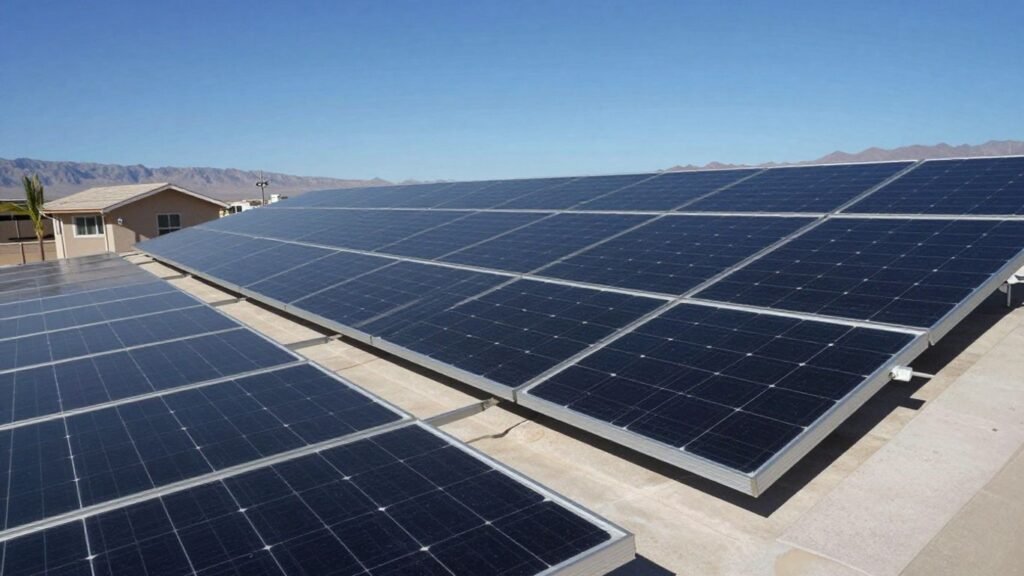
Nevada solar policy update — October 2, 2026 The federal homeowner Residential Clean Energy Credit (§25D) is unavailable for new installations completed after December 31, 2025. Do not subtract 30% from a new 2026 quote. Earlier qualifying installations and eligible unused-credit carryforwards are separate; business-owned systems follow different rules. Source: IRS. NV Energy currently schedules Southern Nevada’s daily demand billing component for January 1, 2027. Model demand charges separately from export credits and confirm your utility territory and tariff. NV Energy timing. Prices retained below are earlier published estimates, not a new market survey. Any payback or lifetime-savings projection requires recalculation using your current quote and tariff. Thinking about getting solar panels in Nevada for 2026? I’ve been looking into it myself, and let me tell you, the costs can seem a bit much at first glance. Your electric bill just keeps going up, right? Well, the good news is that solar can help lock in your energy costs for years to come, which sounds pretty great to me. I’ve gathered some info on what to expect, including the average prices, incentives that can help, and what makes Nevada a good spot for solar. Key Takeaways Understanding Solar Panel Costs in Nevada: Key Factors Calculate Your Solar Savings When I first started investigating solar panels for my place here in Nevada, the thing that smacked me upside the head was cost. It’s certainly an investment, and it is pretty significant to understand what contributes to that number. Average solar panel cost for Nevada. Nevada solar panels can save you a pretty penny, but they’re not cheap. Average Solar Panel System Size in Nevada So, how large a system do you really need? Really depends on how much electricity your home uses. A 7.2 kilowatt (kW) system — which would be about average for a Nevada home — can help make a sizable dent in your bills. But if you’re blasting the AC in summer, or have a large family with heavy energy needs, you might want something bigger — 10 kW or more. The opposite side of that coin: If you’re relatively energy-conscious, a smaller system may be suitable. The scope directly affects the price for Nevada’s overall solar system. Cost Breakdown: Panels, Inverters, Installation, and More When you receive a quote from NV for solar, there is more to it that goes into the savings than just the price of the panels. All told there are a few moving pieces making up the price of solar in NV: The cost of a residential solar PV system can be categorized into hardware—modules, inverters, and racking—and soft costs—installation labor, overhead, marketing/sales, and permitting. How much you really pay will vary based on the size of your system, what incentives you qualify for, and other considerations. When I compared quotes, the Nevada solar panel installation cost seemed to generally trend around $2.18 per watt prior to any specific incentives. At 10 kW, that’s about $30,400. But keep in mind that this is all a starting point. What Nevada residents pay for residential solar will be determined by all of these variables. If the payment up front feels a little bit steep, it might also be worth researching solar panels in Nevada financing options. Nevada homeowners are faced with many different questions when it comes to the cost of a solar energy system, so it’s a bit of a complicated answer, but breaking it down makes it pretty simple. Nevada Solar Incentives and Rebates: Reducing Your Investment So when I began investigating some solar panels for my place here in Nevada, the sticker price looked pretty high. It was a lot of money, and I wasn’t sure whether I’d be able to swing it. But then I started researching the incentives and rebates available, and honestly, it really changed the way I was looking at how much to invest in the entire Nevada home solar project. Federal Solar Investment Tax Credit (ITC) For a new homeowner installation completed in 2026, the federal §25D credit is $0. Count only separately confirmed state, local or utility benefits. Nevada programmes and utility terms must be verified separately. It’s not a rebate I get back in cash; it simply reduces what I owe the IRS. I just need to make sure I have enough liability for the full amount. If not, I can typically roll my leftover credit over to the following year. It applies to the entire system cost, panel, inverter, and labor to install. Nevada State and Local Solar Programs Nevada itself doesn’t have quite as many of the upfront cash rebates for solar panels available in some other states, which was a bit surprising to me. They appear to be more interested in promoting energy storage along with solar. There are still ways to save, however. There may be other, local utility programs as well, and always worth checking with your city or county government. I have heard about some things that make it easier with the upfront costs, especially if you are interested in Nevada solar panel financing programs. It’s not necessarily a simple line item that pays you back; sometimes it may be in the form of a low-interest loan / special financing plan, which can reduce your upfront investment in Nevada home solar. Here is a glance at some of what I found: It’s crucial to receive Nevada solar estimates from a number of providers to ensure you don’t pay more for panels that may not see the best performance or return. They’ll have information on the most recent incentives and help you calculate exactly how much you can save. Don’t assume you know all the deals? Ask them. I still need to collect quotes for Nevada residential solar, but having such a grasp of the ITC and knowing that some local rebate could pop up has made the idea of a Nevada solar panel investment feel much more possible. It’s not just about the solar prices in Nevada; it’s about what a complete home solar system will cost you when all of the savings are considered. The Impact of Net Metering Policies on Solar Costs in Nevada When I began
Solar Panel Cost: How Much Solar Panel Cost in Illinois
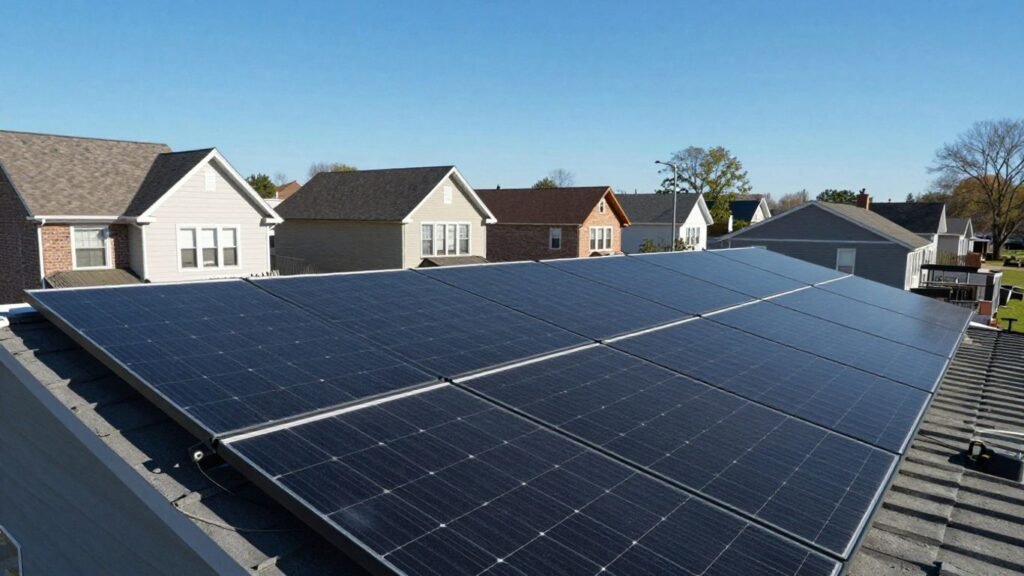
Illinois solar policy update — October 2, 2026 The federal homeowner Residential Clean Energy Credit (§25D) is unavailable for new installations completed after December 31, 2025. Do not subtract 30% from a new 2026 quote. Earlier qualifying installations and eligible unused-credit carryforwards are separate; business-owned systems follow different rules. Source: IRS. For applicable new Small DG REC contracts approved on or after June 1, 2026, Illinois Shines pays 50% at energization and the remainder over six years. An eligible customer-owned-system adder is $20 per REC for 2026–27. These are programme payments; your vendor agreement determines what you receive and when. Illinois Shines rules. Prices retained below are earlier published estimates, not a new market survey. Any payback or lifetime-savings projection requires recalculation using your current quote and tariff. This year, I’ve been looking into getting solar panels for my home here in Illinois, and let me tell you, the cost is a big question mark for a lot of people. It feels like a huge investment, and you want to make sure you’re getting your money’s worth. I’ve been digging into the numbers for 2026, trying to figure out what influences the price and what I can expect to pay. It’s not as simple as just picking a panel; there are a bunch of things that play into the final cost, from the size of the system to the incentives you can get. So, I thought I’d break down what I’ve learned about solar panels cost in Illinois for 2026. Key Points Understanding Solar Panel Costs in Illinois Calculate Your Solar Savings When I started looking into solar for my place here in Illinois, the first thing that hit me was the price tag. It’s not a small investment, that’s for sure. But figuring out the average solar panel expense Illinois homeowners face is key to understanding if it’s the right move. The cost to go solar in Illinois can really vary, and it’s not just about the panels themselves. Average Cost of Solar Panels in Illinois So, what’s the damage, ballpark? As of early 2026, the average solar panel system price in Illinois hovers around $3.02 per watt. For a typical 13.23 kW system, which is pretty common for homes around here, that shakes out to about $40,006 before you even think about incentives. It’s a significant chunk of change, but it’s important to remember this is a long-term investment. Prices can range from about $34,005 on the lower end to $46,007 or more for a higher-end setup. This average cost of solar energy Illinois homeowners are seeing is a good starting point for your research. Here’s a quick look at how system size impacts the overall cost: System Size (kW) Average System Cost (Before Incentives) 5 kW $15,120 7 kW $21,168 10 kW $30,240 13.23 kW $40,006 Remember, these are just averages. Your specific Illinois solar installation price could be different. It’s always best to get a few Illinois residential solar quotes tailored to your home. Factors Influencing Solar Panel Prices in Illinois Why such a range, you ask? Well, a bunch of things play into the final Illinois solar installation prices. It’s not a one-size-fits-all situation. The size of the system you need is a big one, obviously. If you’ve got a huge house or use a ton of electricity, you’ll need a bigger, more expensive system. But even for smaller systems, the cost per watt can sometimes be higher. It’s a bit of a trade-off. The quality and brand of the equipment matter too, and so does how tricky the installation itself turns out to be. Sometimes, getting permits or dealing with the specific layout of your roof can add unexpected costs to your home solar power Illinois cost. It’s a lot to consider when looking at the cost of going solar in Illinois. The total cost of a solar panel system in Illinois isn’t just about the hardware. Installation labor, permitting fees, and the complexity of your roof all contribute to the final price you’ll see on your Illinois solar installation quote. It’s wise to get detailed breakdowns from installers to understand where your money is going. Key Components Affecting Your Solar Investment Calculate Your Solar Savings When I started looking into solar panels for my place here in Illinois, I quickly realized it wasn’t just about picking out the shiniest panels. There are several moving parts that really shake up the final price tag. It’s like building anything, really – the materials and how complicated the job is make a big difference. Panel Type and Brand So, the panels themselves. You’ve got options, and they aren’t all created equal. Generally, higher efficiency panels cost more upfront, but they can generate more power from the same amount of roof space. This is something to think about if your roof isn’t huge. I looked at monocrystalline panels, which seem to be the standard these days for homes because they’re pretty efficient. Polycrystalline panels are usually cheaper, but they don’t perform quite as well, and honestly, I didn’t see many installers pushing them for residential setups. The brand matters too; some names have a reputation for lasting longer and performing better, and you pay a bit more for that peace of mind. It’s worth checking out reviews and seeing what installers recommend based on their experience. System Size (kW) This is a big one. The size of your solar system, measured in kilowatts (kW), directly impacts the cost. A bigger system means more panels, more hardware, and a higher overall price. To figure out what size you need, I had to look at my past electricity bills to see how much power my household actually uses. A common way to estimate is to take your annual kilowatt-hour (kWh) usage and divide it by about 1,200. For example, if you used 12,000 kWh last year, you’d be looking at roughly a 10 kW system. It’s tempting to go bigger to cover 100% of your usage, but sometimes
How Much Do Solar Panels Cost in Virginia in 2026
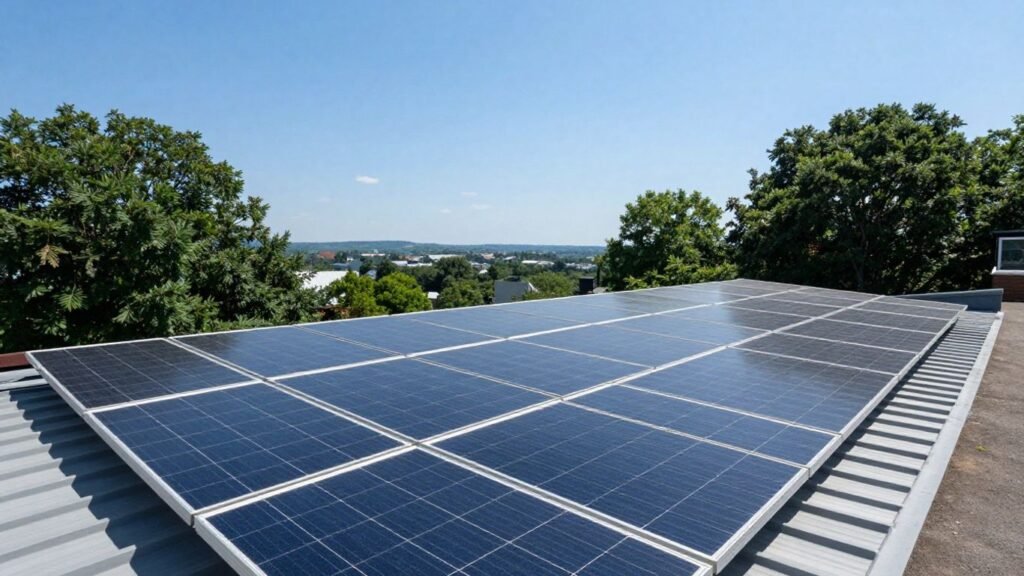
Virginia solar policy update — October 2, 2026 The federal homeowner Residential Clean Energy Credit (§25D) is unavailable for new installations completed after December 31, 2025. Do not subtract 30% from a new 2026 quote. Earlier qualifying installations and eligible unused-credit carryforwards are separate; business-owned systems follow different rules. Source: IRS. Dominion’s published net-metering guidance describes credits offsetting future consumption and a separate agreement for remaining year-end excess. Check the current approved tariff for your utility; do not treat an old proposed reduction as an enacted rule. Dominion guidance. Prices retained below are earlier published estimates, not a new market survey. Any payback or lifetime-savings projection requires recalculation using your current quote and tariff. I’ve been looking into solar panels for my own home here in Virginia, and let me tell you, the costs can seem a bit overwhelming at first glance. Your electric bill just keeps going up, right? It feels like there’s not much I can do about it. But then I started digging into solar, and it turns out there are ways to lock in energy costs for years, even decades. It’s a big decision, and I wanted to break down what you can expect to pay for solar panels in Virginia in 2026, including all the factors that play into the price and the savings you can look forward to. Key Takeaways Understanding the Average Cost of Solar Panels in Virginia Calculate Your Solar Savings The very first thing I wanted to do when exploring solar panels for my home here in Virginia was to get an idea of the price. Because it is a significant investment, right? Now, the average solar panel price Virginia homeowners are finding in 2026 can vary quite a bit, but personally, I discovered the average residential solar system price for my area generally ranges from $25,000 to $45,000 before incentives. Sounds like a lot, but you have to decompose, and this is what goes into the number. Factors Influencing Solar Panel Costs in Virginia The final Virginia solar installation costs can really be influenced by quite a few things. Reduced system scale was arguably the biggest factor. The capacity needed for this is often calculated in kW, and is dependent upon the electricity needs of my home. More panels equal a bigger system, and, therefore, a higher cost. I also discovered that the quality and brand of the actual boards make a difference. Many homeowners purchase higher-grade panels that can withstand the harsh weather we see around here, but they also come with better warranties. Also, be sure to keep in mind other add-ons such as solar batteries; these can drastically boost the total cost of solar energy systems in Virginia, but provide the advantage of being able to run during a power outage. Here’s a general idea of how system size impacts the cost: The type of financing you choose also plays a role. Paying cash upfront means a larger initial outlay, but you save on interest over time. Solar loans require less money at the start, but will increase your total investment due to interest charges. Cost Breakdown: What You’re Paying For So, what exactly am I paying for when I look at Virginia solar installation pricing? It’s not just the panels themselves. The total cost of going solar in Virginia includes: Keep in mind that another metric standard for comparing quotes is the cost per watt. As an example, the average price for solar energy panels in VA may likely be approximately $2.75 per watt. That’s about $19,250 pre-incentive for 7 kW system. The metric serves to express pricing on the same scale regardless of system size, and enables easier comparisons between offers from different installers. For pricing trends: average solar cost per watt in every state. Virginia Solar Incentives and Rebates: Reducing Your Investment Calculate Your Solar Savings So, you’re considering going solar in Virginia? That’s awesome! However, let’s focus on the financial aspect because no one wants to pay the full price if they don’t have to. Fortunately, there are some excellent means to reduce the up-front cost of your Virginia solar panel system purchase. Federal Solar Investment Tax Credit (ITC) For a new homeowner installation completed in 2026, the federal §25D credit is $0. Count only separately confirmed state, local or utility benefits. Virginia programmes and utility terms must be verified separately. This means that if you owe $10,000 and you spent $30,000 on your solar system, you could actually reduce your tax liability by up to $9,000. In most cases, if you do not owe sufficient taxes to be able to take the full credit in one year, you can carry the unused portion of the credit forward to the next year, and for many years, the maximum is five years. And again, only remember that you must have your system installed and paid in full by the end of 2025 to get the full 30% credit, the rules will change after that! Virginia State Solar Incentives And Virginia has a couple of things working for it as well. Among the most helpful are the statewide property tax exemption on solar equipment. This means that while solar panels will most certainly add value to your home, you will not be charged increased property taxes based on that value. That’s a nice little perk! Virginia has one as well – Solar Renewable Energy Certificates (SRECs). You earn SRECs when you generate electricity from your solar panels. Then you can cash in by selling those SRECs, essentially getting paid for your clean energy! The price of SRECs can fluctuates, somewhat like stocks, so it’s worth doing some research. Side note: SRECs are treated as taxable income, so you should talk to a tax professional about that as well. Local and Utility Company Rebates For a new homeowner installation completed in 2026, the federal §25D credit is $0. Count only separately confirmed state, local or utility benefits. Virginia programmes and utility terms must be verified separately. Additionally, net metering is available through most utility companies in Virginia. This is super handy. When your solar panels generate more energy than you are
How Much Do Solar Panels Cost in Florida in 2026
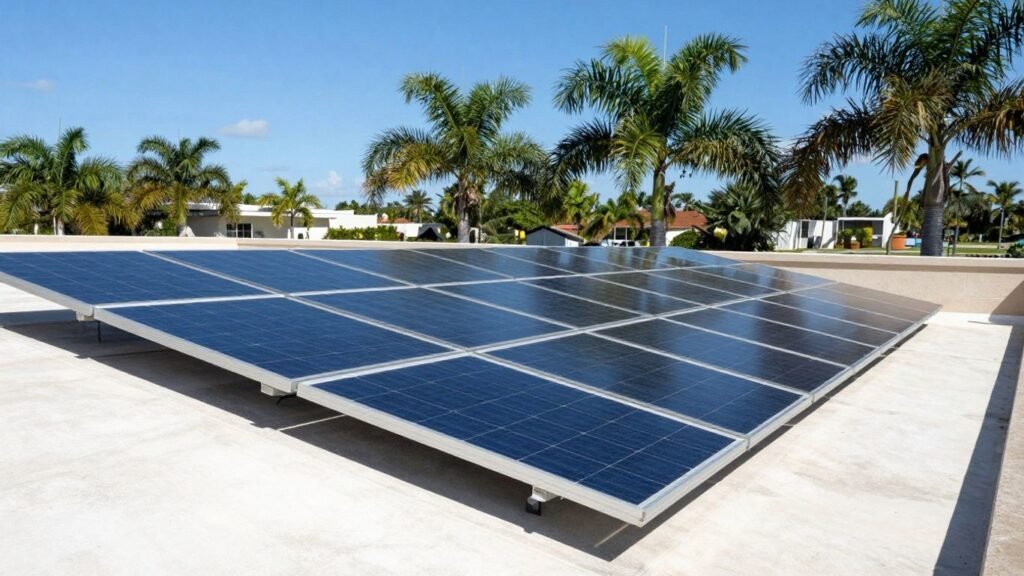
Florida solar policy update — October 2, 2026 The federal homeowner Residential Clean Energy Credit (§25D) is unavailable for new installations completed after December 31, 2025. Do not subtract 30% from a new 2026 quote. Earlier qualifying installations and eligible unused-credit carryforwards are separate; business-owned systems follow different rules. Source: IRS. Confirm your specific utility’s net-metering tariff and year-end surplus settlement. State tax exemptions do not restore §25D; do not subtract a sales-tax exemption twice from a tax-exempt quote. Florida PSC guidance. Prices retained below are earlier published estimates, not a new market survey. Any payback or lifetime-savings projection requires recalculation using your current quote and tariff. Thinking about getting solar panels for my place down here in Florida? I’ve been looking into it, and the cost is definitely something to consider. It’s not just a simple sticker price; several factors contribute to the total cost you’ll end up paying. I wanted to break down what I’ve learned about the Solar Panels Cost in Florida for 2026, so maybe it can help you, too. Key Takeaways Understanding Solar Panel Costs in Florida When I began researching solar panels for my Florida home the first thing that crossed my mind was cost. It feels like a lot upfront, but breaking it down really makes a difference. 2026 average solar installation cost in FL $2.71 per watt low price $1.85 per watt) high price ($3.58 per watt) before any rebates is $21,680! This implies that the average-size system might cost around $19,512. Now, this is a rough estimate, and the actual price for your home could vary significantly depending on several factors. Average Solar Installation Expenses Then, what’s an Very comfortable perspective on that Average Solar Panel Installation In Florida cost? It’s about $2.71 a watt, as I mentioned. For an average residence, this typically also means system capacity that runs about $19,512 before any tax credits or incentives. It’s a big investment, no doubt, but it’s crucial to keep in mind that this is the beginning. The cost of installing solar panels in Florida is determined by more than the size of the system. Cost Per Watt Breakdown It’s this last metric (the cost per watt) that I used to first begin comparing quotes for different solar panel systems in Florida. Framing the option in this way is a bit of artificial leveling. For example, that 5 kW system might cost an average of $3.00 per watt, a larger 10 kW system would be closer to $2.52 per watt or about 13% cheaper. This demonstrates that per-watt costs can become cheaper the more power you are interested in. It is a great way to tell if you are getting La Habra real estate for sale at a good deal on cost of solar panels in Florida. Impact of System Size on Overall Price And of course, the larger the system, the more expensive. It’s pretty straightforward. If I required a smaller system — say, 3 kW — the price might be closer to $6,573. But if I wanted a bigger 10 kW setup to cover more of my electricity needs, I’d be looking at about $21,909. That’s why we’re such big fans of getting multiple solar quotes from different companies at the same time, and your ability to compare them depends on what you can tie to each of them, which in turn is driven by their business practices. This is exactly why we offer these overview articles for different markets – once you’re done with this one, keep reading; other individual solar cost info pages are live. Factors Influencing Solar Panel Expenses As I began to research going solar on my home in Florida, it didn’t take long to discover that the ultimate price tag isn’t simply one amount. It’s really more of a puzzle with lots of pieces, all of which interlock to arrive at the final cost. Knowing these parts made it so much easier for me to grasp what I was actually paying for and where I might cut some costs. Equipment Selection and Efficiency The type of panels and other gear you select matters. You can choose between monocrystalline and polycrystalline panels. They are more efficient, which means they can squeeze more power from a smaller space: Great if you do not have a large roof to cover! They can also be a bit more expensive, however. Polycrystalline panels tend to be more affordable, though they require more space to generate equivalent power. Just as you don’t need the highest-performing phone on the market to make a call, you might not need (or be willing to pay for) absolutely “best” panels if you’re in sunny Florida; those 99th percentile ones are going to serve up good results there , too, and cost less upfront. But we also need to think about hurricane season. If you’re in a place that experiences many high winds, you may want to choose more durable panels or get panels backed by an absolutely strong warranty. That additional peace of mind can come at a higher cost. Roof Characteristics and Orientation The condition and positioning of my roof were more important than I had realized. Where your roof is and which way it points are really important for the amount of sun your panels capture. An ideal roof is one that faces south and isn’t shaded by trees or other buildings. That means you can extract more power from fewer panels, reducing the total cost. If your only choice is a roof that faces north, or has an especially steep pitch, you may need to cover more of it with panels to produce the same amount of electricity. This can significantly raise the cost, so that price per unit of energy you generate becomes a lot higher. GP Image Credit. Here’s the first thing I learned: Before you even think about installing panels, it’s smart to have someone check out your roof. If it’s old or needs repairs, it is way cheaper to fix or replace any of these parts before the solar panels go on. Removing panels and replacing them to work on a roof can add thousands to the bill. I heard a tale
How Much Do Solar Panels Cost in California in 2026
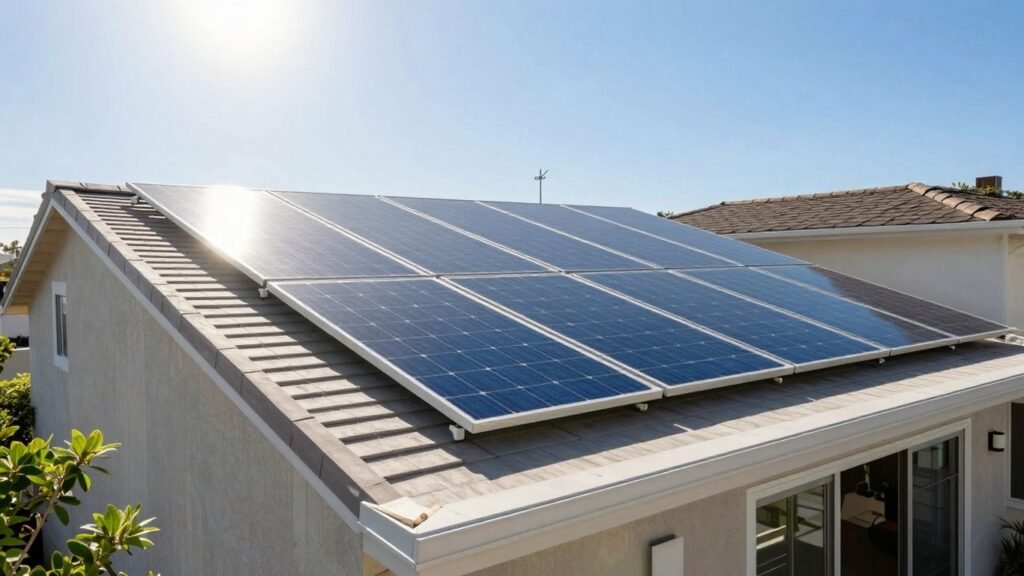
Updated October 13, 2026 · Research update by Living With Solar editorial team. Quick answer: EnergySage’s California marketplace benchmark, updated October 2, 2026, is $2.52 per watt installed. It reports about $21,200 for an 8.42 kW system, with a quoted range of $18,020–$24,380 before available incentives. This is a marketplace estimate, not a statewide census, a battery-inclusive budget or a quote for your roof. Pricing source and methodology. Important for a new 2026 installation: Do not deduct the former 30% homeowner federal solar credit. IRS guidance says §25D is unavailable for property placed in service after December 31, 2025. Check IRS guidance. A useful solar proposal must answer three questions: what you pay for the installed system, what your utility will charge and credit after installation, and what you may spend on financing, maintenance and equipment replacement. California’s sunshine alone does not establish a positive return. California solar cost and policy snapshot Measure Latest verified figure or rule Date and scope Installed solar price $2.52/W; 8.42 kW benchmark about $21,200 EnergySage California marketplace; October 2, 2026; before incentives Homeowner federal §25D credit Unavailable for property placed in service after December 31, 2025 IRS guidance checked October 13, 2026 Behind-the-meter solar Almost 20,000 MW in 2025 CEC annual statewide data; capacity, not a household savings estimate Battery adoption among NBT customers Nearly 70% paired batteries by end of 2024 CPUC historical statistic for net-billing customers, not all California homes Sources: EnergySage, IRS, California Energy Commission and CPUC. Statistical years differ because publication schedules differ. Historical adoption figures are not presented as October 2026 totals. How much do solar panels cost in California? Use cost per watt to compare solar-only cash quotes: installed cash price ÷ system capacity in DC watts. For example, a $15,120 quote for 6 kW is $15,120 ÷ 6,000 W = $2.52/W. Keep batteries, roof replacement and financing charges separate so unlike scopes do not appear comparable. Budget examples by system size System capacity (DC) Illustrative cost at $2.52/W 4 kW $10,080 5 kW $12,600 6 kW $15,120 8 kW $20,160 10 kW $25,200 12 kW $30,240 These figures are our arithmetic using the rounded marketplace benchmark—not collected quotes for each size. Actual $/W can change with system size, equipment, roof access and electrical work. They do not establish the system size your home needs or include a separately priced battery. What changes your installed price? Annual and hourly consumption: use 12 months of bills and interval data, then account for planned EV charging, heat pumps or other changes. Roof condition and access: roof repairs, multiple roof planes, shading, tile work and difficult access can affect scope. Equipment: panel model, inverter architecture, monitoring, mounting hardware and warranty terms. Electrical and approval work: main-panel upgrades, service changes, permits, engineering and interconnection. Installer and payment terms: subcontracting, service coverage, cash versus financed price, loan fees and interest. What a complete quote should include Quote item What to verify Panels and inverters Exact models, DC size, expected AC performance and manufacturer warranty Racking and roof attachments Roof compatibility, flashing responsibility and penetration warranty Labor and approvals Permits, engineering, inspection and utility interconnection responsibilities Electrical upgrades Included allowances and written exclusions Battery, if selected Usable kWh, power rating, backup equipment and protected circuits Monitoring and service Connectivity, support contact, workmanship coverage and response terms Roof replacement and detach-and-reset work need their own scope. See our solar panel removal and reinstallation guide. California solar incentives and rebates in 2026 Federal homeowner credit: no automatic 30% deduction The former Residential Clean Energy Credit is unavailable for new property placed in service after December 31, 2025. A new homeowner installation completed in 2026 should not be priced as cash cost minus 30%. Earlier qualifying projects and eligible unused-credit carryforwards are separate tax situations. Third-party-owned and business projects follow different rules; a provider’s incentive is not automatically your personal tax credit. Source: IRS. SGIP and qualifying solar-plus-storage support The CPUC describes SGIP support for eligible storage and paired solar projects, including a low-income Residential Solar and Storage Equity budget with $280 million authorized. Authorized funding is not a promise that your application will receive money. Eligibility, administrator, budget availability and reservation approval determine support. Confirm the current category before subtracting a rebate. SGIP eligibility and administrator information. Property-tax exclusion: watch the January 2027 change BOE’s September 1, 2026 letter explains that the active solar new-construction exclusion becomes inoperative January 1, 2027. Previously excluded systems remain excluded until a property ownership change. It also describes new initial-purchaser claim filing rules. This is a property-assessment rule, not an installation cash rebate. Ask the county assessor how the completion date, ownership and claim requirements apply to your property. BOE Letter 2026/034. Local programs vary by utility, income, location and funding. Do not assume a statewide rebate is available to every homeowner. Obtain written eligibility and reservation information; related electrification incentives are not automatically solar incentives. How NEM 3.0 and the Solar Billing Plan affect savings For PG&E, SCE and SDG&E, applications from April 15, 2023 generally use the Net Billing Tariff, called the Solar Billing Plan. Electricity used onsite offsets imports; exported electricity earns time-dependent credits that are usually below retail import prices, though some late-summer evening hours can be more valuable. CPUC billing explanation. Legacy NEM customers and municipal-utility customers need separate models. A Los Angeles mailing address does not establish whether LADWP or SCE serves the property. Confirm the utility and rate schedule on your bill, including any community-choice generation provider, before calculating savings. Should you add a battery? Compare solar-only and solar-plus-battery proposals using the same load data. Storage can shift midday generation into evening consumption and may provide outage backup when designed for it. It also adds purchase cost, conversion losses, operating limits and possible replacement expense. Higher battery adoption does not prove every battery pays for itself. Request usable capacity, continuous and peak output, backup circuits, reserve settings and warranty details. Read our home battery cost guide. Calculate savings and payback using your
How Much Do Solar Panels Cost In Texas (Complete Guide by Sophia Green) 2026
Texas solar policy update — October 2, 2026 The federal homeowner Residential Clean Energy Credit (§25D) is unavailable for new installations completed after December 31, 2025. Do not subtract 30% from a new 2026 quote. Earlier qualifying installations and eligible unused-credit carryforwards are separate; business-owned systems follow different rules. Source: IRS. From September 1, 2026, residential solar retailers and salespeople must register with TDLR. Check the seller’s registration alongside applicable electrical-contractor licensing before signing. TDLR requirements. Prices retained below are earlier published estimates, not a new market survey. Any payback or lifetime-savings projection requires recalculation using your current quote and tariff. I’ve been looking into solar panels for my place here in Texas, and honestly, the whole cost thing can be a bit confusing. There are a lot of numbers out there, and figuring out what you’ll actually pay feels like a puzzle. This guide breaks down what I’ve found about solar panel costs in Texas for 2026, so hopefully, it helps clear things up for you, too. Key Points Understanding the Average Solar Panel Cost in Texas So, you’re considering putting solar panels on your Texas home six years from now? That’s a clever maneuver, especially given the vagaries with which costs such as energy can increase and decrease. I’ve been investigating this (and it’s not quite as simple as just choosing a panel from the store shelf). The average solar panel cost that Texas homeowners are finding can really fluctuate. At the moment, I’m seeing numbers that say the average best cost for a solar system in Texas is about $30,000 to $35,000 before rebates are calculated in. This is a typical home system, perhaps around 10 or 12 kilowatts (kW). It adds up to between about $2.50 and $3.50 per watt for the entire installation. This is ballpark, remember. Your real average solar panel price in Texas will depend on a few things. Factors Influencing Solar Panel Prices in Texas The numbers I was seeing weren’t all the same when I received my first few quotes. This, it seems, is what made the biggest difference: How Much Power You Use: The higher your power bills, the larger system you will need. The larger the system, the more panels, equipment, and cost overall. I would like to know the average monthly usage for a more accurate estimate. System Size: This is related to energy use, but it’s worth mentioning in its own right. This comes down to the fact that a 5kW system is simply going to be less expensive than a 10kW system. Quality of the Panels and Inverters: All panels are not alike. Some are more efficient, have longer warranties, or are constructed to endure Texas’s harsh weather more effectively. Also butterfly as to inverter type (string vs microinverters). Roof Factors: The slope, orientation, and condition of your roof make a difference. A simple south-facing roof with no shade is best and generally cheaper to work with compared to a more complex roof with multiple angles or shades from trees. Installer Choice: Various companies have different overheads, labor rates, and margins. Yes, it’s the way to go for sure. Cost Breakdown: What You’re Paying For It’s not just the panels themselves. When I looked at the breakdown of costs, it was interesting to see where the money goes. For a typical installation, here’s a rough idea: It’s easy to get stuck on that number, but the panels themselves are just one piece of a potentially costly package. A lot of that goes into the labor, permits, and other installation-essential equipment to safely and effectively get the system up in your home. So, when you see the average solar panel cost Texas homeowners face these may seem high at first, but knowing the various parts of this price can help make things much clearer for your investment. In my next post, I’ll explain how incentivizers can bring that figure much lower. The Impact of Incentives and Rebates on Texas Solar Costs When I first got to shopping for solar panels for my home here in Texas, the price was, as they say in the GPS biz, a little bit jarring. It seemed like a large chunk of change, you know? But then I began to look at the incentives and rebates, and that put an interesting spin on things. These programs can dramatically lower the cost of going solar. Federal Solar Tax Credit (ITC) All right, so here’s a little curveball for 2026. The federal solar tax credit (ITC) for newly-installed, customer-owned solar systems is no longer available. If you installed solar on your home by Dec. 31, 2025, you may still be eligible to take it when you file your taxes. But for any new systems being hoisted after Jan. 1, 2026, that particular federal treat is off the table. This means that the emphasis shifts ever more to other strategies for saving money. “Texas Solar Incentives: State and Local Programs to Save You Money” Even without the federal credit, Texas and many of its local governments offer ways to make solar more affordable. It’s worth investigating what is available in your area. These can include: Property Tax Exemptions: You will not have to pay increased property taxes because you installed solar panels on your… in Texas! This is a feel-good little benefit that saves your home’s value. Tax Free Energy Purchase: You are not charged state sales tax when you invest in solar equipment. That’s immediately saved right off the top. Local Utility Rebates: A few Texas utilities also have their own rebates or solar programs. These can vary significantly, so you should verify with your individual provider. Information about these programs should be available on your utility’s website or by talking to your installer. Consider the available rebates offered by your local utility company. If you’re skeptical of the high initial costs of solar, it may pay to see what’s available in incentives and rebates. These programs are intended to make clean energy more affordable and can drastically cut how much you pay out of pocket. Don’t overlook this step, it could save you thousands. Keep in mind that the incentives landscape is changeable, so always get the latest information directly from your installer or
Solar Panel Cost: How Much Does Solar Cost in 2026?
Solar Power Vs Wind Power: Whats the difference ???
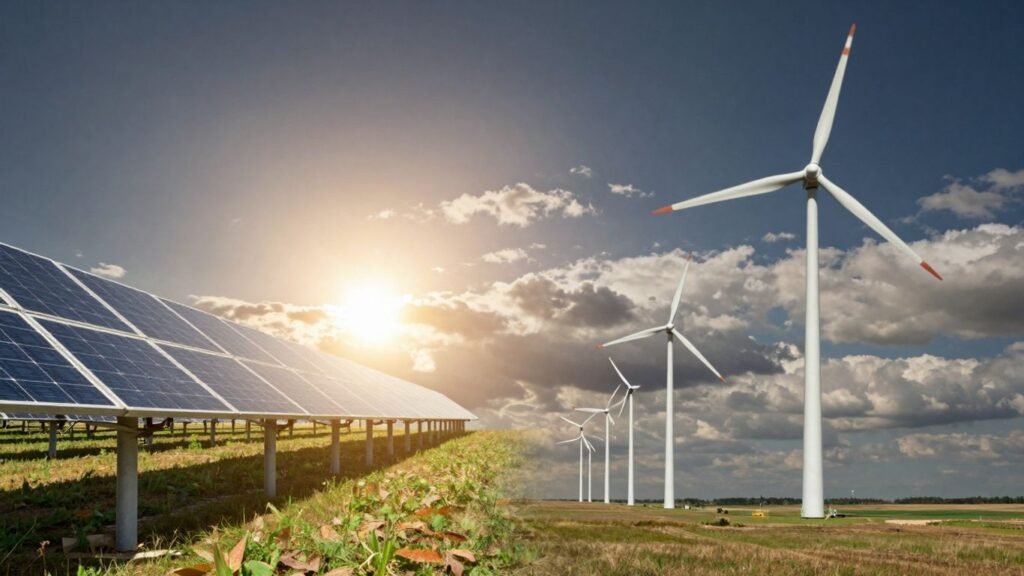
I’ve been doing a bit of research on renewable energy recently, and the whole solar power vs wind power thing keeps coming up. It’s a big decision, for your home or business, and frankly, it’s not as straightforward as picking the “greenest” one. Each has its upsides and downsides, and what’s right for one person might be a complete miss for the next. I wanted to break it down the things I’ve learned about solar power vs wind power to help cut through the noise. Key Takeaways Understanding Solar Power When I first became familiar with renewable energy, solar power was something that really caught my attention. Essentially, it’s about taking the sun and turning it into electricity. I’m talking about those shiny panels you see on rooftops or in large fields; those are the stars of this story. They are composed of photovoltaic (PV) cells that absorb sunlight and directly convert it into electricity. This electricity, though, starts off as quite a bit more than a trickle of direct current (DC), and a little box known as an inverter turns it into the alternating current (AC), that we all use to power our homes and appliances. Some of the biggest selling points, and something I thought was very cool, were the solar energy benefits. For one thing, it’s a renewable resource. Let us not forget, the sun is not going anywhere, at least in the foreseeable future, a comfort from our perennial anxiety about running out of fossil fuels. And once installed, panels produce power without pumping out greenhouse gases. As far as carbon goes, the footprint is limited mostly to the manufacture and transportation of the panels themselves. And in all honesty, the notion of producing my own power is fairly rad. And now, the practical. The price of installing solar has dropped significantly in recent years, making it considerably more accessible than in the earlier days. There are even options, such as leases or power purchase agreements, among some of the installers Spotlight contacted, if making a purchase outright is too expensive up front. Maintenance is usually pretty minimal as well. They don’t have as many moving parts, and they don’t break down the way mechanical things do. For most systems, it’s merely a matter of having them cleaned and checked every now and then. They’re designed to last, usually 20 to 30 years, which is a good investment. And of course, well, it’s not all sunshine and rainbows. Since solar panels require sunlight to operate, cloudy days equate to less power. They also require space, either on your roof or the ground. And though they endure for such a long time, they do become slightly less efficient as the years go by, albeit slowly in most cases. That’s something to be aware of for long-term planning. How Solar Panels Work So how on earth do these things turn sunlight into electricity? It has everything to do with a phenomenon known as the photovoltaic effect. At its heart, when sunlight shines on the photovoltaic panels that sit on your roof, it causes electrons to buzz around within the silicon cells. These electrons now begin to circulate, generating a direct electrical current (DC) of electricity. Think of it as a small, controlled electrical storm erupting within each cell. Pros of Solar Power Pound for pound the best pro is that solar power is clean. They don’t pump out any greenhouse gases while they work; once the panels are manufactured and installed. And the sun is a limitless supply of energy, so it’s renewable. And I appreciate the fact that they don’t have moving parts, so there’s less to break and not much in the way of maintenance. You don’t hear them clattering away, either, like those giant wind turbines. And the price has dropped a lot, so it’s more affordable to people like me. You can even have them installed on your roof; that way, they won’t take up additional yard space (of which you may not have much). Cons of Solar Power Of course, the obvious problem is that solar panels require sunlight. You won’t get much or any if it’s cloudy, raining or at night. That leaves you often needing a battery backup or additional power source in those moments. They also occupy space, whether on your roof or across the ground if you have the land. And though they last a long time, their solar panel efficiency does decrease a little bit each year. It’s not enough that you’d likely never notice it, less than 1 percent a year on average, in fact, but it’s something to keep in mind when it comes to long-term planning. And the up-front purchase and installation cost can be high, though there are financing options. Understanding Wind Power Wind power is one of the first things I think of when I consider the subject b, renewable energy. It’s pretty awesome that we’re able to harness the force of wind and convert it into electricity. In basic terms, a wind generator (wind turbine) uses blades that are attached to a rotor, which in turn is connected to the main shaft. This rotation, among other things, is able to be transmitted over an internal transmission mechanism which produces mechanical energy as a result of wind energy. Next, a generator captures that mechanical energy and converts it into the electric power we need. Wind has become a big deal, as well it should. It’s a clean way to get power, and the technology has advanced by leaps and bounds. In the United States, wind turbines generated a record amount of electricity in 2023; enough to power millions of homes. You notice these big wind farms all over the place now, and they’re not just a sight on land; some of them are popping up miles from shore. Wind turbines are flexible, and that is one of the things that makes them so cool. You can put them in a lot of different places, whether that’s out in the hinterlands or offshore. They are thus a viable candidate for large-scale power production. While the idea of some giant turbine in your backyard is common, you can also get smaller ones, similar to how different-sized solar panels are on the market. The larger the turbine, generally speaking, the more power it can generate.
String Inverter vs Microinverter: Which Is Better? (Sophia Green)
Thinking about going solar? That’s awesome! The biggest decisions you’ll face are the type of inverter to purchase. It’s not a trivial detail; it makes all the difference in how your system operates. We’re about to go over the difference between microinverter and string inverter installations to help you determine which is the most suitable for your home. It may be a little technical-sounding at first, but we’re going to keep it simple. Key Takeaways Understanding Solar Inverters: The Basics Well, well, so you’re thinking of putting a solar panel on your roof? That’s pretty cool. But before you dive too deep into panel types and warranties, there’s this other piece of hardware you need to be aware of: the inverter. It’s sort of the engine of your solar system. In short, solar panels generate electricity, but not the kind that can simply be used to power a light bulb in your living room. They generate DC power. Your toaster, your TV, your lights. They all power up using that magic electricity form called Alternating Current (AC). The inverter’s main function is to take that DC power from the panels and flip it into the kind of electricity we use every day at home: AC, or alternating current. Without an inverter, your solar panels are essentially expensive roof ornaments. But it’s not just the conversion. Inverters also help ensure your system is running efficiently. They can assist in getting the most electricity out of your panels, track how much energy you’re producing and even sh…ope up some chit-chat with the power company’s grid. They are also the first line of defense for identifying problems with your solar setup. There are a few primary ways that these inverters get the job done and the type of inverter you decide to install can actually have an impact on how well your system works and how much money it costs. We’ll go into the specifics of those in a moment, but for now, all you need to know is that the inverter is an essential bridge between your solar panels and your home’s electrical system. What is a String Inverter? Well, let’s discuss string inverters. They are likely the type you’ll come across most often when people talk about solar power systems. So it’s sort of like the central conduit for your solar power. How String Inverters Work In essence, a string inverter takes the direct current (DC) electricity that all of your solar panels create and converts it to alternating current (AC), which is what powers your home devices and can be returned to the grid. The “string” part refers to the way the panels are wired. You wire several solar panels together in a series configuration, like beads on a string, and this “string” then runs to a single large inverter. This inverter is typically installed somewhere easily accessible (the side of your home near the electrical meter, often). It’s the workhorse that turns your solar power into something you can use. The effectiveness of this process is especially crucial when it comes to optimizing your solar set-up. You can learn about how a solar string inverter converts DC to AC power most effectively here. String Inverters: Pros and Cons String inverters, like everything else in solar, have their ups and downs. Pros: Cons: Some people, in order to overcome the shading issue on string inverters, put in ‘optimizers.’ These tidy little devices attach to each panel and enable it to operate at its peak, even if others in the string are impaired. It’s as if each runner had their own coach accompanying them. That’s going to drive the cost up, but it can still be cheaper than simply using a different inverter technology altogether and allows you to get more power out of each panel. What is a Microinverter? All right, so let’s talk about microinverters. These little guys are like the tiny superheroes for each of your solar panels. Unlike a large central inverter, which deals with dozens of panels at once, a microinverter is installed directly onto the back of each solar panel. Its function is to receive the direct current electricity the panel generates and convert it into alternating current electricity, or AC, which your house runs on. For some microinverters, that can be two panels, but the fundamental concept is that each panel receives its own conversion unit. How Microinverters Work And how does this work in the real world? Every solar panel produces DC energy. This DC electricity is immediately fed to the microinverter affixed to it. The microinverter works its magic, turning that DC power into AC power. From there, the AC electricity generated by each microinverter goes immediately into your home’s electrical system or back out into the grid. Under this panel-by-panel method, if one panel is not producing well, perhaps, it’s slightly shaded, it does not bring down the entire system. It’s like a team where everybody is just on their own, and nobody can be slowed down by one person having a bad day. Pros and Cons of Microinverters As with anything, microinverters have their pluses and minuses. Pros: Cons: When considering microinverters, though, it’s all about optimising how much power each individual panel can produce to make the most out of your roof, particularly if you have tricky spots or multiple angles. You get a lot of flexibility going forward if you upgrade your system or need performance information for each panel. Key Differences: String Inverter vs. Microinverter So you have your solar panels, but what do you actually do with all that sunshine power? Enter inverters, of which there are two big types, string inverters and microinverters. They perform the same essential job, converting your panels’ DC power into the AC power that your home uses, after all, but they can go about it in some pretty different ways. Let’s unpack what distinguishes them. Efficiency and Performance This is a big one. A string inverter, which everyone was once using due to cost, wires up all your panels in series, like a chain. The entire string connects to a single inverter at the center. The catch? A chain is only as strong as its weakest link. If one panel is shaded by a tree branch at certain times of day, or if one panel
10 Disadvantages of Solar Energy (Sophia Green)
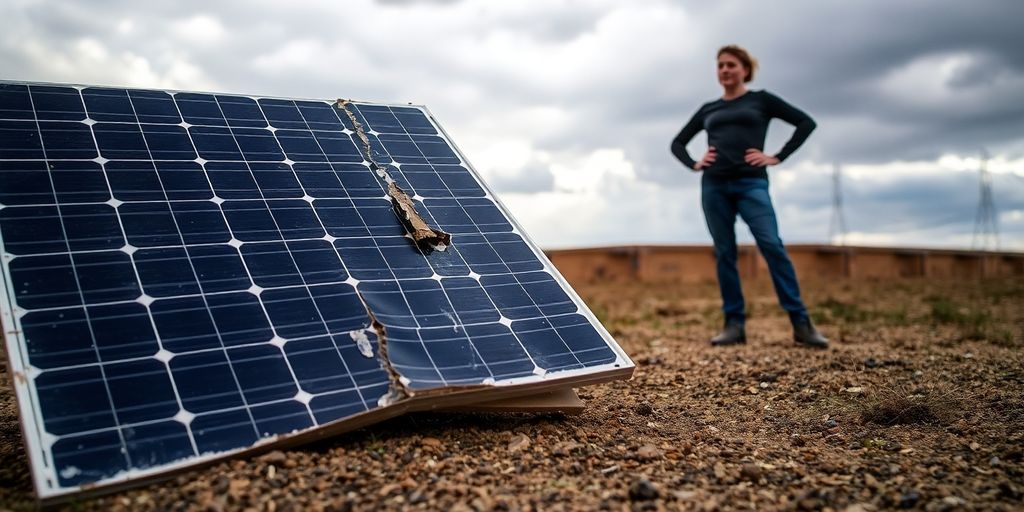
Thinking about going solar? It’s a great idea for the planet, and often for your wallet too. But like anything, it’s not all sunshine and rainbows. Before you jump in, it’s smart to know the downsides. We’re going to break down some of the common solar energy disadvantages so you can make a well-informed choice. It’s not about scaring you off, just giving you the full picture. Key Takeaways What are Solar Panels? So, what exactly are solar panels? Think of them as the collectors for sunshine. They’re basically flat devices, usually mounted on roofs or in open fields, that grab sunlight and turn it into electricity. This magic happens thanks to special materials inside, called photovoltaic cells. When sunlight hits these cells, it excites electrons, creating an electric current. It’s a pretty neat way to harness power directly from the sun. These panels are the heart of any solar energy system, converting light into usable power for homes and businesses. They’re designed to be durable and capture as much solar energy as possible throughout the day. The amount of electricity generated depends on factors like the panel’s size, efficiency, and how much sun it gets. It’s a technology that’s been around for a while, but it’s constantly getting better and more efficient. You can learn more about how solar panels work. What is the Lifespan of a Solar Panel in California ? So, you’re thinking about solar panels, maybe even here in California. It’s a big investment, and one of the first things people wonder about is how long these things actually last. Most solar panels are built to last for a really long time, typically around 25 to 30 years. That’s a pretty solid warranty period, and many panels can keep producing power even beyond that. Of course, performance might dip a little as they age, but they don’t just suddenly stop working. Think of it like an old car; it still runs, but maybe not as smoothly as it used to. The actual lifespan can depend on a few things, like the quality of the panels themselves and how well they’re installed and maintained. California’s climate is generally pretty good for solar, with plenty of sunshine, which helps keep them running efficiently. You’ll want to make sure your installer is reputable to get the most out of your system for years to come. 10 Major Disadvantages of Solar Panels (Sophia Green) While solar power is often praised for its environmental benefits, it’s not without its challenges. Understanding the downsides of solar energy is key before making the switch. Many people focus on the long-term savings, but the initial investment can be a significant hurdle. The upfront cost of purchasing and installing solar panels is substantial, even with falling equipment prices and available incentives like tax credits and rebates. This is one of the primary solar power disadvantages that potential adopters consider. It’s important to weigh this against future energy bill savings, but the initial outlay is a real concern for many homeowners. The disadvantages of solar panels are varied, and while technology is improving, these points remain relevant. 1. Solar Power is Expensive Let’s talk about the elephant in the room when it comes to solar energy: the cost. However, as great as free electricity from the sun may be, the pathway to it involves a rather expensive upfront cost. Buying and installing solar panels come with a hefty upfront price tag. And we’re not talking just a few panels, either; to power a whole home, you’d probably need an entire array, which piles up quickly. This is the top of the solar con people weigh into. You may read about leasing these cars that will certainly reduce the direct hit on your wallet, but still, it’s a long game. It may not be feasible to install a system that you can’t just lug along when you move a few years down the line. That is surely something to consider wisely, especially alongside your relatively predictable monthly utility bills. 2. Location and Sunlight Availability Matters The issue, though, is not with the panels, but where you put them, and how much sun they receive. Well, I mean to say that if you live up there near the North Pole, your direct sunlight will not be anywhere near as good as if you were near the equator. That’s just physics. And even within a country, some cities have way more sunny days than the rest. However like an area that is always cloudy or foggy is going to be an issue for solar panels. They actually require direct sunlight to effectively do their thing. While solar is a practical alternative in some areas, solar performance does tend to regress based on your country and climate. This is a significant thing in your mind when researching possible savings and the amount of power that you can really create. Your geographic spot really matters. Location Type Sunlight Availability Impact on Solar Near Equator High High Efficiency Far from Equator Lower Lower Efficiency Frequently Cloudy/Foggy Low Significantly Reduced Efficiency 3. Solar Panels Require a Lot of Space The first thing you might notice with solar power is that it can be a bit standoffish. You are going to want at least some clean, uninterrupted space in order to achieve a reasonable output. For most homeowners, this usually means sacrificing a large chunk of their roof. You may not have enough square meters of roof space that is not filled with vents, skylights, and other protrusions, or you may have an awkward-shaped roof that prevents you from fitting enough panels to create a significant difference to your electricity bill. If you are building a larger setup for your business or farm, we are dealing with acres of land. And no, it’s not enough to have the space; that space needs to be receiving direct sunlight at least most of the day. This means if tall trees or other buildings block the